The Best Fluffy Pancakes recipe you will fall in love with. Full of tips and tricks to help you make the best pancakes.
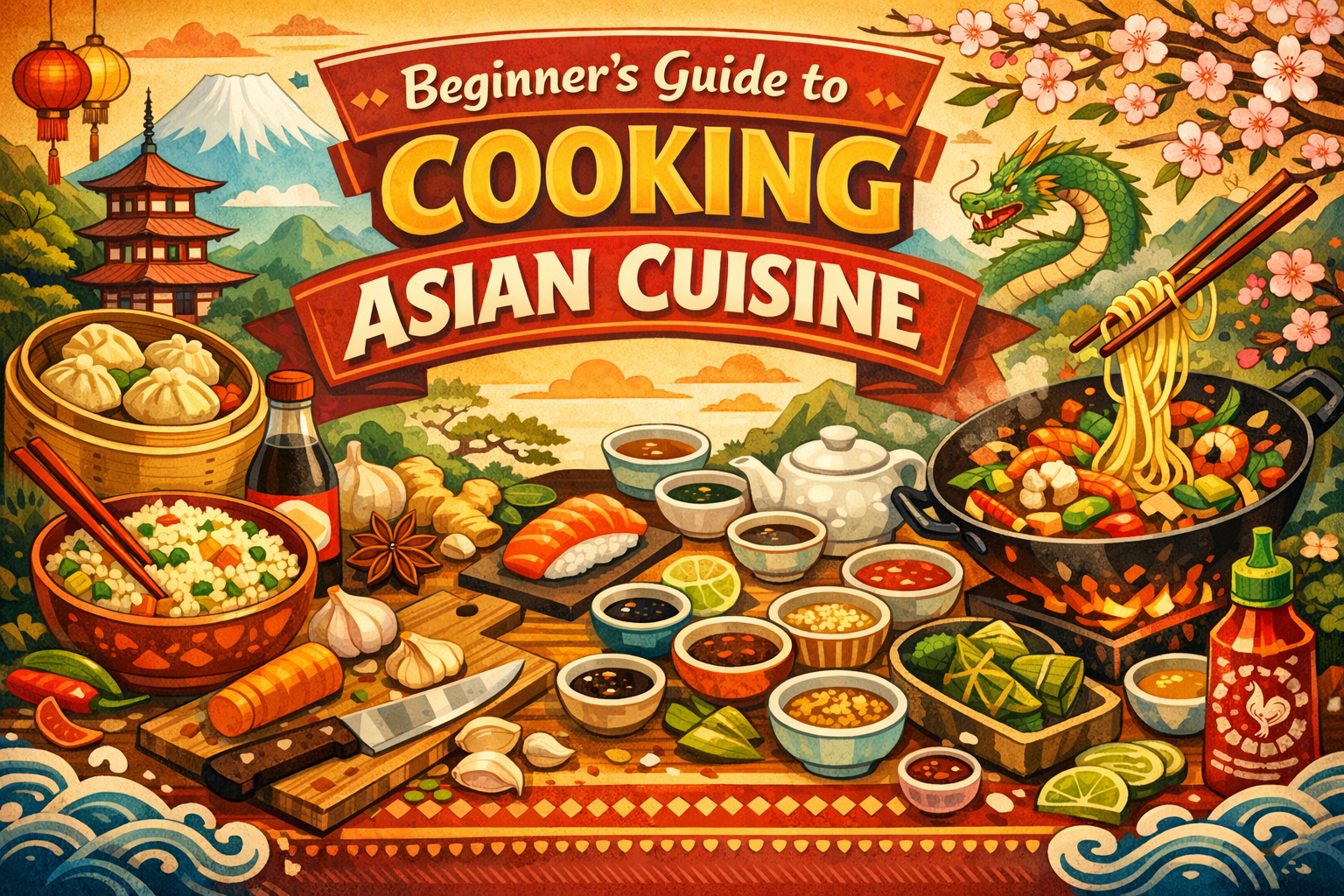

Let’s be honest about something: “Asian cuisine” is not a single cuisine. It’s a continent. A staggeringly diverse collection of culinary traditions spread across more than forty countries, thousands of distinct regional styles, and thousands of years of culinary history. Chinese cooking alone is so varied that a dish from Sichuan province and a dish from Cantonese tradition might share almost no ingredients, techniques, or philosophy.
So when someone says they want to learn to cook “Asian food,” the first honest thing to say is: which part? And the second honest thing is: you don’t have to choose just one.
This guide is designed for the home cook who has fallen in love with the flavors of Asian cooking — the umami depth of a Japanese miso broth, the bright heat of a Thai curry, the clean savory intensity of a Chinese stir-fry, the layered spice of an Indian dal — and wants to start cooking these things at home without feeling completely lost.
We’re going to build your foundation: the ingredients, the equipment, the core techniques, and the key flavor principles that appear across multiple Asian culinary traditions. Then we’ll move into beginner-friendly recipes from several different traditions — dishes chosen because they’re genuinely accessible, genuinely delicious, and teach you something important about the cuisine they come from. By the end, you’ll have a real starting point. The rest is practice, curiosity, and a well-stocked pantry.
Let’s begin.
Why Asian Cuisine Feels Intimidating — And Why It Shouldn’t
Here’s the thing that makes Asian cooking feel overwhelming to beginners from other culinary traditions: the ingredient list. A Thai red curry paste, a bottle of fish sauce, a jar of doubanjiang, a bag of dried shrimp, a block of fermented black beans — none of these are self-explanatory to someone who grew up cooking Italian or French or American food. They look unfamiliar, the labels are sometimes in other languages, and it’s not immediately obvious how to use them or what to substitute when you don’t have them.
But here’s the reframe: the same disorientation would happen to an Asian home cook encountering anchovies, capers, crème fraîche, and dried porcini mushrooms for the first time. Unfamiliarity is not complexity. Every culinary tradition has a core pantry of essential ingredients that seem exotic from the outside and completely obvious once you start using them regularly.
The second thing that makes Asian cooking feel daunting is technique — particularly wok cooking, which involves very high heat and fast movement that looks almost intimidating to watch. But most Asian home cooking is not done in a professional restaurant wok over a jet-engine burner. Most of it is remarkably achievable in a regular home kitchen with regular equipment, once you understand a few key adjustments.
Here’s a point worth making early: the recipes in this guide are not “authentic” in the sense of being historically verified against a specific village tradition. They’re honest, well-made, flavor-correct versions that are accessible to a beginner with a standard home kitchen. Respecting a cuisine starts with understanding it — not with performing a false purity you don’t have the background to actually deliver.
The Five Culinary Traditions We’ll Cover
Rather than giving you a surface-level tour of everything, we’re going to go a bit deeper into five culinary traditions that are the most accessible entry points for home cooks and the most commonly loved by people new to Asian cooking:
- Chinese (with a focus on Cantonese and simple stir-fry cooking)
- Japanese (focused on the foundational flavors of dashi, miso, and soy)
- Thai (the balance of sweet, sour, salty, spicy, and the role of fresh aromatics)
- Indian (the spice logic, the importance of tempering, and the dal as a masterclass)
- Korean (fermented flavors, gochujang, and the art of banchan)
Each of these traditions is deep enough to spend a lifetime exploring. What we’re building here is an entry point into each — enough to cook confidently and understand what you’re doing.
Part One: The Asian Pantry — What to Buy First
Before you cook a single dish, you need to stock the right ingredients. The good news: once you have the core pantry items, you can make a significant number of dishes across multiple traditions without buying anything else.
Here’s the honest shopping list — organized by tradition, with notes on which items overlap across multiple cuisines.
The Cross-Tradition Essentials (Buy These First)
These ingredients appear in multiple Asian culinary traditions and are worth having regardless of what you decide to focus on.
Soy sauce: The most fundamental flavoring agent across East and Southeast Asian cooking. For Chinese and stir-fry cooking, you need two types: light soy sauce (everyday seasoning, bright and salty) and dark soy sauce (thicker, slightly sweet, primarily used for color and depth). For Japanese cooking, Japanese soy sauce (shoyu) has a slightly different flavor profile — rounder and less sharp. For a beginner, start with a good all-purpose soy sauce and add the others as you go.
Sesame oil: Toasted sesame oil — dark amber in color — is a finishing oil, not a cooking oil. A few drops at the end of a stir-fry, stirred into a marinade, or drizzled over a bowl of noodles adds a deep, nutty richness that is genuinely irreplaceable. Use sparingly — it’s powerful.
Rice vinegar: Mild, slightly sweet vinegar that appears in Chinese, Japanese, Korean, and Thai cooking. Completely different from Western white wine vinegar in flavor profile — more delicate and less sharp. Don’t substitute.
Garlic and ginger (fresh): These two aromatics form the flavor base of an enormous portion of Asian cooking. Buy them fresh rather than jarred — the difference in flavor is significant, particularly for ginger. Freeze peeled ginger and grate it directly from frozen — it grates beautifully and lasts for months.
Neutral cooking oil: For stir-frying and high-heat cooking, you need an oil with a high smoke point — vegetable, sunflower, or peanut oil. Olive oil is not appropriate here.
Fish sauce: Essential for Thai and Vietnamese cooking, and also appears in Korean cuisine. Deeply savory, pungently salty, and irreplaceable in the dishes that call for it. It smells alarming straight from the bottle but transforms entirely when cooked or used as seasoning in a dish. Do not skip it or substitute soy sauce — the flavor profile is completely different.
Oyster sauce: A thick, slightly sweet, deeply savory sauce made from oysters and used extensively in Chinese and Vietnamese cooking. One of the most useful stir-fry additions — it adds depth and umami without heaviness.
Cornstarch: Used for thickening sauces and — critically — for velveting proteins in Chinese cooking (more on this technique shortly). Always on hand.
For Chinese Cooking
- Shaoxing rice wine: A Chinese cooking wine that adds complexity and removes the raw edge from proteins. Not expensive. Dry sherry is an acceptable substitute if unavailable.
- Doubanjiang (chili bean paste): The soul of Sichuan cooking — a fermented chili and broad bean paste that adds heat, depth, and umami. Used in Mapo tofu, dan dan noodles, and many braised dishes.
- Chili oil: A prepared oil infused with dried chilies and often Sichuan peppercorns. Used as a condiment, a finishing oil, and a flavor base.
- Five-spice powder: A ground spice blend (typically star anise, cloves, cinnamon, Sichuan pepper, fennel) used in marinades and braised dishes.
For Japanese Cooking
- Miso paste: Fermented soybean paste that comes in white (shiro — mild and sweet), yellow (awase — balanced), and red (aka — intense and salty) varieties. White miso is the most versatile starting point.
- Mirin: A sweet rice wine used primarily for seasoning and glazing. Don’t substitute — its sweetness and subtle sake notes are specific.
- Dashi: The Japanese stock made from kombu (dried kelp) and katsuobushi (dried bonito flakes). It’s the backbone of Japanese cooking — miso soup, ramen broths, noodle dipping sauces all begin here. You can buy instant dashi powder as a beginner-friendly starting point.
- Sake: Japanese rice wine used in cooking for flavor and to tenderize proteins. Dry sherry or dry vermouth work as approximate substitutes.
For Thai Cooking
- Coconut milk: Full-fat canned coconut milk is a different product from coconut cream. For curries, use full-fat — the flavor and texture are significantly better than reduced-fat versions.
- Thai curry paste: Red and green curry pastes are available pre-made from good-quality brands. Maesri and Mae Ploy are reliably authentic options. Making your own is rewarding eventually — but for a beginner, a good pre-made paste is a perfectly honest shortcut.
- Lime: Fresh lime juice is non-negotiable in Thai cooking. Bottled lime juice is a different, flatter flavor. Buy limes fresh and use them immediately.
- Fresh Thai basil, lemongrass, galangal, kaffir lime leaves: These aromatics give Thai cooking its characteristic freshness. All are increasingly available in Asian grocery stores and many supermarkets.
For Indian Cooking
- Whole spices: Cumin seeds, mustard seeds, coriander seeds, whole cardamom pods, cinnamon sticks, dried chilies. Indian cooking often starts with whole spices tempered in oil — this blooming process extracts the volatile oils in a way that pre-ground spices cannot replicate.
- Ground spices: Turmeric, cumin, coriander, garam masala, smoked paprika (for color), chili powder. Buy small quantities and replace frequently — ground spices go stale quickly.
- Ghee: Clarified butter with a high smoke point and a deep, nutty flavor. Used for tempering spices and enriching dishes. Butter is a workable substitute for some applications.
- Canned whole tomatoes and coconut milk: Appear across many Indian curry traditions.
- Dal (lentils): Red lentils (masoor dal), yellow split peas (chana dal), and green or brown lentils. Cheap, nutritious, and the foundation of one of the most important dishes in Indian cooking.
For Korean Cooking
- Gochujang: Fermented chili paste — sweet, spicy, and deeply savory all at once. The signature flavor of Korean cooking and completely unlike any other chili paste. Used in bibimbap, tteokbokki, marinades, and much more.
- Gochugaru: Coarsely ground Korean chili flakes — different from regular chili flakes in texture and flavor. Used in kimchi and countless other dishes.
- Doenjang: Korean fermented soybean paste — similar in concept to Japanese miso but stronger and earthier in flavor. The two are not interchangeable.
- Sesame seeds: Toasted and used as a finishing garnish across many Korean dishes.
Part Two: The Equipment — What You Actually Need
The good news: you don’t need specialized equipment to start cooking Asian food at home. Here’s the honest breakdown.
A Wok (or a Large, Heavy Skillet)
A wok is the single most useful piece of equipment for East and Southeast Asian cooking. Its round shape, sloping sides, and large cooking surface are designed for stir-frying — food moves easily, cooks quickly at high heat, and nothing traps steam as it would in a flat-bottomed pan.
If you’re buying a wok: carbon steel is the traditional and best choice. It heats quickly, develops a non-stick seasoning over time (like cast iron), and is inexpensive. Look for 30–35cm diameter. Round-bottomed woks are traditional but require a gas flame — for electric or induction stoves, flat-bottomed woks work correctly.
If you don’t have a wok: a large stainless steel or cast iron skillet is a workable substitute for most stir-fry dishes. The technique requires slight adjustments (less food at once to maintain heat), but the results are entirely respectable.
A Rice Cooker (Optional but Very Useful)
If you’re going to cook Asian food regularly, a rice cooker is one of the most genuinely useful small appliances you can own. It produces perfect rice every time, keeps it warm, and frees up a burner while you cook everything else. Not mandatory — stovetop rice is completely fine — but worth it if you cook rice several times a week.
A Fine-Mesh Strainer, a Spider Skimmer, and a Bench Scraper
These are small tools that come up again and again in Asian cooking: straining broths, skimming noodles, moving food from pan to bowl. Not glamorous. Worth having.
Good Chopsticks
Both for eating and for cooking — long wooden or bamboo chopsticks are excellent for stir-frying, testing oil temperature, and moving individual pieces of food in a pan with more precision than a spatula. Buy a set of cooking chopsticks (longer than eating chopsticks) if you cook Asian food regularly.
Part Three: Core Techniques That Appear Across Multiple Asian Cuisines
The Wok Hei Effect — and How to Chase It at Home
Wok hei — literally “breath of the wok” in Cantonese — is the smoky, slightly charred quality that distinguishes a properly stir-fried dish cooked over ferocious heat from a home version cooked on a domestic burner. It’s the flavor that makes restaurant Chinese stir-fry taste different from even a carefully made home version.
The honest truth: you cannot fully replicate wok hei on a home stove. Restaurant woks are powered by burners that produce 10–15 times the BTU of a typical home range. That gap is real.
But you can get close. The strategies: use a carbon steel wok or the heaviest pan you have. Preheat it over your highest burner setting for at least 3–4 minutes before adding anything. Cook in small batches — never more than half the wok’s capacity — so the temperature stays high rather than dropping when cold food hits hot metal. Don’t crowd the pan. And keep everything moving.
The result won’t be identical to a restaurant wok. But it will be a genuinely excellent stir-fry.
Velveting — The Chinese Technique That Changes Everything
If you’ve ever wondered why Chinese restaurant chicken is so incredibly tender while yours comes out dry and chewy, the answer is probably velveting. It’s a pre-cooking marinade treatment applied to proteins before stir-frying, and it’s one of the most useful techniques you’ll learn.
The basic velveting marinade for chicken: toss bite-sized pieces of chicken in a mixture of 1 egg white, 1 tablespoon cornstarch, 1 teaspoon soy sauce, and a splash of Shaoxing wine. Mix well and let sit for 15–30 minutes. The egg white and cornstarch coat the protein and create a protective layer that retains moisture during high-heat cooking. The result is silky, tender chicken that stays juicy even in a very hot wok.
The same principle applies to beef (add a tiny pinch of baking soda for extra tenderness) and shrimp. Once you know this technique, it’s impossible not to use it.
Tempering Spices — The Foundation of Indian Flavor
One of the things that makes Indian cooking taste different from any other cuisine in the world is the technique of tempering (also called tadka or chaunk): whole spices or aromatics are added to hot oil or ghee at the very beginning of cooking, allowing their volatile oils to bloom and infuse the fat before anything else goes in.
The sizzle that happens when mustard seeds hit hot ghee and begin to pop, or when cumin seeds go into oil and immediately release their fragrance — this is the beginning of almost every Indian dish. The fat carries those released flavors throughout everything that follows.
It happens fast and requires attention — mustard seeds pop (have a lid nearby), cumin seeds can go from fragrant to burnt in under a minute. But it’s learnable and utterly transformative.
Building a Thai Flavor Balance
Thai cooking operates on a principle of five flavor dimensions — sweet, sour, salty, spicy, and umami — that should be present in varying proportions in almost every dish. When a Thai dish tastes “off,” it’s almost always because one of these dimensions is under-represented or over-dominant.
The tools for each:
- Sweet: palm sugar (or light brown sugar as a substitute), ripe fruit, coconut milk
- Sour: fresh lime juice, tamarind, rice vinegar
- Salty: fish sauce (primarily), soy sauce, shrimp paste
- Spicy: fresh Thai chilies, dried chilies, chili paste
- Umami: fish sauce, shrimp paste, oyster sauce
Tasting and adjusting along this five-dimension framework is how you finish a Thai dish. Add lime if it’s too flat. More fish sauce if it needs depth. A pinch of sugar if it’s too sharp. This is a transferable framework that makes Thai cooking feel logical rather than mysterious.
Part Four: Ten Beginner Recipes Across Five Traditions
Chinese: Classic Egg Fried Rice
The first dish every beginner should master in Chinese cooking. It teaches wok technique, seasoning timing, and the magic of day-old rice — all in one fast, satisfying dish.
Key principle: Cold, day-old rice is essential. Freshly cooked rice has too much moisture and steams in the wok rather than frying. Make rice the night before or earlier in the day and refrigerate uncovered.
Ingredients (serves 2):
- 2 cups cooked, cold rice
- 3 eggs, beaten
- 3 tablespoons soy sauce
- 1 teaspoon sesame oil
- 2 spring onions, sliced
- 1 cup frozen peas or corn (thawed)
- 2 garlic cloves, minced
- 1-inch piece ginger, grated
- 2 tablespoons neutral oil
- Optional protein: chopped shrimp, diced chicken, or char siu pork
Method: Heat wok over highest flame until smoking. Add oil, swirl to coat. Add garlic and ginger and stir-fry 20 seconds — no longer. Push to the side. Add beaten eggs and scramble briefly, breaking into pieces before fully set. Add protein if using, stir-fry 2 minutes. Add cold rice, pressing it flat against the wok surface for 30 seconds, then stirring and pressing again — this is where crispiness develops. Add peas or corn. Season with soy sauce, tossing constantly. Remove from heat. Drizzle sesame oil over the top. Garnish with spring onions.
Chinese: Garlic and Ginger Bok Choy
The simplest possible Chinese vegetable dish — and one of the most satisfying. Teaches the fundamental stir-fry technique with vegetables and the proper use of oyster sauce.
Ingredients (serves 2 as a side):
- 4 heads baby bok choy, halved lengthwise
- 3 garlic cloves, thinly sliced
- 1-inch piece ginger, julienned
- 2 tablespoons oyster sauce
- 1 tablespoon soy sauce
- 1 teaspoon sesame oil
- 2 tablespoons neutral oil
- 2 tablespoons water or stock
Method: Blanch bok choy in salted boiling water for 60 seconds. Drain and arrange on serving plate cut-side up. Heat oil in wok over high heat. Add garlic and ginger, stir-fry 30 seconds until fragrant. Add oyster sauce, soy sauce, and water. Let bubble 30 seconds. Pour sauce over bok choy. Drizzle sesame oil on top. Serve immediately.
Chinese: Velveted Chicken Stir-Fry With Vegetables
This is the recipe where you practice velveting and see immediately why it matters.
For the velvet marinade:
- 500g chicken breast, thinly sliced against the grain
- 1 egg white
- 1 tablespoon cornstarch
- 1 tablespoon soy sauce
- 1 tablespoon Shaoxing wine Mix and marinate 20 minutes minimum.
For the stir-fry:
- 1 red bell pepper, sliced
- 2 heads broccoli florets, blanched briefly
- 3 garlic cloves, minced
- 1-inch ginger, grated
- 2 tablespoons oyster sauce
- 1 tablespoon soy sauce
- 1 teaspoon cornstarch mixed with 3 tablespoons water (slurry)
- 2 tablespoons neutral oil
- Sesame oil to finish
Method: Heat wok until smoking. Add oil. Add chicken in a single layer — don’t stir immediately. Let it sit 60 seconds to sear. Then stir-fry until just cooked through, 3–4 minutes. Remove from wok. In the same wok, stir-fry garlic and ginger 20 seconds. Add vegetables and stir-fry 2 minutes. Return chicken. Add oyster sauce and soy sauce. Add cornstarch slurry and toss — the sauce will thicken in 30 seconds. Finish with sesame oil.
Japanese: Miso Soup
The simplest Japanese dish and the one that teaches you the most about Japanese flavor principles. A good miso soup is deeply satisfying and takes about 10 minutes once you have the ingredients.
Ingredients (serves 4):
- 1 liter dashi stock (made from instant dashi powder as a beginner-friendly starting point, or from scratch with kombu and katsuobushi)
- 3–4 tablespoons white (shiro) miso paste
- 200g silken tofu, cubed
- 2 spring onions, thinly sliced
- Optional additions: rehydrated wakame seaweed, mushrooms, clams
Method: Bring dashi to a gentle simmer — never a boil, which drives off the delicate flavor. In a small bowl, whisk miso paste with a few tablespoons of hot dashi until dissolved — adding miso directly to the pot leaves lumps. Add dissolved miso to the pot and stir. Add tofu. Do not boil after adding miso — boiling destroys the live cultures and dulls the flavor. Ladle into bowls and top with spring onions.
Critical principle: Miso is always added at the very end, off the boil. This is the most important rule in miso soup and it applies across all miso-based cooking.
Japanese: Teriyaki Salmon
A genuinely beginner-friendly Japanese recipe with a four-ingredient glaze that produces extraordinary results. Teaches the Japanese balance of soy, mirin, and sake that appears in countless Japanese dishes.
Ingredients (serves 4):
- 4 salmon fillets, skin on
- 3 tablespoons soy sauce
- 3 tablespoons mirin
- 2 tablespoons sake (or dry sherry)
- 1 tablespoon sugar
- Neutral oil for cooking
- Steamed rice and sesame seeds to serve
Method: Combine soy, mirin, sake, and sugar in a small saucepan over medium heat. Stir until sugar dissolves, then simmer 3–4 minutes until slightly syrupy. Set aside. Pat salmon fillets dry — this is essential for proper searing. Season lightly with salt. Heat oil in a pan over medium-high heat. Place salmon skin-side down and cook 4–5 minutes without moving. Flip and cook 2 more minutes. Pour teriyaki glaze over the salmon in the pan and let it bubble and coat — 60–90 seconds, spooning it over the fish continuously. Serve over rice with sesame seeds.
Thai: Green Curry With Chicken and Vegetables
One of the most beloved Thai dishes and surprisingly approachable for a beginner using good pre-made curry paste.
Ingredients (serves 4):
- 500g chicken thigh, cut into bite-sized pieces
- 2 tablespoons Thai green curry paste (Mae Ploy or Maesri recommended)
- 2 cans (800ml) full-fat coconut milk
- 200g green beans, trimmed
- 1 medium zucchini, sliced
- 1 handful Thai basil leaves
- 3 kaffir lime leaves, torn (or 1 teaspoon lime zest)
- 2 tablespoons fish sauce
- 1 tablespoon palm sugar or light brown sugar
- 1 tablespoon vegetable oil
- Jasmine rice to serve
Method: Heat oil in a wide pan over medium heat. Add curry paste and fry, stirring constantly, for 2 minutes — this blooms the paste and deepens its flavor. Add coconut milk (shake cans well first) and stir to combine. Add kaffir lime leaves. Bring to a gentle simmer. Add chicken and cook 8–10 minutes until cooked through. Add vegetables and cook 3–4 minutes until just tender. Season with fish sauce and sugar — taste and adjust: more fish sauce for saltiness, more sugar to balance heat, more lime juice for brightness. Add Thai basil leaves at the very last moment before serving — they wilt instantly. Serve over jasmine rice.
Thai: Pad Thai
The most famous Thai noodle dish — and one that’s frequently made badly outside of Thailand. Here’s a version that comes close to the real thing.
Ingredients (serves 2):
- 200g flat rice noodles (soaked in cold water 30 minutes until pliable but not fully soft)
- 200g shrimp or chicken, or firm tofu
- 2 eggs
- 3 tablespoons tamarind paste (or 2 tbsp lime juice mixed with 1 tbsp water as a substitute)
- 2 tablespoons fish sauce
- 1 tablespoon palm sugar or brown sugar
- 2 garlic cloves, minced
- 2 shallots, sliced
- 2 spring onions, cut into 2-inch pieces
- A handful of bean sprouts
- 3 tablespoons neutral oil
- To serve: crushed peanuts, lime wedges, dried chili flakes, extra fish sauce and sugar on the side
Sauce: Combine tamarind paste, fish sauce, and sugar. Stir until sugar dissolves. Taste — it should be sour, sweet, and salty in balance. Adjust as needed.
Method: Heat wok over high heat until smoking. Add oil. Stir-fry protein until cooked through. Push to the side. Add garlic and shallots, stir-fry 30 seconds. Add drained noodles and sauce. Toss to combine — if noodles stick, add a splash of water. Push everything to the side. Crack eggs into the empty space, scramble briefly, then mix with noodles before fully set. Add bean sprouts and spring onions, toss 30 seconds. Plate immediately. Top with crushed peanuts. Serve with lime wedges and condiments on the side so each person can adjust their own balance.
Indian: Red Lentil Dal (Masoor Dal Tadka)
Dal is arguably the most important dish in Indian home cooking — eaten daily across the subcontinent in endless variations. This red lentil version is the most beginner-friendly: fast, forgiving, deeply nourishing, and a complete lesson in the tempering technique.
Ingredients (serves 4):
- 300g red lentils (masoor dal), rinsed until water runs clear
- 1 medium onion, finely diced
- 4 garlic cloves, minced
- 1-inch ginger, grated
- 2 medium tomatoes, chopped (or 1 can crushed tomatoes)
- 1 teaspoon ground turmeric
- 1 teaspoon ground cumin
- 1 teaspoon ground coriander
- ½ teaspoon chili powder (adjust to taste)
- Salt to taste
- 800ml water or light vegetable stock
- Fresh cilantro to serve
- Juice of ½ lemon
For the tadka (tempering):
- 3 tablespoons ghee or neutral oil
- 1 teaspoon cumin seeds
- ½ teaspoon mustard seeds
- 2 dried red chilies
- 4 garlic cloves, thinly sliced
- ½ teaspoon Kashmiri chili powder (or smoked paprika for a milder version)
Method: Combine rinsed lentils, water, turmeric, and a pinch of salt in a pot. Bring to a boil, skim off any foam, then reduce heat to medium-low. Simmer 15–20 minutes until lentils are completely soft and beginning to collapse. While lentils cook, sauté onion in a separate pan with oil over medium heat for 8 minutes until golden. Add garlic and ginger, cook 2 minutes. Add ground spices and cook 1 minute, stirring. Add tomatoes and cook 8–10 minutes until the mixture is jammy and the oil begins to separate at the edges — this is a sign the masala is properly cooked. Add the onion-tomato masala to the cooked lentils and stir well. Simmer together 5 minutes. Add lemon juice. Taste for salt.
The tadka: In a small pan, heat ghee over medium-high heat until shimmering. Add mustard seeds — they’ll pop within seconds (have a lid ready). Add cumin seeds — they’ll sizzle. Add dried chilies and sliced garlic, stir-fry 60 seconds until garlic is golden. Add Kashmiri chili powder, stir 10 seconds. Pour the entire sizzling tadka directly over the dal. It will hiss dramatically. Stir it in partially — leaving some swirled on top looks and tastes wonderful. Top with fresh cilantro and serve with basmati rice or warm naan.
Korean: Bibimbap (Mixed Rice Bowl)
Bibimbap — literally “mixed rice” — is one of the most flexible and nutritious dishes in Korean cooking. A bowl of warm rice topped with seasoned vegetables, a protein, a fried egg, and a generous spoonful of gochujang sauce. Each component can be made ahead and assembled at mealtime.
Ingredients (serves 2):
- 2 cups cooked short-grain white rice (warm)
- 2 eggs
- 100g beef bulgogi (see quick method below) or any cooked protein
- 1 cup spinach, briefly blanched and squeezed dry
- 1 medium carrot, julienned and briefly sautéed in sesame oil
- 1 zucchini, julienned and briefly sautéed
- 1 cup bean sprouts, briefly blanched
- 1 cup shiitake mushrooms, sliced and sautéed with soy sauce
- Toasted sesame seeds, sesame oil, soy sauce for seasoning each vegetable
Quick bulgogi: Thinly slice 150g beef ribeye or sirloin. Marinate 20 minutes in: 2 tablespoons soy sauce, 1 tablespoon sugar, 1 tablespoon sesame oil, 2 minced garlic cloves, 1 teaspoon grated ginger. Stir-fry over high heat 3–4 minutes until just cooked and slightly caramelized.
Gochujang sauce: Mix 2 tablespoons gochujang, 1 tablespoon sesame oil, 1 tablespoon rice vinegar, 1 tablespoon honey, and 1 teaspoon soy sauce. Thin with a splash of water if needed.
Assembly: Divide warm rice between two bowls. Arrange vegetables and beef in separate sections on top of the rice — the visual separation is part of the dish. Fry eggs sunny-side up and place one on top of each bowl. Add a generous spoonful of gochujang sauce. Drizzle with sesame oil. Sprinkle with sesame seeds. At the table, mix everything together vigorously — that’s the “bi” in bibimbap.
Korean: Doenjang Jjigae (Fermented Soybean Paste Stew)
A deeply comforting Korean stew that shows the power of fermented flavors. Earthy, savory, and warming — this is Korean home cooking at its most honest and nourishing.
Ingredients (serves 4):
- 3 tablespoons doenjang (Korean soybean paste)
- 1 tablespoon gochujang
- 800ml anchovy stock or vegetable stock
- 200g firm tofu, cut into cubes
- 1 medium zucchini, diced
- 100g mushrooms (shiitake or oyster), sliced
- 1 medium potato, diced small
- 1 small onion, diced
- 3 garlic cloves, minced
- Spring onions to garnish
- Steamed rice to serve
Method: Bring stock to a simmer in a pot. Dissolve doenjang and gochujang into the stock, whisking until smooth. Add potato and onion — they need the most cooking time, about 8 minutes. Add zucchini, mushrooms, garlic, and tofu. Simmer 5 more minutes until all vegetables are tender. Taste for seasoning — doenjang is salty, so add salt carefully. Ladle into bowls over rice and garnish with spring onions.
Note: This stew is traditionally simmered in a small earthenware pot (dolsot) that retains heat beautifully at the table. Any heavy pot works, but if you find a dolsot at an Asian kitchen supply store, it’s a worthwhile and inexpensive investment.
Part Five: Practical Tips for Becoming a Better Asian Home Cook
Visit an Asian Grocery Store and Wander
The single fastest way to expand your Asian pantry and your culinary knowledge is to spend an hour in a proper Asian grocery store — Chinese, Korean, Japanese, Indian, or Southeast Asian — without a specific list. Pick up things you’ve never heard of, read the labels, look up what they’re used for when you get home. The exposure to unfamiliar ingredients is more educational than any guide.
Don’t Worry About Authenticity to the Point of Paralysis
“Authentic” is a complicated concept in cuisine. Dishes that are now considered traditional often arrived in their current form through centuries of adaptation, migration, and the gradual integration of outside ingredients. The Thai use of chili, now utterly central to Thai cuisine, only arrived from the Americas in the 16th century. Japanese ramen has significant Chinese origins. The goal of cooking is delicious food, not historical performance.
Learn about authenticity. Respect the traditions you’re cooking from. Cook dishes as close to their origins as you reasonably can. And then cook them — without guilt about the substitutions your ingredients or kitchen require.
Mise en Place Is Not Optional in Asian Cooking
In Western cooking, you can often chop ingredients while something else is cooking. In stir-fry cooking, where things move in seconds rather than minutes, this is not possible. Everything must be prepped, measured, and in bowls beside the stove before the wok gets hot. Once you start, you cannot stop to chop a garlic clove — it’ll burn.
This principle of mise en place — French for “everything in its place” — is borrowed from professional kitchens but applies most urgently to high-heat Asian cooking. Prep everything. Then cook.
Cook Rice and a Simple Vegetable Side Every Night
The fastest way to get comfortable with Asian cooking is to make it daily — not necessarily a complex dish, but rice and a simple stir-fried or steamed vegetable. This builds rice-cooking intuition, trains your seasoning sense, and makes the pantry ingredients feel familiar rather than exotic. Within two weeks, the techniques that felt foreign will start to feel like second nature.
Taste Everything, Constantly
Asian cooking — particularly Thai, Vietnamese, and Korean food — relies on active tasting and adjustment more than most Western culinary traditions. The balance of sweet, sour, salty, and spicy is subjective and adjusted to personal preference at the stove. You cannot taste too often. Taste before you season, after you season, at the midpoint of cooking, and just before serving. The dish will tell you what it needs if you listen.
A Note on Health and Asian Cooking
Asian culinary traditions contain some of the most nutritious cooking styles in the world. Japanese cuisine — particularly traditional Okinawan food — has been studied extensively in the context of longevity and health outcomes. The Korean tradition of banchan (small fermented and pickled side dishes) provides probiotic-rich foods that support gut health. Indian dal provides exceptional plant-based protein, fiber, and iron. Thai and Vietnamese cooking centers fresh herbs, vegetables, and lean proteins with minimal processed fats.
The common threads: abundant vegetables, lean proteins, fermented foods, minimal refined sugar (outside of desserts), and cooking methods — steaming, stir-frying, simmering — that preserve nutrients far better than heavy frying or extended roasting.
Na prática: a diet that draws regularly from Asian culinary traditions is, by almost any nutritional measure, a very good thing. The ingredients, the cooking methods, and the portion sizes of traditional Asian home cooking align remarkably well with what nutritional science consistently identifies as beneficial for long-term health.
Conclusion: Start With One Dish, One Cuisine, and Go Deep
Here’s the advice I’d give every beginner who wants to learn Asian cooking: pick one cuisine and go deep before you go wide.
Not because the others aren’t worth exploring — they absolutely are. But because cooking skill builds through depth. Making the same stir-fry technique fifteen times teaches you more than making fifteen different dishes once each. The flavors of Japanese miso-based cooking start making intuitive sense after you’ve made miso soup, teriyaki salmon, and a simple miso-marinated chicken several times. The logic of Thai flavor balancing becomes natural when you’ve tasted and adjusted a curry paste dish enough times to understand what each condiment does.
Start anywhere in this guide. The egg fried rice is probably the best single starting point — it teaches the most fundamental wok technique, uses ingredients you already have, and rewards you with something genuinely delicious in under 30 minutes.
Then come back. Try the dal. Try the bibimbap. Try the miso soup on a cold evening. These aren’t just recipes — they’re entry points into culinary traditions that will give you years of pleasure, discovery, and increasingly excellent meals.
I’d love to hear from you: which of these cuisines are you most excited to explore? Have you tried any of these dishes before — and if so, what’s been your challenge? Drop it below. Every comment shapes the next article, and there’s a lot more Asian cooking left to cover together.
Disclaimer: This article is intended for informational and educational purposes only. Recipes have been adapted for home kitchen accessibility and may differ from strictly traditional preparations. Individual nutritional needs vary. For personalized dietary advice, consult a qualified healthcare professional