The Best Fluffy Pancakes recipe you will fall in love with. Full of tips and tricks to help you make the best pancakes.
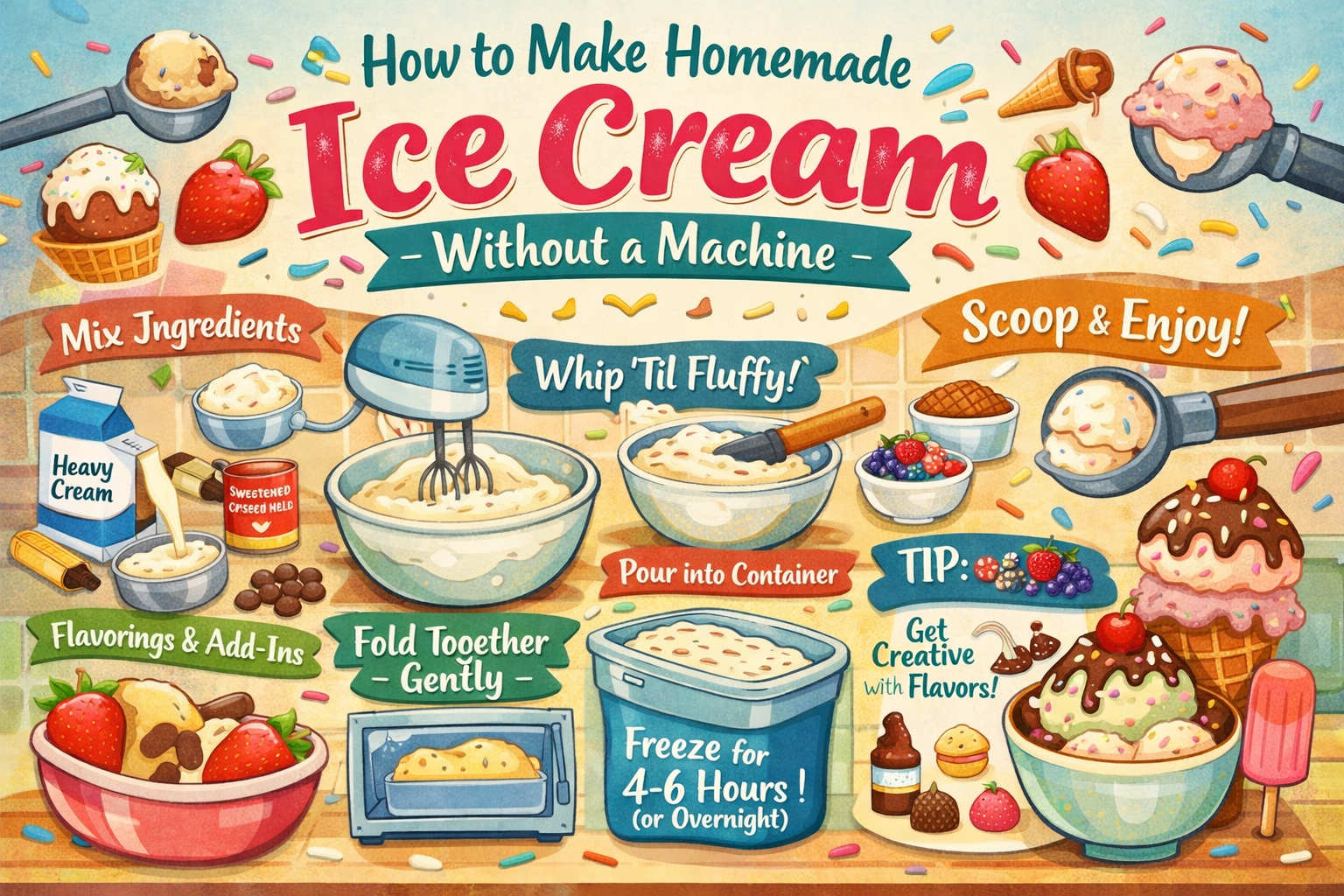

Picture this: it’s a hot afternoon, you’re craving ice cream, and then you remember — you don’t own an ice cream maker. And honestly, who does? Those machines are bulky, expensive, and end up collecting dust in the back of a cabinet after the novelty wears off. So you close the freezer, grab whatever’s there, and settle for something that isn’t quite what you wanted.
Sound familiar? Yeah. Most of us have been there.
Here’s what changes everything: you don’t need a machine to make genuinely good ice cream at home. Not even close. With the right technique and a handful of ingredients, you can make no-churn ice cream that’s rich, creamy, and packed with flavor — the kind of thing that makes people ask, “Wait, you made this yourself?”
This guide covers everything. The science behind why it works, the two main methods for making it, the most common mistakes and how to avoid them, and a collection of recipes that go way beyond basic vanilla. Whether you’re a complete beginner or someone who’s tried no-churn before and ended up with an icy, sad block of disappointment — this is for you.
Let’s make something good.
Why No-Churn Ice Cream Actually Works
Before we get into recipes, it helps to understand what’s actually happening — because once you get it, you can troubleshoot, improvise, and create your own flavors without following a recipe to the letter.
Traditional ice cream machines work by churning the mixture while it freezes. That constant movement breaks up ice crystals as they form, keeping them tiny. Tiny crystals = smooth, creamy texture. Big crystals = icy, grainy texture. That’s the whole game.
No-churn ice cream solves this problem differently. Instead of breaking up ice crystals through movement, it prevents large crystals from forming in the first place — by using ingredients with high fat and sugar content, both of which interfere with crystal formation.
The two main players:
Heavy whipping cream, whipped until fluffy. The air you beat into the cream creates thousands of tiny air bubbles that get trapped in the mixture. When it freezes, those bubbles act as a buffer, keeping the texture light and smooth rather than dense and icy.
Sweetened condensed milk. This stuff is magic for no-churn ice cream. It’s intensely sweet and thick, which lowers the freezing point of the mixture slightly and prevents large ice crystals from forming. It also adds richness and body that makes the finished product feel indulgent.
Together, these two ingredients create a base that freezes into something genuinely creamy — without any churning at all. The science is straightforward, and once you understand it, you’ll never feel like you’re missing something by not having a machine.
The Two Main Methods
Method 1: Whipped Cream + Sweetened Condensed Milk (The Classic No-Churn Base)
This is the most popular approach, and for good reason — it works beautifully, uses only a few ingredients, and takes about 15 minutes of active time before you put it in the freezer.
The basic ratio:
- 2 cups (480ml) heavy whipping cream, very cold
- 1 can (14oz / 397g) sweetened condensed milk
- 1–2 teaspoons vanilla extract
- A pinch of salt
The method: Pour the cold heavy cream into a large, chilled bowl. Beat with a hand mixer or stand mixer on medium-high speed until stiff peaks form — this usually takes 3–4 minutes. You’ll know it’s ready when you lift the beaters and the cream holds its shape without drooping.
In a separate bowl, combine the condensed milk, vanilla, and salt. Stir to mix. Then — and this is the important part — fold the condensed milk mixture into the whipped cream gently, using a rubber spatula. Don’t stir aggressively. Fold slowly, in big scooping motions from the bottom of the bowl, turning the bowl as you go. You want to preserve as much of that air as possible.
Pour into a freezer-safe container (a loaf pan works perfectly), smooth the top, cover with plastic wrap pressed directly against the surface, and freeze for at least 6 hours — overnight is ideal.
That’s it. That’s the base. Everything else — every flavor variation, every mix-in, every swirl — builds on this.
Method 2: Frozen Banana Base (The Dairy-Free Option)
Here’s an option that surprises a lot of people: frozen bananas, blended until smooth, create an incredibly creamy, ice cream-like texture without any dairy at all.
The science is slightly different here. Bananas are high in water content, but when they’re frozen and then blended in a high-powered blender or food processor, the cell walls break down in a way that creates a naturally smooth, soft-serve-like consistency.
The basic method:
- 3–4 ripe bananas (the riper the better — black spots are your friend)
- Optional: 2–3 tablespoons peanut butter, cocoa powder, frozen berries, or any flavor you want
Peel, slice, and freeze the bananas completely — at least 4 hours, preferably overnight. Place them in a food processor and blend. It will go through a few stages: chunky, then crumbly, then suddenly — smooth and creamy. Scrape down the sides as needed. Add your mix-ins and blend briefly to combine.
You can eat it immediately as soft serve, or transfer to a container and freeze for 1–2 hours for a scoopable texture.
This method is fantastic for a lighter, dairy-free option. It naturally tastes of banana, which works beautifully with chocolate, peanut butter, and tropical flavors. If banana isn’t your thing, it might not win you over. But if you’re open to it — it’s genuinely impressive for how simple it is.
6 No-Churn Ice Cream Recipes to Try Right Now
Let’s get to the actual recipes. Each one uses the classic no-churn base unless noted otherwise.
Recipe 1: Classic Vanilla Bean No-Churn Ice Cream
Sometimes the most reliable flavor is the one that lets the technique shine. This vanilla is clean, rich, and far better than anything in a basic grocery store tub.
Ingredients:
- 2 cups heavy whipping cream, cold
- 1 can sweetened condensed milk
- 2 teaspoons pure vanilla extract (or the seeds from 1 vanilla bean for extra luxury)
- A pinch of salt
Method: Follow the classic base method above. Pour into a loaf pan, press plastic wrap directly on the surface, and freeze overnight.
The secret: That pinch of salt isn’t optional — it amplifies the sweetness and rounds out the flavor in a way that makes people think something more complex is going on. Don’t skip it.
Recipe 2: Dark Chocolate Fudge Swirl
For the chocolate lovers. This one is intense, rich, and completely unapologetic about it.
Ingredients:
- 2 cups heavy whipping cream, cold
- 1 can sweetened condensed milk
- ¼ cup raw cacao powder or good-quality cocoa powder
- 1 teaspoon vanilla extract
- A pinch of salt
- For the fudge swirl: ½ cup dark chocolate chips + 3 tablespoons heavy cream, melted together
Method: Whip the cream as usual. Mix the condensed milk, cacao powder, vanilla, and salt in a separate bowl — whisk until completely smooth and no lumps remain. Fold into whipped cream. Pour half the mixture into your loaf pan. Drizzle half the chocolate fudge over the top. Add the remaining ice cream base. Drizzle the remaining fudge and use a skewer or knife to swirl it gently through — 3 or 4 slow strokes is enough. Don’t over-swirl or it blends in completely. Freeze overnight.
Worth noting: The quality of your cocoa powder genuinely matters here. Dutch-process cocoa gives a deeper, darker flavor. Standard natural cocoa works fine but is slightly more acidic and lighter in color.
Recipe 3: Strawberries and Cream
Fresh strawberries give this a natural, jammy sweetness that’s completely different from artificially flavored strawberry ice cream. It tastes like summer in a scoop.
Ingredients:
- 2 cups heavy whipping cream, cold
- 1 can sweetened condensed milk
- 1 teaspoon vanilla extract
- 1½ cups fresh strawberries, hulled and diced
- 1 tablespoon lemon juice
- 1 tablespoon sugar
Method: Toss the strawberries with lemon juice and sugar and let them sit for 20–30 minutes — they’ll release their juices and soften slightly into a rustic jam-like consistency. This step makes a big difference to the flavor depth. Fold the macerated strawberries (juices included) into the condensed milk, then fold that into the whipped cream. Freeze overnight.
Na prática: If you want a stronger pink color, blend half the strawberries before mixing in. The unblended half adds texture. Both ways are delicious — it depends on whether you like chunks in your ice cream.
Recipe 4: Salted Caramel
And here’s a point that separates this recipe from the others: salted caramel ice cream sounds ambitious, but it’s genuinely one of the simpler ones once you have caramel on hand. You can use store-bought caramel sauce to make it even faster.
Ingredients:
- 2 cups heavy whipping cream, cold
- 1 can sweetened condensed milk
- ½ cup good-quality caramel sauce (store-bought works fine)
- 1 teaspoon flaky sea salt (Maldon is ideal)
- 1 teaspoon vanilla extract
Method: Mix the condensed milk, caramel sauce, sea salt, and vanilla together. Taste it — it should be noticeably salty and sweet at the same time. Adjust the salt if needed. Fold into whipped cream. Pour into pan, drizzle a little extra caramel on top, and swirl gently. Freeze overnight. Before serving, sprinkle a pinch of flaky salt on each scoop.
Why it works: The salt doesn’t just add flavor — it enhances every other element, making the caramel taste more caramel-y and the cream taste richer. This is true of almost every dessert, honestly.
Recipe 5: Mango Coconut (Dairy-Free)
This one uses a modified no-churn method that swaps the heavy cream for full-fat coconut cream — making it completely dairy-free and giving it a tropical depth that’s hard to resist.
Ingredients:
- 2 cans (13.5oz each) full-fat coconut cream, refrigerated overnight
- 1 can sweetened condensed coconut milk (available at most health food stores)
- 2 cups frozen mango, thawed and blended smooth
- 1 tablespoon lime juice
- ½ teaspoon vanilla extract
Method: Open the refrigerated coconut cream cans carefully — don’t shake them. Scoop the solid cream off the top (the liquid underneath can be saved for smoothies). Whip the solid coconut cream with a hand mixer until fluffy, about 4–5 minutes. It won’t reach the same stiffness as dairy cream, but it will get airy. Blend the mango with lime juice until completely smooth. Mix with the condensed coconut milk. Fold into whipped coconut cream gently. Freeze overnight.
Honest note: This requires planning ahead — the coconut cream must be refrigerated overnight for the solid and liquid to separate. But the result is worth it. Creamy, fruity, and completely plant-based.
Recipe 6: Coffee Oreo Crunch
For the people who need coffee in every form possible — including frozen. This one has real depth from the espresso and a satisfying crunch from the cookie pieces.
Ingredients:
- 2 cups heavy whipping cream, cold
- 1 can sweetened condensed milk
- 2 tablespoons instant espresso powder (dissolved in 1 tablespoon hot water, then cooled)
- 1 teaspoon vanilla extract
- 10–12 Oreo cookies, roughly crushed (not fine crumbs — you want chunks)
Method: Mix the dissolved espresso, vanilla, and condensed milk together. Fold into whipped cream. Stir in the crushed Oreos gently — just a few folds to distribute them without crushing them further. Freeze overnight.
Vale dizer: The espresso powder doesn’t just add coffee flavor — it intensifies the chocolate notes already present in the base, making the whole thing taste richer and more complex. Even people who don’t love coffee tend to love this one.
The Most Common No-Churn Mistakes (And How to Fix Them)
If your no-churn ice cream didn’t turn out the way you hoped, here’s what probably went wrong:
Icy, grainy texture. The most common issue. Usually caused by undermixing the condensed milk into the cream, or by the cream not being whipped to stiff peaks before folding. Make sure your cream is very cold before whipping, and make sure it’s fully whipped before you add anything to it.
Flat, dense texture. You deflated the whipped cream when folding. Be patient and gentle — fold, don’t stir. Use a big spatula and think of it like folding paper.
Not sweet enough. The recipe probably needed more condensed milk. Taste your base before freezing and adjust — it should taste slightly sweeter than you’d want in the final product, because freezing dulls sweetness slightly.
Too sweet. A pinch more salt usually balances this out. The salt doesn’t make it taste salty — it makes the sweetness more balanced.
Won’t scoop cleanly. Let it sit at room temperature for 5–10 minutes before scooping. No-churn ice cream freezes firmer than churned ice cream because there’s no built-in air from a machine. A minute or two out of the freezer makes all the difference.
Tips to Take Your No-Churn Ice Cream to the Next Level
A few things worth knowing once you’re comfortable with the basics:
Add alcohol — just a little. A tablespoon of vodka, rum, or bourbon in your base lowers the freezing point slightly, making the finished ice cream softer and scoopier. You won’t taste the alcohol at all, but the texture improves noticeably.
Toast your mix-ins. Toasted nuts, toasted coconut, toasted crumbled cookies — heat brings out flavor compounds that make everything more complex and interesting. Takes 5 minutes in a dry pan and makes a real difference.
Layer, don’t just mix. Instead of stirring everything together, pour in layers and add swirls, drizzles, and chunks in between. The visual contrast when you scoop is beautiful, and the texture variety in each bite is more interesting.
Cover the surface tightly. Press plastic wrap directly against the surface of the ice cream before freezing. This prevents ice crystals from forming on top, which leads to that icy crust that’s unpleasant to dig through.
Final Thoughts: Your Freezer Is Your Machine
Let’s bring it home.
Making homemade ice cream without a machine isn’t a compromise — it’s a completely legitimate technique that produces genuinely delicious results. The no-churn method is fast, flexible, and requires almost no special equipment. A hand mixer, a freezer-safe container, and about 15 minutes of active time. That’s all.
The key things to remember: whip your cream to stiff peaks, fold gently, use the right base ratio, and give it enough time to freeze properly. Do those things, and you’ll get creamy, smooth, scoopable ice cream every single time.
What flavor are you going to make first? Are you going straight for chocolate, or are you someone who always starts with vanilla to see how a recipe performs? Tell me in the comments — I genuinely want to know.
And if you’ve got a flavor combination you’ve been wanting to try but weren’t sure how to make it work, drop it below. That could be the next recipe in this series.