The Best Fluffy Pancakes recipe you will fall in love with. Full of tips and tricks to help you make the best pancakes.
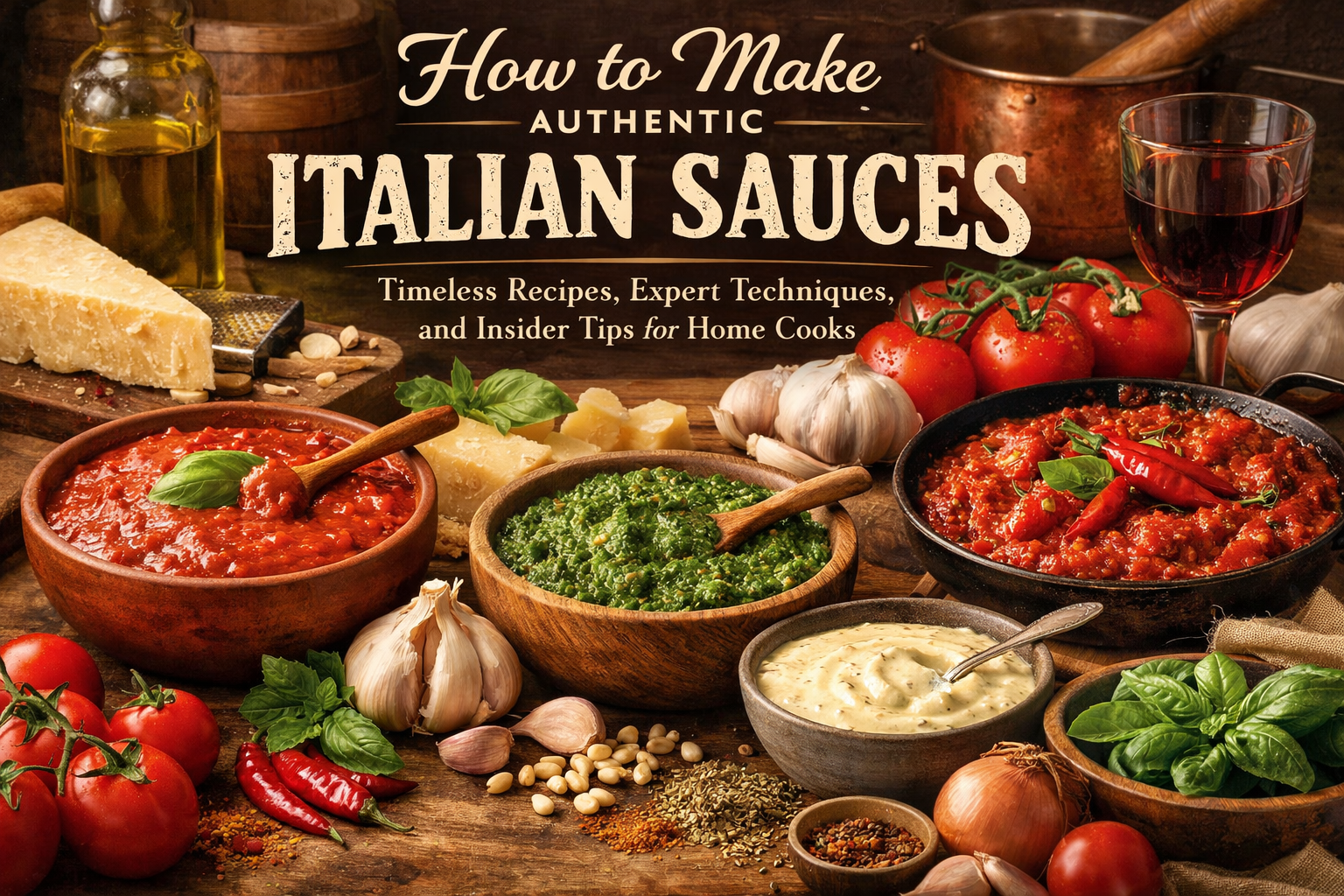

There’s a moment in every home cook’s life when they taste a plate of pasta in Italy — or at the table of someone who actually grew up making Italian food — and something shifts. The sauce is different. Not complicated, necessarily. Not even particularly long in its ingredient list. But it tastes deeper, more alive, more complete than anything they’ve managed at home.
And then they come back to their own kitchen and wonder: what am I missing?
The answer, most of the time, is not a secret ingredient. It’s not an exotic imported product you can only find in a specialty store in Milan. It’s understanding. It’s knowing why each step exists, what role each ingredient plays, and where most home cooks — often without realizing it — quietly abandon the principles that make Italian sauces so extraordinary.
This guide is going to fix that.
We’re going to cover the philosophy behind authentic Italian sauces, the essential techniques that appear across all of them, and six of the most important sauces in the Italian culinary tradition — from the deceptively simple Pomodoro to the deeply complex Bolognese — with proper recipes, the reasoning behind each method, and the insider details that most recipes leave out. By the time you finish reading, you’ll understand Italian sauces at a different level. And the difference will show up on the plate.
The Italian Philosophy of Sauce: Why Less Is More, and Why That’s Harder Than It Sounds
Here’s the thing that surprises most people when they start studying Italian cooking seriously: the discipline is not in complexity. It’s in restraint.
Italian culinary tradition — particularly in the south, where many of the world’s most iconic pasta sauces originate — operates on a philosophy of letting a small number of excellent ingredients speak for themselves. A great Pomodoro sauce has five ingredients. A Cacio e Pepe has three. Aglio e Olio — garlic, olive oil, pasta water, and parsley — is considered one of the great pasta dishes in the world.
This restraint is actually harder to execute well than complexity, because there’s nowhere to hide. When a sauce has twelve ingredients, a mediocre tomato gets covered up by everything else around it. When a sauce has five, that tomato is front and center. Every ingredient carries its full weight.
Here’s a point worth making: this is why ingredient quality matters so profoundly in Italian cooking. A San Marzano tomato from a good producer is not interchangeable with a generic canned tomato. Extra-virgin olive oil that’s genuinely cold-pressed and fresh is not the same as something that’s been sitting on a supermarket shelf under fluorescent light for two years. Parmigiano-Reggiano from a wheel aged 24 months is not the same as pre-grated Parmesan in a green canister.
None of this means you need to spend excessively on every ingredient. But it does mean that when a sauce has five components, upgrading even one of them — particularly the tomatoes or the olive oil — makes a noticeable difference in the result.
The other pillar of Italian sauce philosophy is this: technique over shortcuts. Soffritto cooked properly takes twenty minutes over low heat. Bolognese simmers for three hours because it needs three hours. Tomato sauce made with good tomatoes, correct heat, and the right amount of time produces something that no amount of herbs, spices, or seasoning can simulate from a shortcut approach. The Italians have had eight hundred years to figure out that patience, in cooking, is not optional.
The Foundations: Four Techniques Every Italian Sauce Relies On
Before we get to specific sauces, let’s talk about the underlying techniques that appear repeatedly across the Italian sauce-making tradition. Master these, and the individual recipes become much easier to understand and execute.
1. Soffritto: The Flavor Foundation
Soffritto — from the Italian verb soffriggere, meaning to “under-fry” — is the base of aromatic vegetables cooked slowly in fat until soft, sweet, and deeply flavorful. At its most classic, it’s onion (or a combination of onion, carrot, and celery — il trinity of Italian cooking) cooked in olive oil over low to medium-low heat for fifteen to twenty minutes.
The difference between a properly made soffritto and a rushed one is significant. Properly cooked soffritto is golden, soft, and sweet — the sugars in the vegetables have caramelized gently, the raw sharpness of the onion has completely disappeared, and the whole mixture has developed a depth that becomes the invisible backbone of the sauce. A rushed soffritto — cooked over high heat for five minutes — has none of this. It just tastes like cooked onion.
Almost every Italian meat sauce, ragu, and many tomato sauces begin here. Don’t rush it.
2. Using Pasta Cooking Water
This is probably the most consistently underused technique in home Italian cooking, and it’s the one thing that explains why restaurant pasta often looks silkier and more cohesive than what most people make at home.
Pasta cooking water is starchy, salted, and hot — the perfect emulsifier for bringing a sauce and pasta together into a unified dish rather than pasta floating in a pool of sauce with nothing binding them. A splash added to almost any pasta sauce as it finishes cooking loosens it, extends it, and helps it cling to the pasta in a way that water or additional olive oil alone can’t replicate.
The technique: before draining your pasta, reserve at least a full cup of cooking water. Don’t forget — once it’s down the drain, it’s gone. Add it to the sauce gradually (not all at once) while tossing the pasta and sauce together.
3. Finishing Pasta in the Sauce
Properly made Italian pasta dishes don’t just have sauce ladled on top of pasta. The pasta finishes cooking in the sauce — transferred from the boiling water 1–2 minutes before it’s fully cooked, with some pasta water added, and then tossed and stirred together until the sauce has absorbed into the pasta and everything is cohesive.
This step makes a meaningful difference. The pasta absorbs flavor from the sauce. The sauce thickens slightly from the pasta starch. The final dish is integrated rather than assembled. It adds about three minutes to the process and produces a result that’s qualitatively different from pasta with sauce on top.
4. Salting Pasta Water Generously
The water you cook pasta in should taste noticeably salty — “like the sea” is the Italian instruction, which is perhaps slightly hyperbolic, but the direction is right. Under-salted pasta water produces pasta that tastes flat and bland regardless of how good the sauce is. The pasta itself needs to be seasoned.
The practical guide: for every 500g of pasta, use 4–5 liters of water and 2 full tablespoons of salt. This sounds like a lot because it is — and it makes a real, detectable difference.
The Six Sauces Every Italian Cook Knows
Sauce 1: Salsa di Pomodoro — The Foundation of Everything
There is no more fundamental Italian sauce than Pomodoro. And there is no sauce that better demonstrates the Italian principle that simplicity done right is more powerful than complexity done average.
A proper Pomodoro has five ingredients: good tomatoes, olive oil, garlic, salt, and fresh basil. That’s it. The recipe that follows is not a shortcut — it’s the actual thing.
The Tomato Question
The most important decision in a Pomodoro is the tomato. San Marzano tomatoes — the elongated, low-seed, low-acid variety grown in the volcanic soil near Naples — are the traditional choice for a reason. Their flesh is dense and sweet, their acidity is balanced, and they require less cooking time to develop flavor than most alternatives. Look for “DOP” on the label (Denominazione di Origine Protetta), which certifies the tomatoes are genuinely grown in the San Marzano region.
If San Marzanos aren’t available, choose whole peeled tomatoes with the fewest ingredients on the label — tomatoes and salt, ideally nothing else.
The Cold Oil Method vs. The Sauté Method
There are two main schools of Pomodoro preparation in Italy, and both are correct in different contexts:
The cold oil method (most associated with southern Italy): raw garlic goes into cold olive oil, heat is applied together, and tomatoes are added as the garlic becomes fragrant but before it colors. The result is a sweeter, more delicate sauce.
The sauté method: garlic is gently cooked in already-heated oil until just golden before the tomatoes are added. The result is slightly more intense and toasty.
For a beginner, the cold oil method is more forgiving — it’s harder to burn the garlic when you start cold.
Recipe: Salsa di Pomodoro
Serves 4, with 400g pasta
- 2 cans (800g total) whole peeled San Marzano tomatoes
- 4 tablespoons extra-virgin olive oil (genuine quality here matters)
- 3–4 garlic cloves, lightly crushed but left whole
- 1 teaspoon salt (adjust to taste)
- A generous handful of fresh basil leaves
- Optional: a pinch of sugar if the tomatoes are more acidic than expected
Method: Crush the tomatoes by hand directly into the pan, squeezing each one through your fingers and leaving some texture — not a smooth purée. Place cold olive oil and garlic in a wide, shallow pan. Turn heat to medium-low and let the garlic infuse the oil slowly, pressing it gently with a wooden spoon, for about 8 minutes. You want it fragrant and very faintly golden — not brown. Add the crushed tomatoes and salt. Increase heat to medium and let the sauce simmer, partially covered, for 20–25 minutes, stirring occasionally. The sauce should thicken slightly and deepen in color. Remove garlic (or leave it for more flavor). Take the pan off the heat and tear fresh basil leaves directly into the sauce. Taste for salt and sugar. Finish cooked pasta in the sauce with a splash of pasta water.
Insider detail: Never add dried basil to a Pomodoro. The fresh basil added off the heat is not decorative — it’s structural to the flavor profile. Dried basil produces a completely different (and inferior) result.
Sauce 2: Ragù Bolognese — The One Everyone Gets Wrong
Let’s address this directly: what most of the world calls “Bolognese” — heavily tomato-ed, thick, vigorously seasoned ground beef sauce — is not Bolognese. It’s a reasonable pasta sauce in its own right, but it’s not what Bolognese actually is.
Authentic Ragù Bolognese, as codified by the Italian Academy of Cuisine in 1982, is a meat-forward sauce where tomato plays a supporting role rather than the starring one. It’s made with a mixture of minced beef and pork (or beef and pancetta), softened slowly with soffritto, enriched with white wine and whole milk, and then simmered — with only a small amount of tomato — for a minimum of two hours and ideally three or four.
The result is deeply savory, unctuous, and complex — nothing like the tomato-heavy versions most people know. It’s also one of the most satisfying things you’ll ever cook.
Why the Milk?
This is the element that confuses most people encountering the real recipe for the first time. Milk — added after the wine and before the tomato — serves two purposes: it tenderizes the meat (the mild acidity breaks down the muscle fibers slightly) and it adds a subtle sweetness and creaminess that rounds out the sauce’s savory intensity. It cooks off almost entirely, leaving no dairy flavor behind — just a richer, more rounded texture.
Don’t skip it. Don’t substitute cream. Use whole milk.
The Long Simmer
Bolognese is a patience test. The minimum respectful cooking time is two hours. Three is better. Four, low and slow, is the professional standard. During this time, the meat breaks down into the soffritto, the liquids absorb and concentrate, and the sauce develops a depth that’s simply not achievable in less time. You can’t rush it by turning up the heat — high heat evaporates the liquid too fast and toughens the meat before it has time to become tender.
Recipe: Ragù Bolognese
Serves 6, traditionally served with tagliatelle or used in lasagna
- 300g minced beef (not lean — 15–20% fat)
- 200g minced pork (or 150g pancetta, finely chopped)
- 1 medium onion, finely diced
- 2 celery stalks, finely diced
- 1 medium carrot, finely diced
- 4 tablespoons extra-virgin olive oil
- 2 tablespoons butter
- 150ml dry white wine
- 150ml whole milk
- 2 tablespoons tomato paste (not a large quantity — this is the entire tomato component)
- 200ml beef broth (plus more as needed during cooking)
- Salt and black pepper
Method: In a heavy-based pan or Dutch oven, heat olive oil and butter over medium-low heat. Add the soffritto vegetables (onion, celery, carrot) and cook, stirring occasionally, for 20 minutes until very soft and just beginning to color. Increase heat to medium-high. Add the minced beef and pork, breaking up with a wooden spoon, and cook until the liquid they release has fully evaporated and the meat is beginning to brown — this takes longer than most people expect, 12–15 minutes. Season with salt and pepper. Add white wine and stir, scraping up any browned bits. Let the wine evaporate completely. Add the milk and stir. Let the milk evaporate completely — another 10 minutes or so. Stir in the tomato paste and beef broth. Reduce heat to the lowest setting. Partially cover and simmer for a minimum of 2 hours, adding splashes of broth or water whenever the sauce looks dry. The finished sauce should be moist but not liquid, deep golden-brown, and smell extraordinarily rich. Taste for salt. Serve tossed with fresh tagliatelle and Parmigiano-Reggiano grated at the table.
Sauce 3: Cacio e Pepe — The Three-Ingredient Test of Technique
If Bolognese is a patience test, Cacio e Pepe is a technique test. Three ingredients: Pecorino Romano, black pepper, and pasta cooking water. And yet it’s one of the most demanding sauces to get right, because the technique is everything.
The goal is a silky, creamy sauce that coats every strand of pasta without a drop of cream or butter anywhere. This creaminess comes entirely from the emulsification of aged cheese with starchy pasta water. And achieving that emulsification — preventing the cheese from clumping into a rubbery mass — requires control, speed, and the right starch concentration in your pasta water.
The Cheese
Authentic Cacio e Pepe uses Pecorino Romano — a sharp, salty, aged sheep’s milk cheese — either alone or combined with a smaller amount of Parmigiano-Reggiano for balance. Pre-grated cheese will not work. The cheese must be freshly grated on the finest setting of your grater, almost to a powder, to melt correctly into the sauce.
The Pepper
Freshly cracked black pepper, toasted briefly in the pan before the pasta arrives, is not optional. The toasting blooms the pepper’s essential oils and gives the sauce its characteristic warmth. Pre-ground pepper produces a flat, dusty result.
Recipe: Cacio e Pepe
Serves 2
- 200g spaghetti or tonnarelli (a thick square-cut pasta traditional in Rome)
- 80g Pecorino Romano, finely grated (plus more to serve)
- 20g Parmigiano-Reggiano, finely grated
- 2 teaspoons whole black peppercorns, coarsely cracked
- Salt for pasta water
Method: Cook pasta in generously salted boiling water. Before draining, reserve at least 1 full cup of the starchy cooking water — this is critical. In a large pan over medium heat, toast the cracked pepper for 60 seconds until fragrant. Add 2–3 tablespoons of pasta water to the pan (this stops the pepper from burning and starts your sauce base). Transfer the pasta to the pan using tongs 2 minutes before it’s fully cooked, with some of its water clinging to it. Toss vigorously over medium-low heat.
Remove the pan completely from the heat — this is important, as too much heat causes the cheese to seize. Add the grated cheese in two or three additions, tossing constantly and adding splashes of pasta water between additions. The goal is a creamy, fluid sauce that clings to the pasta. Keep tossing, keep adding small amounts of water if needed, until you reach that silky consistency. Serve immediately with extra Pecorino grated on top.
The most common mistake: adding cheese over too much heat or all at once, which causes it to clump. Off the heat, in small additions, with patient tossing — that’s the method.
Sauce 4: Amatriciana — Rome’s Other Great Sauce
Amatriciana comes from the mountain town of Amatrice, northeast of Rome, and it is one of the most precisely defined and fiercely protected recipes in Italian culinary tradition. Romans argue about it. Legislation has been proposed to define it officially. This level of seriousness about a pasta sauce is, honestly, very Italian and entirely appropriate.
The authentic version uses guanciale (cured pork cheek), Pecorino Romano, San Marzano tomatoes, white wine, and optionally a small amount of chili. That’s it. No onion. No garlic. No extra herbs.
Guanciale vs. Pancetta
Guanciale — cured pork cheek — has a higher fat content and a more intensely porky, slightly gamey flavor than pancetta. It renders down to silky, slightly transparent pieces with crispy edges and an incomparable depth of flavor. If you can find it (Italian delis and specialty food shops usually carry it), use it. If you genuinely cannot source it, thick-cut pancetta is the accepted substitute. Do not use bacon — the smoked flavor competes with and distorts the sauce’s flavor profile.
Recipe: Sugo all’Amatriciana
Serves 4, traditionally served with rigatoni or bucatini
- 150g guanciale (or thick-cut pancetta as a substitute), cut into strips or small lardons
- 400g whole peeled San Marzano tomatoes, crushed by hand
- 100ml dry white wine
- 60g Pecorino Romano, finely grated
- ½ teaspoon dried chili flakes (optional but traditional)
- Black pepper
- Salt (used carefully — guanciale and Pecorino are both salty)
Method: In a cold pan, add the guanciale strips. Turn heat to medium-low and render slowly — 8–10 minutes — until the fat has melted out and the pieces are golden and slightly crispy at the edges. Add chili flakes if using, cook 30 seconds. Add white wine and let it evaporate completely, about 3 minutes. Add the hand-crushed tomatoes and season with a small amount of black pepper (hold salt until the end — the guanciale and cheese will contribute significant saltiness). Simmer on medium heat for 15–20 minutes until the sauce thickens and the fat from the guanciale has emulsified into the tomato, giving it a glossy, rich appearance. Taste for salt. Toss with cooked pasta and pasta water, finish with Pecorino Romano.
Insider detail: The rendered fat from the guanciale — which might look excessive in the pan — is not something to drain away. It emulsifies with the tomato into the sauce’s silky backbone. Removing it produces a flat, thin sauce.
Sauce 5: Pesto Genovese — The Sauce You’re Probably Making Wrong
Pesto is one of the most frequently made and most frequently misrepresented Italian sauces in home kitchens worldwide. Most versions — blended too aggressively in a food processor until the basil turns grey-green and bitter, made with the wrong cheese or low-quality olive oil — have little in common with the real thing.
Authentic Pesto Genovese is made from young Ligurian basil (smaller-leaved, more delicate, less anise-forward than the large-leaf basil most people use), pine nuts, garlic, Ligurian extra-virgin olive oil (lighter and sweeter than Tuscan varieties), Parmigiano-Reggiano, Pecorino Sardo, and salt. Traditionally, it’s made in a marble mortar, not a food processor — the crushing action preserves the basil’s delicate essential oils rather than tearing and oxidizing them.
The Food Processor Problem
The food processor is faster. But the high-speed blades heat the basil through friction, which accelerates oxidation — turning it darker, slightly bitter, and less vibrant. If you use a food processor, chill the blade and bowl in the freezer first, add ice water to the basil, and pulse in short bursts rather than running continuously. This minimizes (though doesn’t entirely eliminate) the heat issue.
For the finest results: use a mortar and pestle. It takes about fifteen minutes of patient work, but the texture, color, and flavor are noticeably superior.
Recipe: Pesto Genovese
Makes enough for 400g pasta
- 60g fresh basil leaves (young, small-leaved if possible)
- 30g pine nuts
- 1 small garlic clove
- 40g Parmigiano-Reggiano, finely grated
- 20g Pecorino Sardo (or use all Parmigiano if unavailable)
- 80–100ml extra-virgin olive oil (light, mild variety preferred)
- A pinch of coarse salt
Mortar method: Begin by crushing the garlic with the coarse salt in the mortar until it forms a paste. Add pine nuts and grind to a rough paste. Add basil leaves a handful at a time, grinding in a circular motion rather than pounding — this bruises rather than tears the leaves. Add the grated cheeses and incorporate. Finally, stir in the olive oil gradually until you have a bright green, slightly textured paste. Taste for salt.
Food processor method: Pulse garlic, pine nuts, and salt first. Add chilled basil and pulse briefly. Add cheeses and pulse again. Stream in olive oil while pulsing — stop as soon as it’s combined. The sauce should be slightly textured, not completely smooth.
Critical technique: Never heat pesto. Add it to pasta off the heat or after removing from the burner, with a splash of pasta water to loosen and emulsify. Cooked pesto loses its freshness and brightness almost instantly.
Sauce 6: Aglio e Olio — The Genius of Nothing
The last sauce in this guide is arguably the most important one to master, because it teaches something that applies to every other Italian sauce in this guide and beyond: that the quality of your execution of a simple thing determines everything.
Aglio e Olio — garlic and oil — is pasta with nothing but garlic, olive oil, chili, parsley, and pasta water. No cheese. No tomato. No soffritto. Just a perfect emulsification of olive oil and pasta water, perfumed with slowly cooked garlic and lifted by parsley and chili.
It is one of the fastest pasta dishes in the Italian repertoire — 20 minutes from start to table. It is also the dish that most clearly reveals whether a cook understands the fundamentals.
The Garlic Question
This sauce lives or dies on the garlic. It needs to be sliced thin — not minced — and cooked slowly in olive oil from cold until pale golden and fragrant. Golden means sweet and nutty. Brown means bitter. The margin between those two states is about ninety seconds. Watch it constantly.
The Emulsification
The creaminess of a properly made Aglio e Olio doesn’t come from any dairy product. It comes from rapidly tossing the pasta, the garlicky oil, and pasta water together until the starch in the water and the fat in the oil form an emulsion — a unified, slightly creamy sauce that coats the pasta rather than pooling beneath it. This tossing step requires energy and speed. Use tongs, keep the heat medium-low, add pasta water in small increments.
Recipe: Spaghetti Aglio, Olio e Peperoncino
Serves 2
- 200g spaghetti
- 6 tablespoons extra-virgin olive oil (good quality — this is the entire flavor base)
- 4 garlic cloves, thinly sliced
- 1–2 dried chili peppers (or ½ teaspoon chili flakes), to taste
- A generous handful of fresh flat-leaf parsley, roughly chopped
- Salt for pasta water
- Reserved pasta cooking water
Method: Cook spaghetti in heavily salted boiling water. While it cooks, place cold olive oil and sliced garlic in a wide pan over medium-low heat. Cook slowly, 8–10 minutes, until the garlic is pale golden and fragrant — stir frequently and watch carefully. Add chili and cook 1 more minute. Add 2–3 tablespoons of pasta water to the pan and let it bubble and emulsify with the oil. Transfer pasta to the pan 2 minutes before fully cooked, using tongs, with some water clinging to it. Toss vigorously over medium-low heat, adding pasta water in small splashes, until the sauce is creamy and clings to the pasta. Remove from heat. Add parsley and toss again. Taste for salt. Serve immediately — this dish does not wait.
Ingredient Upgrades That Make a Real Difference
A few specific upgrades worth making if you cook these sauces regularly:
San Marzano tomatoes, DOP certified. Not every tomato sauce recipe requires them, but for Pomodoro and Amatriciana especially, the quality difference is significant. Look for the DOP seal.
Parmigiano-Reggiano in block form. Buy a wedge and grate it fresh. The pre-grated versions contain anti-caking additives and have already begun losing their volatile aromatic compounds. Fresh-grated Parmigiano smells like something worth eating. Pre-grated Parmesan smells like packaging.
A genuinely good extra-virgin olive oil. Look for a harvest date on the bottle — olive oil is best within 18 months of harvest. If there’s no harvest date, the oil is probably old. For finishing and dressings, a peppery Tuscan oil is excellent. For cooking aromatics gently, a lighter Ligurian or southern Italian oil works beautifully.
Guanciale. If you cook Italian food regularly and have access to a good Italian deli, buy guanciale and keep it in your fridge. It transforms Amatriciana and Carbonara from good to genuinely extraordinary.
A Word on Health: Italian Sauces and Balanced Eating
Since this blog focuses on health alongside recipes, it’s worth addressing this directly.
Italian sauces — particularly the tomato-based ones — are among the most nutritious foundations in European cooking. San Marzano tomatoes are rich in lycopene (especially bioavailable when cooked in olive oil), Vitamin C, and potassium. Extra-virgin olive oil provides monounsaturated fats, polyphenols, and Vitamin E. Fresh herbs contribute antioxidants. Even the meat-based ragù provides iron, zinc, and B vitamins.
The portions in Italian food culture are also worth noting. In Italy, pasta is typically served as a primo — a first course in moderate quantity — followed by a protein dish. The pasta portion is smaller than what most people serve in a single bowl. The richness of the sauce makes a smaller amount satisfying.
Na prática: these are real, whole-ingredient sauces made from food rather than processed products. A generous portion of Bolognese over fresh tagliatelle, eaten as part of a balanced diet with vegetables and fresh produce throughout the day, is not a dietary problem. It’s a meal worth eating with pleasure.
Conclusion: The Sauces Are Not the Destination — They’re the Beginning
Here’s what I want you to take from this guide:
The six sauces we covered — Pomodoro, Bolognese, Cacio e Pepe, Amatriciana, Pesto Genovese, and Aglio e Olio — are not just recipes. They’re a complete education in Italian cooking principles. The patience of a proper soffritto. The discipline of restraint. The technique of emulsifying cheese with pasta water. The difference between a garlic that’s golden and one that’s brown. These lessons carry into everything you’ll ever cook in this tradition.
Start with Aglio e Olio. It’s the fastest, the most forgiving in terms of ingredients, and the most immediately instructive about emulsification and garlic technique. Then try the Pomodoro. Then, on a weekend when you have three hours and something to listen to — the Bolognese.
Cook each one more than once. The second time will be better than the first. The third time better still. That’s how this kind of cooking works.
I’d love to hear from you: which of these sauces are you going to try first? Have you made any of them before — and if so, what’s been your biggest challenge? Drop it in the comments. Real questions and real kitchen experiences are always welcome here.
And if there’s a specific Italian dish or sauce you’ve been wanting to master — Carbonara, Arrabbiata, Genovese di cipolla, a proper lasagna — let me know below. I’ll cover it.
Disclaimer: This article is intended for informational and educational purposes only. Traditional Italian recipes vary significantly by region and family. The versions presented here draw from broadly recognized culinary traditions. For specific dietary concerns or health conditions, consult a qualified professional.