The Best Fluffy Pancakes recipe you will fall in love with. Full of tips and tricks to help you make the best pancakes.
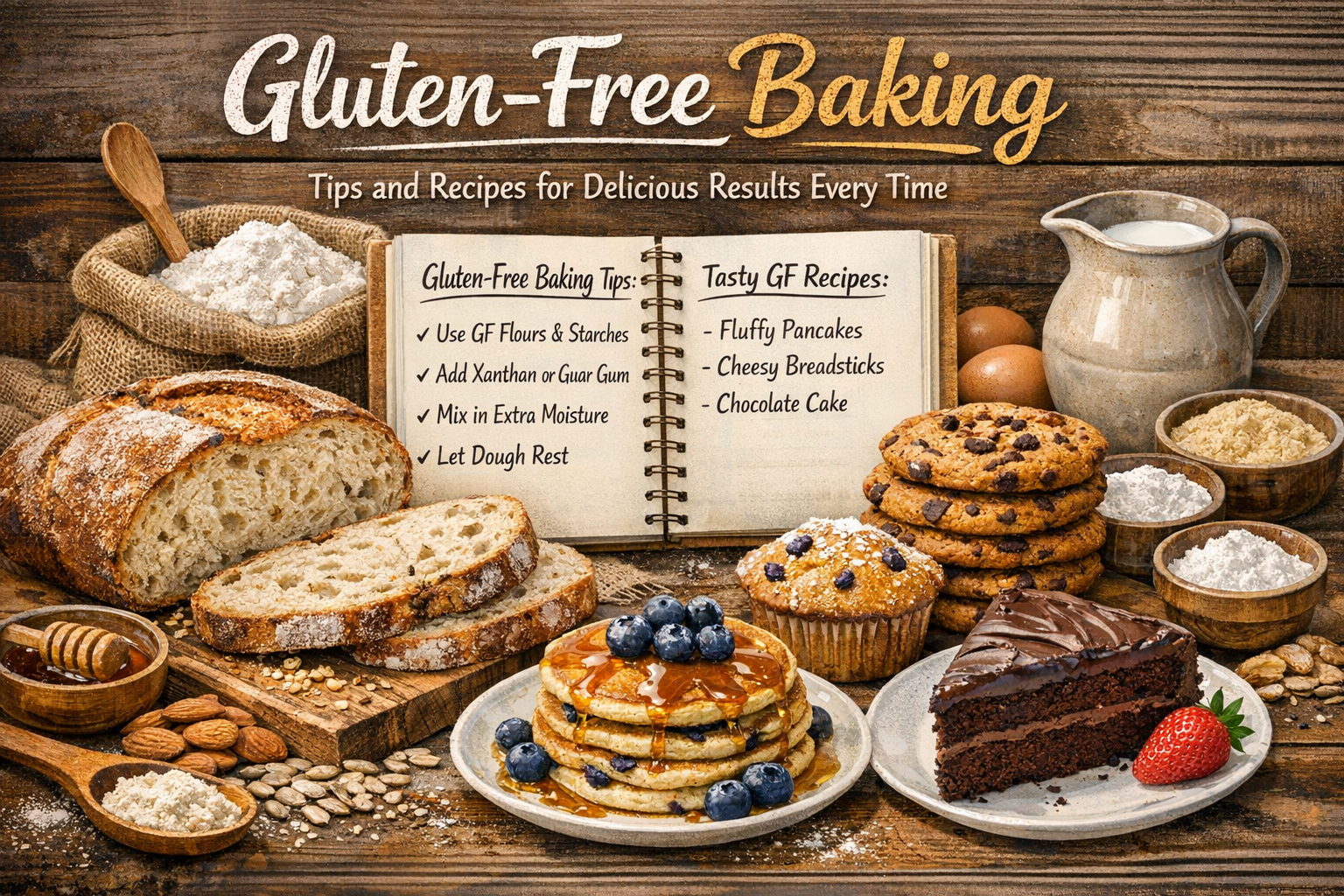

Let’s start with a confession: the first time I tried gluten-free baking, the result was a dense, crumbly brick that vaguely resembled a banana bread if you squinted hard enough and were feeling generous. It tasted like cardboard with good intentions. I ate one slice out of obligation, threw the rest away, and briefly considered that maybe gluten-free baking just wasn’t for me.
Sound familiar? If you’ve ever tried to bake without gluten and ended up with something that looked nothing like the photo, had the texture of wet sand, or just fell apart the moment you touched it — you’re in excellent company. Gluten-free baking has a reputation for being difficult, and honestly, that reputation isn’t entirely undeserved. But it’s also not the whole story.
Here’s what nobody tells you upfront: gluten-free baking isn’t harder than regular baking. It’s just different. Once you understand what gluten actually does in traditional baking and how to replace those functions with other ingredients and techniques, everything changes. The failures stop feeling random. The successes become repeatable. And the food? Actually delicious — not “pretty good for gluten-free,” but genuinely, honestly good.
That’s exactly what this guide is about. Whether you’re baking gluten-free out of necessity (celiac disease, gluten sensitivity, or baking for someone who has either) or simply curious about exploring it, everything you need to know is here — including some recipes that will make you forget you’re missing anything at all.
What Gluten Actually Does (And Why Removing It Changes Everything)
Before we talk about how to bake without gluten, it helps to understand why gluten exists in the first place — because it’s doing a lot of important work that most people never think about.
Gluten is a protein network that forms when two proteins in wheat flour (glutenin and gliadin) combine with water and get worked through mixing or kneading. That network is elastic and stretchy, which means it traps the carbon dioxide bubbles produced by your leavening agents (baking powder, baking soda, yeast) and gives baked goods their structure, chew, and lift.
Think about what makes a good bread loaf chewy and airy. What makes a croissant layered and flaky. What makes a cookie slightly crispy at the edge but soft in the center. Gluten is doing a significant portion of that work.
When you remove it — and use rice flour or almond flour or tapioca starch instead — you lose all of that. No elasticity. No structural network to trap air. No chew. Without compensating for those losses deliberately, you end up with the dense, crumbly results that give gluten-free baking a bad name.
The good news is that every single one of those functions can be replicated. Just not with a simple one-to-one flour swap. That’s the key insight that changes everything.
The Most Common Gluten-Free Baking Mistakes
Let’s get these out of the way early, because they explain a lot of failed bakes.
Mistake 1 — Using a Single Alternative Flour
Rice flour alone produces gritty results. Almond flour alone creates dense, oily baked goods with no structure. Coconut flour alone absorbs so much liquid it turns everything into a stiff, dry lump. No single gluten-free flour replicates what wheat flour does on its own.
The solution is blending. Most successful gluten-free baking uses a combination of flours and starches that together approximate the properties of wheat flour — some for structure, some for lightness, some for binding.
Mistake 2 — Skipping the Binder
Gluten holds things together. Without it, you need something else to do that job. The most common binders in gluten-free baking are:
- Xanthan gum — A small amount (usually ¼ to ½ teaspoon per cup of flour) adds elasticity and structure. A little goes a long way — too much and your baked goods become gummy and dense.
- Psyllium husk — Particularly good in bread baking. Creates a chewy, bread-like texture that xanthan gum doesn’t quite match.
- Flaxseed or chia seed “eggs” — Ground flaxseed or chia seeds mixed with water form a gel that binds ingredients together and adds moisture.
- Extra eggs — Regular eggs are powerful binders and are often used in larger quantities in gluten-free recipes for this reason.
Mistake 3 — Using a 1:1 Swap Without Adjusting Hydration
Gluten-free flours absorb liquid differently than wheat flour — some absorb much more (coconut flour), some absorb less (almond flour). A recipe adapted directly from a wheat-based original without adjusting the liquid content will almost never work as written.
This is why it’s generally easier, especially when starting out, to follow recipes specifically developed for gluten-free baking rather than trying to adapt conventional recipes yourself. Once you understand the behavior of different flours, adaptation becomes more intuitive.
Mistake 4 — Under-Resting the Batter
Gluten-free batters often benefit from resting for 20–30 minutes before baking. This gives the flours and starches time to absorb the liquid fully, which improves texture and makes the batter easier to work with. Many people skip this step and wonder why their results are disappointing.
Mistake 5 — Expecting Identical Results
And this one is important — maybe the most important: gluten-free baking produces similar results, not identical ones. A gluten-free bread will not taste exactly like a sourdough loaf. A gluten-free chocolate chip cookie will not have the exact chew of a traditional one. Managing expectations while still aiming for genuinely delicious results is the mindset that leads to success.
Your Gluten-Free Flour Guide: What to Use and When
Understanding the flour options is the foundation of good gluten-free baking. Here’s a practical breakdown of the most useful ones.
Rice Flour (White and Brown)
The most neutral-tasting and widely available gluten-free flour. White rice flour is lighter; brown rice flour has more fiber and a slightly nuttier flavor. Both are great as the base of a flour blend. Neither works particularly well on its own — white rice flour can be gritty in large quantities, and brown rice flour has a slightly grainy texture.
Best used as: the primary flour in a blend, typically making up 40–60% of the total.
Almond Flour
Made from blanched, ground almonds. Rich, moist, and slightly sweet. Naturally high in fat and protein, which means baked goods made with it are dense, moist, and don’t rise as much as lighter flours. Works beautifully for cookies, cakes, and quick breads. Not great for things that need to be light and airy.
Worth noting: almond flour and almond meal are different things. Almond flour is finer and made from blanched almonds (skin removed); almond meal is coarser and includes the skin. They’re not interchangeable in most recipes.
Best used for: cookies, muffins, brownies, dense cakes, pancakes.
Oat Flour (Certified Gluten-Free)
Made from ground oats. Has a mild, slightly sweet flavor and produces a soft, tender crumb. The catch: oats are often processed in facilities that also handle wheat, so cross-contamination is a real concern. If you’re baking for someone with celiac disease, certified gluten-free oat flour is non-negotiable. Some people with celiac also react to a protein in oats (avenin) even when they’re certified gluten-free — worth being aware of.
Best used for: muffins, pancakes, cookies, quick breads.
Tapioca Starch (Tapioca Flour)
A fine, white starch extracted from cassava root. Adds chewiness and helps bind. Used in smaller quantities as part of a blend rather than as the primary flour. It also creates a nice sheen and crunch on crusts when used in the right proportions.
Best used as: 15–25% of a flour blend, paired with heavier base flours.
Potato Starch
Another fine starch that adds lightness and moisture to baked goods. Often paired with rice flour in commercial gluten-free blends. Different from potato flour — potato starch is neutral tasting and very fine, while potato flour is heavier and has a distinct potato flavor.
Best used as: part of a blend, adding lightness and moisture.
Coconut Flour
Highly absorbent — genuinely, aggressively absorptive. You typically use about ¼ of the amount of coconut flour you’d use of other flours, and you need significantly more liquid and eggs. Coconut flour recipes require specific development; you can’t substitute it for other flours without completely reformulating the recipe. Has a slightly sweet coconut flavor.
Best used for: recipes specifically developed for it. Approach with caution as a substitution.
Commercial Gluten-Free Flour Blends
For most people starting out with gluten-free baking, a good commercial 1:1 or cup-for-cup blend is the most practical starting point. These blends — brands vary by country and availability — are already formulated to approximate the behavior of all-purpose wheat flour, often including xanthan gum in the blend itself.
They’re not perfect for every application, but they eliminate a lot of the guesswork while you’re still learning. Once you’re more comfortable, experimenting with custom blends becomes more interesting and often produces better results for specific applications.
The Binding Agents: Why They Matter and How Much to Use
Quick reference on the binders worth keeping in your pantry:
Xanthan gum: Use ¼ tsp per cup of flour in cookies and cakes; ½ tsp per cup in bread and pizza dough. Skip it if your commercial blend already contains it (most do).
Psyllium husk powder: Use 1–2 teaspoons per cup of flour. Particularly good in yeasted breads. Creates a texture closer to traditional bread than xanthan gum does.
Flax egg: 1 tablespoon ground flaxseed + 3 tablespoons water, rested for 5 minutes. Replaces 1 egg. Good for binding in muffins, quick breads, and cookies.
Chia egg: Same ratio and method as flax egg. Slightly more neutral in flavor.
Gluten-Free Baking Recipes That Actually Deliver
Here’s where the real payoff is. These recipes are specifically developed for gluten-free baking — not adapted from conventional recipes with fingers crossed. Each one has been built around the actual behavior of gluten-free ingredients.
Recipe 1 — The Best Gluten-Free Banana Bread
This is the recipe to make when you want to introduce someone to gluten-free baking. It’s moist, deeply flavored, and genuinely hard to distinguish from a conventional banana bread when it’s done right. The secret is using very ripe bananas (the ones that have gone almost completely black) and a good flour blend.
Ingredients (makes 1 loaf):
- 3 very ripe bananas, mashed (the riper the better — they should be almost black)
- 2 large eggs
- ⅓ cup melted coconut oil or butter
- ¼ cup maple syrup or honey
- 1 teaspoon vanilla extract
- 1½ cups gluten-free 1:1 flour blend (with xanthan gum included)
- 1 teaspoon baking soda
- ½ teaspoon cinnamon
- ¼ teaspoon salt
- Optional add-ins: a handful of dark chocolate chips, walnuts, or both
Method: Preheat your oven to 175°C (350°F). Grease a 9×5-inch loaf pan. Mash the bananas thoroughly in a large bowl until smooth — some texture is fine but you don’t want chunks. Whisk in the eggs, oil, maple syrup, and vanilla until well combined. Add the flour blend, baking soda, cinnamon, and salt, and stir until just combined. Don’t overmix. Fold in any add-ins. Pour into the prepared pan and bake for 55–65 minutes, until a toothpick inserted in the center comes out clean. Cool in the pan for 10 minutes, then transfer to a wire rack.
A note on testing: gluten-free quick breads often look done before they are. If the toothpick comes out with wet batter (not just a few moist crumbs), give it another 5–10 minutes. This bread is worth the wait.
Recipe 2 — Chewy Chocolate Chip Cookies
Getting chew in a gluten-free cookie is the hardest thing. Most gluten-free cookies either spread too much and become crispy, or they stay too thick and turn cakey. This recipe hits the sweet spot by using almond flour for richness, tapioca starch for chew, and brown butter for deep flavor.
Ingredients (makes about 16 cookies):
- 115g (½ cup) butter
- ¾ cup packed brown sugar
- 1 large egg + 1 egg yolk (the extra yolk adds richness and chew)
- 1 teaspoon vanilla extract
- 1 cup almond flour
- ¾ cup gluten-free 1:1 flour blend
- 2 tablespoons tapioca starch
- ½ teaspoon baking soda
- ½ teaspoon fine salt
- 1 cup dark chocolate chips
Method: Brown the butter first: melt it in a saucepan over medium heat, stirring occasionally, until it turns golden and smells nutty — about 5–7 minutes. Pour into a mixing bowl and let it cool for 10 minutes. Whisk in the brown sugar, egg, egg yolk, and vanilla until smooth and slightly lightened in color. Add all the dry ingredients and stir until combined. Fold in the chocolate chips. Refrigerate the dough for at least 30 minutes — this step is not optional if you want cookies that hold their shape. Scoop into balls and bake at 175°C for 10–12 minutes until golden at the edges but still slightly underdone in the center. They firm up as they cool. Let them sit on the pan for 5 minutes before transferring.
Recipe 3 — Fluffy Gluten-Free Pancakes
Weekends deserve good pancakes. These are genuinely fluffy — not the dense, gummy kind that sometimes come out of gluten-free baking — because the method matters as much as the ingredients.
Ingredients (serves 2–3):
- 1 cup gluten-free 1:1 flour blend
- 1 tablespoon sugar
- 1 teaspoon baking powder
- ½ teaspoon baking soda
- ¼ teaspoon salt
- ¾ cup buttermilk (or regular milk with 1 tablespoon of lemon juice or white vinegar stirred in and left for 5 minutes)
- 1 large egg
- 2 tablespoons melted butter
- 1 teaspoon vanilla extract
Method: Whisk the dry ingredients together in one bowl. Whisk the wet ingredients together in another. Combine them with a light hand — stir until just combined and stop. Lumps are fine and actually preferable. Let the batter rest for 5 minutes while you heat your pan over medium heat. Cook in butter or neutral oil, about 2–3 tablespoons of batter per pancake. Wait until bubbles form on the surface and the edges look set (about 2 minutes) before flipping — don’t rush it. Cook another minute on the second side.
The resting and the buttermilk together create a notably fluffy result. Don’t skip either.
Recipe 4 — Gluten-Free Lemon Almond Cake
This one is elegant enough for company and easy enough for a Tuesday. It’s dense in the best possible way — moist, fragrant with lemon, and rich from the almonds. No complicated flour blending required because almond flour is the star here.
Ingredients (serves 8–10):
- 2½ cups almond flour (not almond meal — this matters here)
- ½ teaspoon baking powder
- ¼ teaspoon salt
- 3 large eggs, room temperature
- ⅓ cup honey or maple syrup
- ¼ cup melted coconut oil or butter
- Zest of 2 lemons
- 3 tablespoons fresh lemon juice
- 1 teaspoon vanilla extract
For the glaze (optional but excellent):
- 1 cup powdered sugar
- 2–3 tablespoons lemon juice
- Zest of half a lemon
Method: Preheat to 175°C. Grease and line a 9-inch round cake pan. Mix together the almond flour, baking powder, and salt. In a separate bowl, whisk the eggs, honey, oil, lemon zest, lemon juice, and vanilla until smooth. Combine wet and dry until just mixed. Pour into the pan and bake for 30–35 minutes until a toothpick comes out clean and the surface is golden. Cool completely before glazing. For the glaze, whisk together powdered sugar and lemon juice until smooth and drizzle over the cooled cake.
This cake actually improves the next day — the lemon flavor deepens and the texture becomes even more moist. Make it ahead without guilt.
Recipe 5 — Simple Gluten-Free Pizza Dough
Pizza is the one that seems impossible without gluten, and it’s true that you won’t get that exact chewy, blistered, New York-style crust. But a gluten-free pizza crust can be crispy on the outside, chewy in the center, and fully capable of holding toppings without becoming a soggy mess — if you make it right.
Ingredients (makes 2 medium pizzas):
- 2 cups gluten-free 1:1 flour blend
- 2 teaspoons instant yeast
- 1 teaspoon sugar
- 1 teaspoon salt
- 1 teaspoon xanthan gum (skip if your blend already contains it)
- 1 teaspoon psyllium husk powder (adds chew significantly)
- ¾ cup warm water
- 2 tablespoons olive oil
Method: Combine the flour, yeast, sugar, salt, xanthan gum, and psyllium husk. Add the warm water and olive oil and mix until a soft, slightly sticky dough forms. Don’t expect it to behave like regular pizza dough — gluten-free dough is more like a thick batter and won’t knead or stretch the same way. Let it rest for 30 minutes covered with a damp cloth. Divide in half, press or roll onto parchment-lined baking sheets (wet hands help prevent sticking), and pre-bake the crust at 220°C for 10 minutes before adding toppings. Return to the oven with toppings for another 10–12 minutes.
The pre-bake step is what prevents the dreaded soggy center. Don’t skip it.
Tips for Gluten-Free Baking Success Every Time
Here are the practical insights that make a real difference once you’re in the kitchen:
Use a kitchen scale. Gluten-free flours vary dramatically in density, which means volume measurements (cups) can be wildly inconsistent. Weighing ingredients — especially flours — produces far more consistent results.
Room temperature ingredients. Cold eggs and butter don’t incorporate as smoothly, which affects texture. Take your eggs and dairy out of the fridge 30 minutes before baking.
Don’t overmix. Wheat flour benefits from some mixing because it develops the gluten network. Gluten-free batters don’t need that — overmixing can actually make things tougher. Mix until just combined and stop.
Use parchment paper generously. Gluten-free baked goods tend to stick more than conventional ones. Parchment in the pan is not optional — it’s insurance.
Let things cool completely. This is especially important for bread and dense cakes. Gluten-free baked goods often continue setting as they cool. Cutting into them too early can result in a gummy, undercooked-looking center that would have been fine if you’d waited.
Keep a baking notebook. When something works well — or doesn’t — write it down. Gluten-free baking has more variables than conventional baking, and your notes from one session are genuinely useful for the next.
Test your leavening agents. Baking powder and baking soda lose potency over time. Gluten-free baked goods depend heavily on chemical leavening to compensate for the lack of gluten structure. Old leavening agents produce flat, dense results. Replace them if they’ve been open for more than 6 months.
Who Should Be Baking Gluten-Free (And Who Might Want To)
Let’s be direct about this, because it matters.
Celiac disease: A serious autoimmune condition where the ingestion of gluten causes damage to the small intestine. Strict, lifelong gluten avoidance is medically necessary. If you’re baking for someone with celiac, cross-contamination is a genuine concern — dedicated equipment, certified gluten-free ingredients, and careful preparation practices all matter.
Non-celiac gluten sensitivity: Some people without celiac disease experience digestive discomfort, brain fog, or other symptoms when eating gluten. The research on this condition is still evolving, but the experience is real for many people. A gluten-free diet often improves their quality of life significantly.
Wheat allergy: Different from celiac disease — an immune response to proteins in wheat rather than an autoimmune reaction. Also requires avoiding gluten-containing grains.
Personal dietary preference: Some people simply feel better eating less wheat and refined grains, whether or not they have a diagnosed condition. There’s nothing wrong with exploring gluten-free baking out of curiosity, preference, or to accommodate others at the table.
And here’s a nuance worth mentioning: gluten-free doesn’t automatically mean healthier. A gluten-free chocolate cake is still cake. A gluten-free cookie made with almond flour and dark chocolate is still a cookie. The health implications depend entirely on what the gluten-free baked good is actually made of — not just the absence of wheat.
The Pantry Essentials for Gluten-Free Baking
If you’re serious about baking gluten-free regularly, having these on hand makes everything easier:
- A reliable 1:1 gluten-free flour blend (for general baking)
- Almond flour (for cookies, cakes, muffins)
- Tapioca starch (for chew and binding)
- Xanthan gum (if your flour blend doesn’t include it)
- Psyllium husk powder (especially if you’re making bread)
- Certified gluten-free oat flour
- Good quality baking powder and baking soda (fresh)
- Parchment paper — lots of it
Conclusion: Gluten-Free Baking Is a Learning Curve, Not a Dead End
Here’s the honest summary: gluten-free baking has a steeper learning curve than conventional baking. The first few attempts may not be what you hoped. That’s genuinely okay — it’s part of the process, not a sign that you’re doing it wrong.
What changes everything is understanding why gluten-free baking fails — and applying that understanding to make it succeed. Choose the right flours and blend them. Use a binder. Don’t skip the rest time. Use a scale. Let things cool. And follow recipes developed specifically for gluten-free baking rather than trying to wing a conversion.
The recipes in this guide — the banana bread, the chewy chocolate chip cookies, the lemon almond cake, the fluffy pancakes, the pizza dough — are all genuinely delicious. Not “pretty good considering they’re gluten-free.” Just good. That’s the standard worth aiming for, and it’s absolutely achievable once you understand the rules of the game.
So give it a try. Pick one recipe that appeals to you most and make it this week. Notice what works, adjust what doesn’t, and build your confidence from there. Gluten-free baking rewards patience and curiosity more than raw skill.
I’d love to hear about your gluten-free baking experiences! Have you tried it before and had mixed results? Or are you just getting started and feeling a bit overwhelmed? Drop a comment and tell me where you’re at — and if there are specific gluten-free recipes you’ve been trying to crack (bread, croissants, sourdough, anything), leave them in the comments. That’s exactly the kind of challenge I enjoy tackling next.
Related Article Ideas You Might Enjoy Next
- “The Best Gluten-Free Bread Recipe (That Actually Has a Real Crust and a Chewy Crumb)” — Bread is the white whale of gluten-free baking — the thing everyone wants to crack and the one that requires the most technique. This article dives deep into gluten-free bread specifically, covering yeasted sandwich loaves, quick breads, and the psyllium husk method that changed everything for home bakers.
- “Baking for Dietary Restrictions: How to Host Dessert When Your Guests Have Different Needs” — A practical guide to baking for a table with multiple dietary needs — gluten-free, dairy-free, nut-free, vegan — without making five separate desserts. Covers smart recipe choices, labeling, and cross-contamination basics.
- “Almond Flour Recipes Beyond Baking: 8 Ways to Use It in Everyday Cooking” — Once you stock almond flour for gluten-free baking, you’ll want to know all the other ways to use it. This article covers savory applications — crusts, coatings, thickeners — alongside sweet ones, making it a genuinely useful reference for anyone who bakes regularly.