
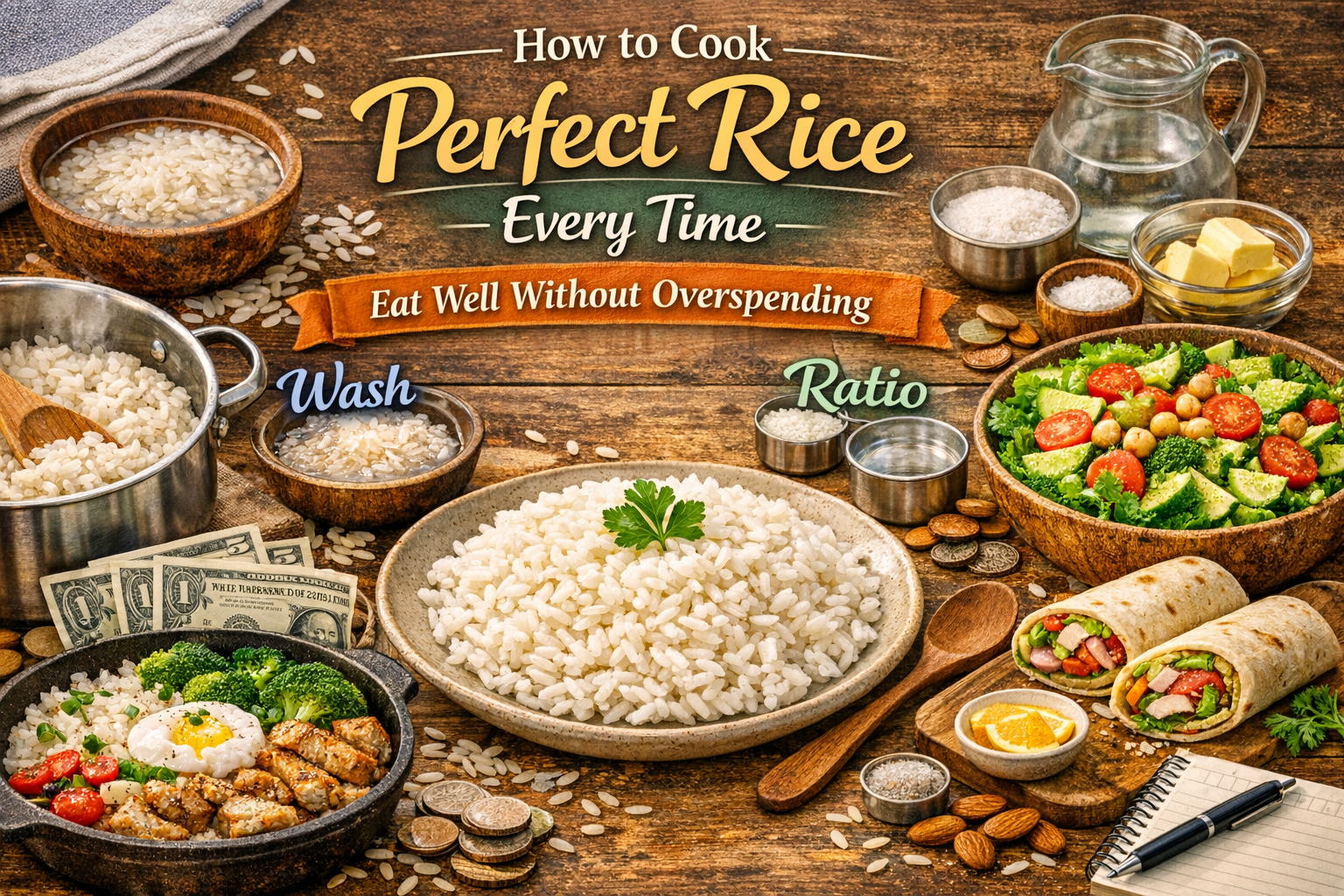
Rice is more than just a side dish—it’s the foundation of countless meals around the world, from fluffy jasmine rice paired with Thai curries to sticky sushi rice that holds together delicate rolls. Yet, for something so simple in theory, cooking perfect rice can feel like an elusive art. One minute you’re measuring water with confidence, and the next, you’re staring at a pot of mushy grains or crunchy undercooked kernels. If you’ve ever wondered why your rice turns out inconsistent despite following the package instructions, you’re not alone. Millions of home cooks face the same frustration every day.
In this comprehensive guide, we’ll demystify the process and show you exactly how to cook perfect rice every time. Whether you’re a beginner in the kitchen or a seasoned home chef looking to elevate your staple grain, you’ll discover proven techniques, insider tips, and troubleshooting strategies that guarantee fluffy, flavorful results. We’ll cover everything from understanding different rice varieties to mastering multiple cooking methods, all while keeping things practical for everyday life.
Perfect rice isn’t just about aesthetics—it’s about texture, taste, and nutrition. When done right, each grain stands separate, tender yet firm, with a subtle nuttiness that enhances any meal. It absorbs flavors beautifully in stir-fries, pilafs, or biryanis, and it can even shine on its own with a simple pat of butter and a sprinkle of herbs. By the end of this article, you’ll have the confidence to cook rice like a pro, saving time, reducing waste, and impressing family and friends. Let’s dive in and transform your rice game forever.
The Timeless Tale of Rice: From Ancient Fields to Modern Kitchens
Rice has a rich, storied history that stretches back over 10,000 years, making it one of humanity’s oldest cultivated crops. Its journey begins in the fertile river valleys of ancient China and India, where wild rice species were first domesticated around 8000 BCE. Archaeological evidence from the Yangtze River region in China reveals early farming communities carefully tending paddies, flooding fields to create the ideal wet environment for this aquatic grass. From there, rice cultivation spread like wildfire across Asia, becoming a cornerstone of diets in Japan, Korea, Thailand, Vietnam, and beyond.
By 3000 BCE, rice had reached the Middle East and parts of Africa through ancient trade routes. The Persians refined irrigation techniques, while the Moors introduced it to Spain and Portugal during the Islamic Golden Age, eventually bringing it to the Americas via European explorers in the 16th and 17th centuries. In the United States, rice farming took root in the Carolinas and later exploded in Louisiana and Arkansas, turning the grain into a global commodity.
Culturally, rice isn’t just food—it’s symbolism. In many Asian cultures, the phrase “to eat rice” simply means “to eat a meal.” Japanese Shinto rituals honor rice deities, while Indian festivals like Pongal celebrate the harvest with elaborate rice dishes. In Latin America, arroz con pollo or Mexican arroz rojo represent comfort and community. Even in Europe, risotto in Italy and paella in Spain showcase rice’s versatility.
I remember my own “rice awakening” during a trip to a small village in northern Thailand. A local grandmother invited me into her kitchen, where she cooked jasmine rice over an open flame in a simple clay pot. No fancy gadgets—just intuition, generations of knowledge, and a gentle simmer. The result? Fluffy, aromatic grains that elevated a simple green curry into something transcendent. That experience taught me that perfect rice isn’t about perfectionism; it’s about respect for the grain and understanding its needs.
Today, rice feeds over half the world’s population. Global production exceeds 500 million tons annually, with varieties adapted to every climate. Yet, despite its ubiquity, many home cooks still struggle because rice demands precision in water absorption, heat management, and timing. Ancient farmers didn’t have measuring cups, but they had observation skills honed over centuries. We’ll blend that ancestral wisdom with modern science—starch gelatinization, amylose content, and steam dynamics—to give you foolproof methods.
Understanding this history adds depth to your cooking. When you rinse basmati rice for a biryani, you’re echoing Persian traders from millennia ago. When you fluff short-grain rice for sushi, you’re connecting to Japanese rice paddies. This story reminds us that how to cook perfect rice every time is a skill passed down through cultures, not just a recipe to memorize. It builds patience, mindfulness, and appreciation for one of the planet’s most sustainable crops—rice requires less water than many staples when grown traditionally and can thrive in marginal lands.
As rice traveled the globe, so did its cooking techniques. Early methods relied on steaming in bamboo baskets or boiling in earthen pots. The Industrial Revolution brought milled white rice to the masses, but it also stripped nutrients, leading to modern preferences for brown and wild varieties. In the 20th century, electric rice cookers revolutionized kitchens in Asia, making perfection accessible even to busy families. Yet, stovetop purists still swear by the traditional absorption method.
This historical lens isn’t just trivia—it’s practical. Different rice types evolved in specific regions because of soil, climate, and culinary needs. Long-grain rice from India stays separate and fluffy due to higher amylose content, ideal for pilafs. Short-grain Japanese rice is stickier thanks to amylopectin, perfect for onigiri. Knowing this backstory equips you to choose and cook rice with intention, avoiding common pitfalls like over-rinsing aromatic varieties or under-soaking sticky ones.
In today’s fast-paced world, rice remains a budget-friendly, gluten-free staple that’s endlessly adaptable. It’s a canvas for vegan bowls, protein-packed stir-fries, or decadent desserts like arroz con leche. By honoring its story, you cook with purpose. Whether you’re preparing a quick weeknight side or an elaborate feast, perfect rice connects you to billions of meals across time and continents. Now that we’ve set the stage, let’s get practical and unlock the techniques that deliver consistent, restaurant-quality results at home.
Mastering the Art: Step-by-Step Guide, Pro Tips, and Endless Variations for Perfect Rice
To cook perfect rice every time, you need a solid foundation: the right rice, proper preparation, and reliable methods tailored to your tools and preferences. Let’s break it down systematically, starting with rice selection and moving through detailed techniques that guarantee success.
Choosing the Right Rice Variety
Not all rice is created equal. The key to perfection lies in matching the grain to your dish:
- Long-grain rice (like basmati or jasmine): Fluffy and separate when cooked. Basmati from India or Pakistan elongates dramatically and releases a nutty aroma. Jasmine from Thailand is slightly stickier with floral notes. Ideal for curries, stir-fries, and pilafs. Water ratio: 1 cup rice to 1.75–2 cups water.
- Medium-grain rice (like Calrose or Valencia): Versatile and slightly creamy. Great for paella or general sides. It absorbs flavors well without becoming mushy.
- Short-grain rice (like sushi or arborio): Sticky and tender. Sushi rice clings together for rolls; arborio is essential for creamy Italian risotto. Higher starch content means more careful stirring.
- Brown rice: Nutty, chewy, and nutrient-dense with the bran intact. Takes longer to cook (45–50 minutes) and needs a 1:2.25 water ratio. Soak for 30 minutes to speed things up.
- Wild rice (technically a grass seed): Earthy and chewy. Often blended with white rice. Cooks in 45–55 minutes at 1:3 ratio.
- Specialty rices: Black (forbidden) rice for dramatic color and antioxidants; red rice for nutty chew; glutinous (sweet) rice for desserts.
Pro tip: Always check the package for aging—older rice (like premium basmati) cooks fluffier because it has less moisture.
Essential Tools and Prep Work
You don’t need fancy equipment, but quality helps:
- Heavy-bottomed saucepan with tight-fitting lid (prevents steam escape).
- Rice cooker for set-it-and-forget-it convenience.
- Instant Pot or pressure cooker for speed.
- Fine-mesh strainer for rinsing.
- Wooden spoon or rice paddle for fluffing (metal can break grains).
Preparation is non-negotiable:
- Measure accurately: Use the same cup for rice and water. One standard cup (240ml) rice serves 2–3 people.
- Rinse thoroughly: Place rice in a bowl, cover with cold water, swirl gently, and drain. Repeat 3–5 times until water runs mostly clear. This removes excess starch that causes gumminess. Skip for enriched rice or very aromatic varieties if you want maximum fragrance.
- Soak when needed: Basmati benefits from 20–30 minutes in warm water for elongation. Brown rice loves a 30-minute soak to reduce cooking time.
- Optional flavor boosts: Add a teaspoon of oil or butter to prevent sticking. Toss in salt, bay leaf, garlic, or whole spices for infused taste.
The Foolproof Stovetop Absorption Method (The Classic)
This is the gold standard for how to cook perfect rice every time on any stove.
Step-by-step for white long-grain rice:
- Combine 1 cup rinsed rice, 1.75–2 cups water, ½ tsp salt, and 1 tsp oil in a saucepan.
- Bring to a boil over medium-high heat (uncovered).
- Stir once, reduce to low simmer, cover tightly.
- Cook undisturbed for 15–18 minutes (check at 15; grains should have absorbed all water and have tiny steam holes on top).
- Remove from heat. Let rest, covered, for 10 minutes—this is crucial for even steaming and fluffiness.
- Fluff gently with a fork or paddle. Never stir aggressively.
For brown rice: Use 2.25 cups water, simmer 45 minutes, rest 10.
Rice cooker method: Rinse, add to cooker with correct water line (most have markings), select “white rice” or “brown,” and press start. It auto-switches to warm. Results are consistently perfect.
Instant Pot/Pressure Cooker: 1:1.25 ratio for white rice. High pressure 4–6 minutes, natural release 10 minutes. Brown rice: 22–25 minutes.
Oven method (great for batches): Preheat to 375°F (190°C). Combine rice, water, salt in a baking dish, cover tightly with foil. Bake 30–35 minutes for white, 50–60 for brown. Rest 10 minutes.
Microwave hack (for emergencies): Rinse 1 cup rice, add 2 cups water in a microwave-safe bowl. Cover, microwave on high 5 minutes, then medium 10–12 minutes. Rest covered.
Pasta method alternative: Boil rice in excess salted water like pasta (8–10 minutes for white), drain, and steam briefly. Less precise but forgiving for beginners.
Advanced Tips and Suggestions for Restaurant-Quality Results
- Heat control is everything: Too high, and you scorch the bottom. Too low, and it steams unevenly. Use the “lowest simmer your stove allows.”
- The finger test myth-busted: The old “water level one knuckle above rice” works for some but varies by hand size and rice type. Stick to measured ratios.
- Resting phase: Never skip! Steam redistributes moisture for uniform texture.
- Fluffing technique: Tilt the pot and use a cutting motion with your paddle to separate grains without compacting.
- Scaling up: For large batches, use a wide pot to maintain even heat. Add 10% more water if cooking over 4 cups.
- Flavor infusions: For Mexican rice, sauté rice in oil with onion and garlic before adding tomato broth. For Indian jeera rice, bloom cumin seeds first.
- Make-ahead magic: Cook a big batch Sunday, portion into containers. Reheat in microwave with a splash of water or steam in a sieve over boiling water.
- Storage: Cooled rice lasts 4–5 days in the fridge or 6 months frozen (spread on a tray first to prevent clumping). Always reheat to 165°F (74°C) for safety.
- Nutritional upgrades: Opt for brown or mixed grains for fiber and vitamins. Add veggies during cooking for one-pot meals.
International Variations to Inspire
- Japanese sushi rice: Short-grain, rinse well, season with sushi vinegar (rice vinegar, sugar, salt) while hot.
- Indian biryani base: Parboil basmati, layer with spiced yogurt and meat, dum-cook (steam-sealed) for layered flavors.
- Italian risotto: Arborio in broth, constant stirring for creaminess (not “perfect fluffy” but perfectly creamy).
- Thai sticky rice: Glutinous rice steamed in a basket, no rinsing—traditionally soaked overnight.
- Latin arroz: Sauté in oil until golden for nutty depth.
Experiment with these, and you’ll never tire of rice. Track your successes in a kitchen journal: note rice brand, water amount, and outcome. Over time, you’ll develop intuition.
With these techniques, you’ll achieve perfect rice consistently—fluffy, aromatic, and never sticky or dry. The secret? Respect the ratio, control the heat, and give it time to rest. Practice once or twice, and it becomes second nature.
To expand further on variations: Consider coconut rice from Southeast Asia—replace half the water with coconut milk, add pandan leaf for aroma. Or Persian tahdig, where you create a crispy golden crust by layering potato or flatbread at the bottom—requires medium heat for 20–25 minutes after initial boil, then low for crust formation. These methods teach patience and reward with textural contrast.
For health-conscious cooks, explore fortified rice or ancient grains like black rice, which turns deep purple when cooked and offers anthocyanins for anti-inflammatory benefits. Cooking times extend slightly, but the payoff in nutrition and visual appeal is immense. Add a handful of quinoa to white rice for a complete protein boost—maintain the same ratios as the blend behaves similarly.
Troubleshooting within techniques: If your rice is too wet, next time reduce water by 2 tablespoons or extend uncovered simmer at the end to evaporate excess. For altitude adjustments (above 3,000 feet), increase water by ¼ cup and cooking time by 5 minutes due to lower boiling point.
Equipment deep dive: Investing in a Zojirushi rice cooker (around $150–300) pays for itself in consistency and features like fuzzy logic that adjusts for humidity. For budget options, a simple 3-cup Aroma model works wonders. Stovetop fans love Le Creuset Dutch ovens for even heat distribution.
Seasonal adaptations: In summer, keep rice light with herbs and lemon. In winter, enrich with broth and root vegetables for hearty warmth. Pairing suggestions: Perfect rice elevates grilled fish, lentil dal, or even breakfast congee (slow-cooked with extra water and ginger).
By incorporating these suggestions, your rice becomes not just a side but the star. Guests will ask for your secret, and you’ll smile knowing it’s all in the method.
Clearing the Air: Answering the Most Common Rice Cooking Doubts and Questions
Even with the best instructions, questions pop up. Here are the top doubts home cooks have about how to cook perfect rice every time, answered with practical solutions.
1. Why does my rice always come out sticky or gummy?
Excess surface starch is the culprit. Rinse more thoroughly (until water is clear). Use less water next time, and avoid stirring during cooking, which releases more starch. For sticky rice varieties, embrace it—it’s supposed to cling!
2. My rice is crunchy or undercooked in the middle. What went wrong?
Not enough water, lid not tight (steam escaped), or heat too low. Test by tasting a few grains at the 15-minute mark. Add 2–3 tablespoons hot water, cover, and steam 3–5 more minutes. Always rest covered afterward.
3. How much water do I really need? The package says different things.
Packages generalize. Standard: 1:1.75–2 for white long-grain; 1:2.25 for brown. The “finger test” works if calibrated to your hand, but measuring is more reliable. Factors like rice age, altitude, and freshness affect it—older rice absorbs more.
4. Can I cook rice ahead and reheat without it drying out?
Absolutely. Store in airtight containers. Reheat in microwave with 1–2 tsp water per cup, covered, for 1–2 minutes. Or use a steamer basket. Fluff after reheating. Avoid room temperature longer than 2 hours for food safety (Bacillus cereus risk).
5. Is it okay to use a rice cooker for brown rice or specialty grains?
Yes! Most have settings for brown rice, which cooks longer with more water. For wild rice blends, use the “mixed” or “porridge” cycle if available. Experiment once to dial in your model.
6. Why does my rice smell or taste off, even when cooked right?
Old rice or improper storage. Store in airtight containers in a cool, dark place (fridge for brown rice to prevent rancidity). Fresh rice from reputable brands has a clean, neutral scent.
7. How do I prevent the dreaded “burnt bottom” layer?
Lower heat sooner, use a heavy pot, and add a bit more oil. For intentional crispy tahdig, that’s a feature—line the bottom with oil and monitor closely.
8. Can I freeze cooked rice? Does it reheat well?
Yes—spread cooled rice on a baking sheet, freeze in single layer, then bag. Thaw overnight or microwave straight from frozen with water. Texture holds up remarkably well.
9. What’s the difference between enriched and regular rice? Should I rinse enriched rice?
Enriched has added vitamins (thiamin, niacin). Rinse lightly if desired, but don’t overdo to retain nutrients. Both cook similarly.
10. My rice cooker keeps switching to “warm” too early—is the rice done?
Check inside. Fuzzy-logic cookers sense moisture levels. If grains are still firm, add water and restart. Usually, it’s accurate.
11. Is it true that adding vinegar or lemon helps with stickiness?
A splash of acid can brighten flavor and slightly firm grains, but it’s not a fix for poor rinsing. Best in seasoned dishes like sushi rice.
12. How do I cook perfect rice for a crowd without a huge pot?
Use the oven method in multiple dishes or batch in a rice cooker and keep warm. Rice holds at “keep warm” setting for hours without drying if moisture is managed.
These answers cover 95% of kitchen rice woes. Remember, practice reduces doubts. Your first few attempts might vary, but by the third batch, you’ll nail it.
Your Path to Perfect Rice Mastery
We’ve covered a lot of ground in this guide to how to cook perfect rice every time. From the fascinating history of rice that connects us to ancient civilizations, to the practical step-by-step techniques across stovetop, rice cooker, Instant Pot, oven, and more, you’ve now got a complete toolkit. We explored rice varieties, essential prep like rinsing and soaking, pro tips for flavor and texture, international variations that spark creativity, and honest answers to the most common doubts that trip up even experienced cooks.
The takeaway? Perfect rice is achievable with attention to ratios, heat, and resting time. It’s not magic—it’s method. Start simple with the stovetop absorption technique for white rice, then branch out to brown varieties or flavored pilafs. Your meals will transform: fluffier sides, better leftovers, happier family dinners. Rice will shift from a potential headache to your most reliable kitchen ally.
Now it’s your turn. Try one of these methods tonight—maybe a simple jasmine rice with dinner—and notice the difference. Share your results in the comments below: What rice variety did you use? Did the resting step make a big impact? Any tweaks that worked for your kitchen? Your sincere opinions and suggestions help fellow readers (and me!) refine these techniques even further. Did something surprise you? What would you add to this guide?
Cooking perfect rice every time isn’t just a skill—it’s an everyday victory that brings joy to the table. Thank you for reading this in-depth article. Here’s to many bowls of flawless rice ahead!