
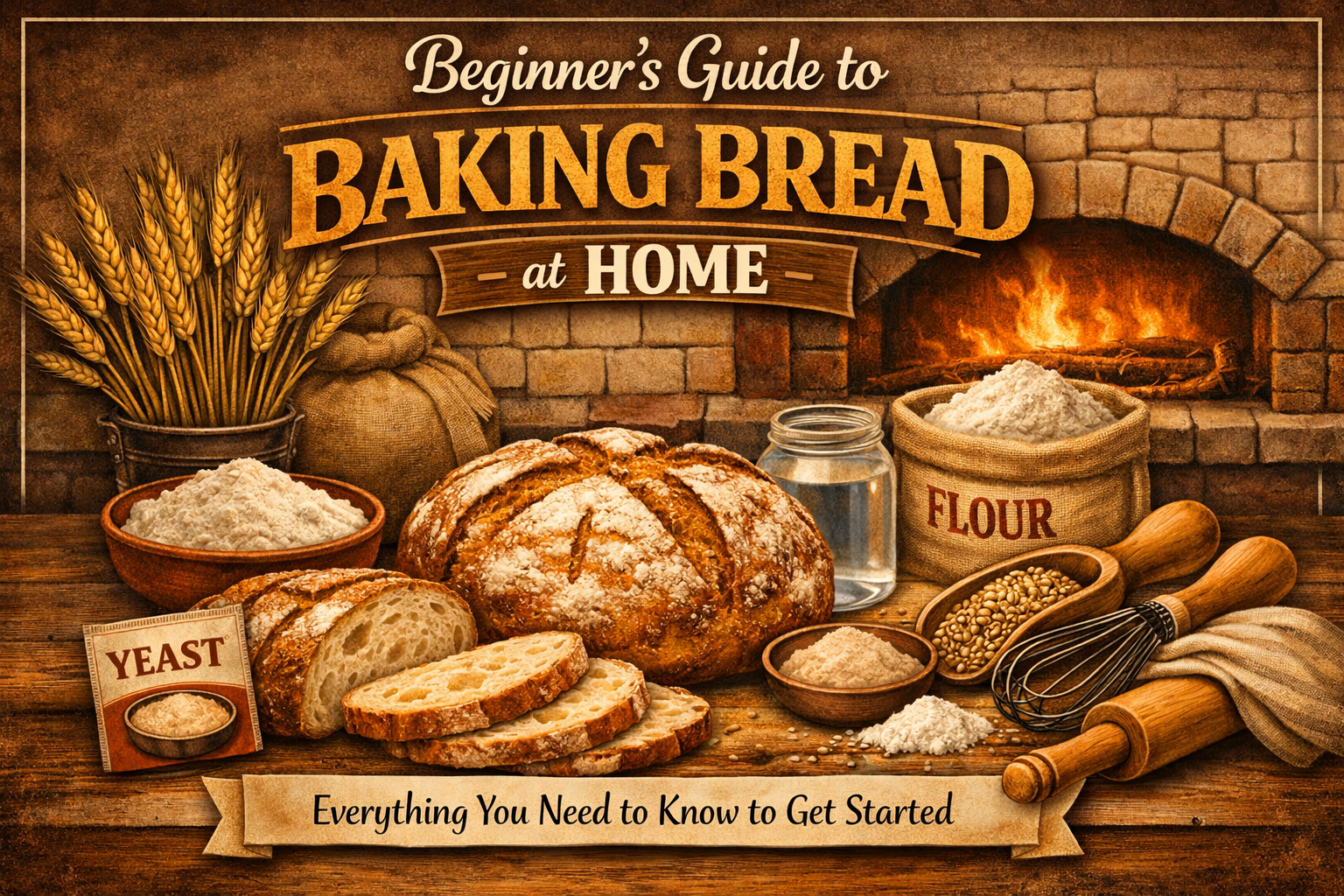
There’s something magical about pulling a golden, crusty loaf of bread from your own oven. The aroma fills the kitchen, warm and comforting, and you realize you just created something that people have been making for thousands of years—using nothing more than flour, water, yeast, and salt. In today’s fast-paced world, where store-bought bread often comes loaded with preservatives and questionable ingredients, learning how to bake bread at home has become more than a hobby. It’s a rewarding skill that saves money, improves your health, connects you with tradition, and brings a deep sense of accomplishment.
This beginner’s guide to baking bread at home is designed specifically for absolute novices. Whether you’ve never touched a dough hook or you’ve tried once and ended up with a brick-like disaster, you’re in the right place. We’ll walk you through every single step, from choosing the right tools to troubleshooting common mistakes. By the end of this guide, you’ll have the confidence to bake beautiful loaves that your family and friends will rave about. Baking bread at home isn’t just about food—it’s about slowing down, creating something real, and enjoying the simple pleasures of life. Ready to get your hands floury? Let’s dive in.
The Fascinating History of Bread Baking
Bread is one of humanity’s oldest foods, and its story is as rich and layered as a perfectly fermented sourdough. Archaeological evidence shows that people were baking primitive flatbreads as far back as 14,000 years ago in the Middle East. Researchers discovered charred crumbs in a stone fireplace in Jordan that date back to the Natufian period—long before agriculture even existed. These early breads were likely made from wild grains that were crushed between stones and mixed with water, then baked on hot rocks.
The real revolution came around 10,000 BCE with the dawn of agriculture in the Fertile Crescent. Once humans began cultivating wheat, barley, and other grains, bread became a staple. The ancient Egyptians took bread making to the next level. They perfected leavened bread using wild yeast from the air and developed the first ovens made of clay. Bread was so important in Egyptian society that it was used as currency—workers building the pyramids were often paid in loaves. Some tombs even contained “bread offerings” for the afterlife.
The Greeks and Romans built on this knowledge. The Romans established public bakeries and even created guilds for bakers. By the Middle Ages in Europe, bread was the center of every meal. Different regions developed signature styles: the French perfected the baguette with its crackling crust, the Italians created airy ciabatta, and German bakers mastered dense rye breads. Monasteries played a huge role in preserving techniques during turbulent times, experimenting with sourdough starters that could be passed down through generations.
The Industrial Revolution changed everything. In the 19th and 20th centuries, commercial bakeries introduced sliced white bread, preservatives, and high-speed mixing machines. While this made bread cheap and convenient, it also stripped away much of the flavor and nutrition. The artisan bread movement of the 1990s and 2000s pushed back, with bakers like Chad Robertson of Tartine Bakery reintroducing slow fermentation and stone-ground flours. Today, home baking is experiencing a massive renaissance. The COVID-19 pandemic accelerated this trend as people stuck at home turned to flour and yeast for comfort and control. Social media platforms exploded with #sourdough starters and beginner bread recipes.
Understanding this history helps you appreciate why baking bread at home feels so special. Every time you knead dough, you’re continuing a tradition that spans civilizations. You’re not just making food—you’re participating in one of humanity’s most enduring crafts. This connection to the past makes the learning process even more meaningful for beginners.
Your Complete Guide to Baking Bread at Home: Tools, Ingredients, Step-by-Step Instructions, Tips, and Expert Suggestions
Now that we’ve covered the “why,” let’s get into the “how.” This section is the heart of our beginner’s guide to baking bread at home. We’ll break everything down into manageable pieces so you never feel overwhelmed. Baking bread is part science, part art, and a whole lot of practice. The good news? You don’t need fancy equipment or years of experience to make incredible loaves right away.
Essential Tools for Beginner Bread Bakers
You don’t need a professional bakery setup. Start simple and upgrade as you gain confidence. Here’s what you absolutely need:
- Digital kitchen scale: This is non-negotiable for beginners. Measuring by weight (grams) is far more accurate than cups. A good scale costs under $20 and will transform your results.
- Large mixing bowl: Glass or stainless steel works best. Avoid plastic if possible—it can retain odors.
- Dough scraper or bench knife: Helps with shaping and cleaning up sticky dough.
- Proofing basket (banneton): Not essential at first, but a game-changer for structure. You can use a colander lined with a tea towel instead.
- Dutch oven or heavy pot with lid: Creates steam for that perfect crust. Cast iron is ideal.
- Instant-read thermometer: Ensures your water temperature is just right (around 100–110°F for yeast).
- Parchment paper and oven mitts: Safety and easy cleanup.
Optional but helpful upgrades include a stand mixer with dough hook, lame (scoring blade), and baking stone. Start without them—you’ll still make fantastic bread.
Understanding Ingredients – The Foundation of Great Bread
Bread has only four basic ingredients, but each one matters enormously:
- Flour: The backbone. All-purpose flour works for beginners, but bread flour (higher protein content, 11–13%) gives better structure. Whole wheat flour adds nutrition but absorbs more water—start with 50/50 blends. Always use unbleached flour.
- Water: Sounds simple, but temperature and quality count. Filtered water is best. Too hot and you kill the yeast; too cold and fermentation slows down.
- Yeast: Active dry or instant. Instant yeast is more forgiving for beginners. One packet (7g) usually leavens 500g of flour.
- Salt: Enhances flavor and strengthens gluten. Never skip it or add it directly to yeast.
Once you master the basics, experiment with add-ins: olive oil for softer crusts, honey or sugar for sweetness, seeds, herbs, cheese, or even chocolate for sweet breads.
The Science Behind Bread – Why It Works
Before we bake, a quick science lesson makes everything click. Gluten is the protein network formed when flour meets water. Kneading develops this network, trapping gas bubbles from yeast. Yeast eats sugars in the flour and releases carbon dioxide—those bubbles are what make bread rise. Fermentation also creates flavor compounds. Longer, slower rises (especially overnight in the fridge) produce better taste and texture. This is why “no-knead” methods work so well for beginners—they rely on time instead of elbow grease.
Step-by-Step: Your First Loaf – Classic Beginner Sandwich Bread
Let’s bake something foolproof. This recipe makes one beautiful loaf and takes about 3 hours active time plus rising.
Ingredients (makes 1 loaf):
- 500g bread flour (or all-purpose)
- 320g warm water (100–110°F)
- 7g instant yeast (1 packet)
- 10g salt
- 15g sugar (optional, for softer crumb)
- 30g unsalted butter, softened
Step 1: Activate the yeast
Mix warm water, sugar, and yeast in your bowl. Let it sit 5–10 minutes until foamy. If it doesn’t foam, your yeast is dead—start over.
Step 2: Mix the dough
Add flour and salt. Mix until shaggy. Add butter and knead by hand (8–10 minutes) or with mixer (5 minutes) until the dough is smooth and passes the windowpane test: stretch a small piece thin enough to see light through it without tearing.
Step 3: First rise (bulk fermentation)
Cover with plastic wrap or damp towel. Let rise in a warm spot (75–80°F) for 60–90 minutes until doubled.
Step 4: Shape the loaf
Punch down gently, shape into a tight rectangle, roll into a log, and place seam-side down in a greased 9×5 loaf pan.
Step 5: Second rise
Cover and let rise another 45–60 minutes until it peeks over the pan.
Step 6: Bake
Preheat oven to 375°F. Bake 30–35 minutes until golden brown and internal temperature reaches 190–200°F. Cool on a wire rack for at least 30 minutes before slicing.
Congratulations—you just baked bread at home!
No-Knead Bread Method – The Easiest Option for Absolute Beginners
If kneading intimidates you, try this revolutionary method popularized by Jim Lahey. Mix 400g flour, 300g water, 8g salt, and 3g instant yeast. Stir until shaggy, cover, and let sit 12–18 hours at room temperature. The long fermentation develops incredible flavor. Shape, rest 30 minutes, bake in a preheated Dutch oven at 450°F for 30 minutes covered, then 15 minutes uncovered. Crust will be bakery-worthy.
Sourdough for Beginners – Your Next Challenge
Once comfortable with yeast bread, try sourdough. It uses a living starter (wild yeast and bacteria) instead of commercial yeast. Creating a starter takes 5–7 days of daily feedings, but the flavor payoff is unmatched. Search for a simple 100% hydration starter recipe and maintain it in the fridge once active.
Tips and Suggestions to Level Up Your Home Bread Baking
- Temperature control: Dough rises best at 75–80°F. Use your oven’s proof setting or a proofing box if your kitchen is cold.
- Hydration matters: Beginners often start at 60–65% hydration (water weight divided by flour weight). Higher hydration (70%+) gives open crumb but stickier dough—use a bench scraper.
- Autolyse technique: Mix flour and water first and let rest 30–60 minutes before adding yeast and salt. This improves gluten development and flavor.
- Scoring: Use a sharp razor to slash the top before baking. This controls expansion and looks professional.
- Steam is key: Place ice cubes in a hot pan at the bottom of the oven or use a Dutch oven to trap steam for oven spring and crisp crust.
- Practice patience: Rushing fermentation leads to dense bread. Trust the process.
- Flour storage: Keep in airtight containers. Fresh-milled or high-quality artisan flours make a noticeable difference.
- Experiment safely: Once confident, try flavored breads like rosemary olive, cinnamon raisin, or jalapeño cheddar.
- Scale recipes: Always weigh ingredients. Double or halve easily once you understand ratios.
- Batch baking: Make two loaves and freeze one. Thaw overnight for fresh bread any time.
Troubleshooting is part of the journey. Dense bread? Probably under-proofed or old yeast. Flat loaves? Over-proofed or insufficient steam. Gummy interior? Under-baked or too much moisture. Take notes on every bake—you’ll improve rapidly.
Flavor Variations and Creative Ideas
Once you’ve mastered the basics, the possibilities are endless. Add 100g of chopped olives and rosemary to your dough for Mediterranean bread. Mix in 150g of grated sharp cheddar and diced jalapeños for a spicy kick. For sweet breads, incorporate cinnamon, raisins, and a touch of honey. Holiday versions with pumpkin puree or cranberry-orange are crowd-pleasers. You can even make dinner rolls, focaccia, baguettes, and pizza dough using the same foundational techniques.
Storage, Freezing, and Making Bread Part of Your Routine
Fresh bread is best eaten the day it’s baked, but it keeps 2–3 days in a paper bag or bread box. For longer storage, slice and freeze in freezer bags—toast straight from frozen. Revive stale bread by sprinkling with water and warming in a 350°F oven for 10 minutes.
Make bread baking a weekly ritual. Sunday afternoon baking sessions create wonderful family memories and fill your home with incredible smells. Many beginners report that homemade bread replaced their morning coffee run habit, saving money while improving quality of life.
Common Questions and Answers About Baking Bread at Home
Every beginner has the same worries. Here are the most frequently asked questions, answered clearly and honestly.
Why did my bread turn out dense and heavy?
The most common culprit is insufficient rising time or weak yeast. Check your yeast freshness and make sure your kitchen isn’t too cold. Under-kneading can also prevent proper gluten development.
Can I use all-purpose flour instead of bread flour?
Yes! Your bread will still be delicious. Bread flour gives a slightly chewier texture because of higher protein, but all-purpose works perfectly for beginners.
How do I know when my dough has risen enough?
The poke test: gently press a finger into the dough. If the indentation springs back slowly, it’s ready. If it springs back immediately, it needs more time. If it never springs back, it’s over-proofed.
Is baking bread at home expensive?
Surprisingly affordable. A loaf costs roughly $1–2 in ingredients versus $4–6 at the store. Once you have basic tools, the only ongoing cost is flour and yeast.
Do I need a stand mixer?
Absolutely not. Hand kneading builds character (and arm muscles). Many world-class bakers still prefer hand methods.
Why is my crust too soft or not crispy?
Steam is the secret. Without enough steam in the first 10–15 minutes of baking, you won’t get that beautiful crackle. Use a Dutch oven or add steam manually.
Can I make gluten-free bread using this guide?
The techniques here are for wheat-based bread. Gluten-free requires different flours, binders like xanthan gum, and recipes specifically formulated for it. We recommend starting with wheat before moving to gluten-free.
How long does it really take to bake bread?
Active time is about 20–30 minutes. Total time including rises is 3–4 hours for same-day bread or overnight for no-knead. The beauty is that most of the time is hands-off.
What if my starter smells like vinegar or acetone?
That’s normal during early days of a sourdough starter. Keep feeding it daily (equal parts flour and water by weight) and it will stabilize into a pleasant, yeasty smell within a week.
Is it safe to bake bread with kids?
Absolutely! It’s a fantastic family activity. Just supervise younger children around the hot oven and teach proper hand-washing since dough can be sticky.
How do I scale recipes up or down?
Stick to baker’s percentages. Flour is always 100%. Water might be 60–75%, yeast 1–2%, salt 2%. This system makes adjusting any recipe easy.
Your Bread-Baking Journey Begins Now
In this comprehensive beginner’s guide to baking bread at home, we’ve covered everything from the ancient history that makes each loaf meaningful to the practical tools, ingredients, step-by-step methods, expert tips, creative variations, and troubleshooting you need to succeed. You now understand how simple ingredients transform through fermentation and heat into something extraordinary. You’ve learned that patience, temperature control, and proper technique matter more than expensive gadgets.
Remember: your first loaf might not be perfect—and that’s okay. Every great baker started exactly where you are. Each bake teaches you something new. The more you practice, the more intuitive it becomes. Soon you’ll be creating signature loaves that reflect your personal style.
The best part? You now have the power to fill your home with the incredible aroma of fresh bread whenever you want. No more settling for mediocre store-bought loaves. You control the ingredients, the freshness, and the flavor.
So what are you waiting for? Grab some flour, warm some water, and get started today. Your first perfect loaf is closer than you think.
I’d love to hear from you! Drop a comment below with your experience after trying any of these recipes. What was your biggest challenge? Which variation did you love most? Share your photos, success stories, or even your epic fails—every baker has them. Your sincere opinions and suggestions help this guide grow and support the entire home-baking community. Happy baking, friends!