The Best Fluffy Pancakes recipe you will fall in love with. Full of tips and tricks to help you make the best pancakes.
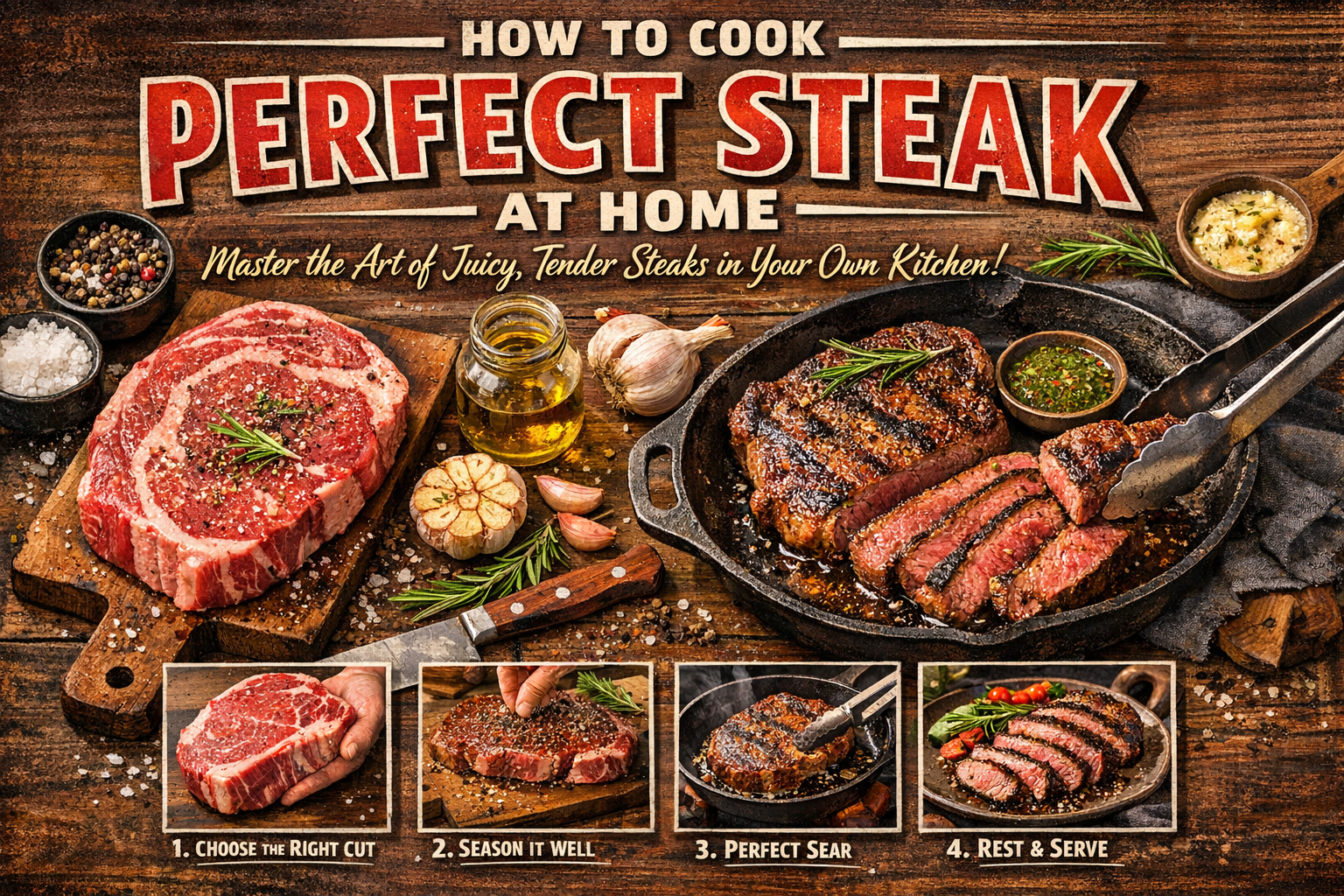

There’s something about a perfectly cooked steak that feels almost out of reach when you’re cooking at home. You’ve been to a great steakhouse. You know what it’s supposed to taste like — that deep, caramelized crust on the outside, the pink, buttery interior, the way it practically melts when you cut into it. And then you go home, try to recreate it, and end up with something that’s either grey and rubbery or raw in the middle with a burnt outside.
It’s frustrating. And it makes people feel like steak is best left to the professionals.
But here’s the honest truth: cooking a perfect steak at home is completely learnable. It’s not about fancy equipment, secret restaurant tricks, or years of culinary training. It’s about understanding a few key principles — and applying them consistently. Once you get those right, your home-cooked steaks will genuinely rival what you get at most restaurants.
This guide covers everything from choosing the right cut to the final resting step that most people skip (and really shouldn’t). Whether you’re a first-timer who’s nervous about ruining an expensive piece of meat, or someone who’s been cooking steaks for years but still can’t quite nail it — there’s something here for you.
Let’s get into it.
Start Here: Choosing the Right Cut
Before heat ever touches your steak, you need to make one important decision — the cut. Not all steaks are created equal, and understanding the differences helps you choose based on your budget, your preferred texture, and how you plan to cook it.
Here are the cuts worth knowing:
Ribeye — The Fan Favorite
If someone tells you to cook one steak to impress people, tell them ribeye. It comes from the rib section of the cow and is heavily marbled with intramuscular fat — those thin white lines running through the meat. When that fat renders during cooking, it bastes the steak from the inside, creating unmatched flavor and a naturally tender bite.
Ribeye is forgiving, too. Because of the fat content, it’s harder to dry out than leaner cuts. It’s the best choice for beginners and experienced cooks alike.
New York Strip (Sirloin Strip) — The Balanced Option
A bit leaner than ribeye, with a firmer texture and a bold, beefy flavor. It has a strip of fat along one edge that crisps up beautifully in the pan. New York strip is the choice for people who want serious flavor without quite as much richness.
Filet Mignon (Tenderloin) — The Luxury Cut
The most tender cut of beef, period. It comes from a muscle that does almost no work, which is why it’s so soft. The trade-off? It’s lean, which means it has less fat-driven flavor than ribeye or strip. It’s also the most expensive. If you’re cooking filet, it’s worth wrapping it in bacon during cooking or serving it with a rich sauce — the flavor benefits from a boost.
T-Bone and Porterhouse — Two Steaks in One
These cuts include both a strip steak and a filet, separated by a T-shaped bone. They’re dramatic, impressive, and delicious — but trickier to cook evenly because the two muscles have different ideal temperatures. For beginners, save these for when you’re more comfortable.
Flank, Skirt, and Flat Iron — Budget-Friendly and Underrated
These are tougher, more muscular cuts that need a bit of extra attention — usually a marinade and always slicing against the grain — but they punch way above their weight in flavor. Great options if you’re cooking for a crowd or working with a tighter budget.
The Most Important Things You Can Do Before You Even Turn on the Stove
A lot of what determines the quality of your finished steak happens before cooking even begins.
Buy Good Meat
This sounds obvious, but it’s worth saying plainly: a mediocre cooking technique applied to excellent beef will beat a perfect technique applied to poor beef every time. Look for:
- USDA Choice or Prime grading (or equivalent in your country) — Prime has more marbling; Choice is excellent and more affordable.
- Bright red color and firm texture. Avoid anything that looks grey or feels slimy.
- At least 1 inch thick, ideally 1.5 inches. Thin steaks cook through before they can develop a proper crust. Thickness gives you control.
A good butcher is worth finding. They’ll cut steaks to order, help you choose the right cut for your goal, and often give you better quality than pre-packaged supermarket steaks.
Bring It to Room Temperature
Take your steak out of the fridge at least 30–45 minutes before cooking. A cold steak dropped into a hot pan creates an immediate problem — the outside overcooks while the center struggles to warm up. Bringing it closer to room temperature means more even cooking throughout.
Dry It Thoroughly
Pat the surface of the steak completely dry with paper towels. And here’s a point that surprises people: moisture is the enemy of a good crust. When a wet steak hits a hot pan, the moisture has to evaporate before the surface can brown. By that time, you’ve already lost heat and precious searing time. A dry surface browns immediately — that’s what you want.
Season Generously — and Early
Use kosher salt or coarse sea salt and freshly cracked black pepper. Season more than you think you need to. Steak is thick, and the seasoning on the outside has to season the whole experience.
For best results, salt your steak at least 45 minutes before cooking — or even the night before. Early salting draws moisture to the surface initially, but that moisture then gets reabsorbed into the meat, carrying the salt deeper and creating a more evenly seasoned result. If you can’t do it early, season right before cooking (not 10–15 minutes before, which gives you the worst of both worlds — moisture drawn out but not reabsorbed).
The Tools That Actually Matter
You don’t need much, but what you do need matters.
A heavy pan — cast iron or stainless steel. This is non-negotiable. Non-stick pans can’t handle the high heat required for a good sear without breaking down. A cast iron skillet holds heat exceptionally well and distributes it evenly, creating the kind of crust that makes a steak worth eating. If you don’t own one, it’s one of the most worthwhile kitchen investments you can make — they last forever and improve with use.
An instant-read thermometer. This is the single tool that takes the guesswork out of steak doneness. Pressing the steak with your finger and guessing by feel works eventually — but a thermometer works every time, from the first try. They’re inexpensive and completely worth it.
Tongs, not a fork. Piercing the steak with a fork lets juices escape. Use tongs.
The Method: How to Cook a Perfect Steak, Step by Step
This method works for ribeye, strip, and filet cooked in a cast iron skillet — the most reliable approach for home cooking.
Step 1: Preheat the Pan Properly
Place your cast iron skillet over high heat and let it preheat for at least 5 minutes. You want it genuinely, aggressively hot. A properly preheated pan is what creates the crust. If it’s not hot enough, the steak will steam instead of sear, and you’ll end up with grey, sad meat.
To test: hold your hand a few inches above the surface. If you can only hold it there for a second before pulling away, you’re ready.
Step 2: Add Oil, Then the Steak
Add a high smoke-point oil — avocado oil, grapeseed oil, or refined coconut oil are all good choices. Skip olive oil for searing; its smoke point is too low and it will burn. Let the oil heat for 30 seconds until it shimmers, then place your steak in the pan.
It should sear loudly and immediately. If it doesn’t, your pan wasn’t hot enough.
Do not touch it. Resist. Let it sear undisturbed for 2–3 minutes, depending on thickness, until it releases naturally from the pan and has a deep, mahogany crust on the underside.
Step 3: Flip Once — Then Baste
Flip the steak and sear the second side for another 2–3 minutes. At this point, add a generous knob of unsalted butter (about 2 tablespoons), a few garlic cloves lightly crushed with the side of a knife, and a sprig or two of fresh thyme or rosemary.
As the butter melts and foams, tilt the pan slightly and use a spoon to continuously baste the top of the steak with the hot, herb-infused butter. This is what restaurant steaks taste like. The basting adds richness, flavor, and helps even out the cooking from the top side.
Step 4: Sear the Edges
Using your tongs, hold the steak upright on its side and press the fat cap and edges against the hot pan for 30–60 seconds each. This renders the fat and adds color to every surface. Don’t skip this — those crispy edges make a difference in the overall experience.
Step 5: Check the Temperature
Use your instant-read thermometer to check the internal temperature. Here are the targets:
- Rare: 120–125°F (49–52°C) — cool, very red center
- Medium-Rare: 130–135°F (54–57°C) — warm, bright red/pink center. The sweet spot for most cuts.
- Medium: 140–145°F (60–63°C) — warm, pink center
- Medium-Well: 150–155°F (65–68°C) — slightly pink
- Well Done: 160°F+ (71°C+) — no pink. Not recommended for quality cuts — you’re cooking out the very thing that makes them good.
Pull the steak off the heat when it’s 5°F below your target temperature. Carryover cooking will take it the rest of the way during resting.
Step 6: Rest the Steak — This Step Is Not Optional
Place the steak on a cutting board or plate and let it rest for 5–10 minutes before cutting. Tenting loosely with foil is fine but not required.
Here’s why this matters and why so many people skip it to their regret: when meat cooks, the heat drives moisture toward the center. Cutting immediately releases all of that juice onto your cutting board instead of redistributing it through the meat. Resting gives the moisture time to settle back evenly throughout. The difference between a rested and un-rested steak is a pool of juice on your board versus a juicy, moist bite.
Five minutes. That’s all it takes. Be patient.
The Reverse Sear Method: For Thick Steaks and Foolproof Results
If you’re working with a very thick cut — anything over 1.5 inches — the reverse sear is worth knowing about. It flips the traditional order of operations: you cook the steak in the oven first, low and slow, then sear it in a hot pan at the end.
Why it works: The gentle oven heat brings the steak to just below your target temperature slowly and evenly, with almost no temperature gradient between the outside and center. Then the final sear creates the crust. The result is a perfectly even doneness edge-to-edge — no grey band of overcooked meat surrounding the center.
How to do it: Place the seasoned steak on a wire rack set over a baking sheet. Cook in a 250°F (120°C) oven until the internal temperature reaches about 115°F (46°C) for medium-rare — usually 25–45 minutes depending on thickness. Remove from the oven, let it rest for 10 minutes, then sear in a screaming-hot cast iron pan for 60–90 seconds per side. The crust forms fast because the exterior is already dry from the oven.
Na prática, this method is more forgiving than the traditional approach, produces a more even result for thick steaks, and is absolutely worth trying once you’re comfortable with the basics.
Sauces and Finishing Touches Worth Knowing
A great steak doesn’t need much — but a few simple additions can take it further.
Compound butter. Softened butter mixed with herbs, garlic, and a pinch of salt. Slice a round onto the hot steak right before serving and watch it melt into every crevice. Blue cheese butter, herb butter, and truffle butter are all classics. Takes about five minutes to make and keeps in the freezer for weeks.
Pan sauce. After removing the steak, don’t throw out what’s in the pan. Add a splash of red wine or beef stock to the hot skillet, scraping up all the browned bits from the bottom. Reduce for a minute, add a knob of butter, swirl until glossy. You have a restaurant-quality pan sauce in under 3 minutes.
Chimichurri. An Argentine sauce of parsley, garlic, red wine vinegar, and olive oil. It cuts through the richness of fatty cuts like ribeye beautifully and adds brightness and freshness that makes the whole plate more interesting.
Maldon flaky salt. A pinch of flaky salt on the finished steak adds texture and a tiny burst of salinity in each bite. It’s a finishing touch, not a cooking ingredient — the difference matters.
The Mistakes That Ruin Most Home Steaks
Even knowing the right method, people make the same errors. Here are the big ones:
Pan not hot enough. The number one mistake. You cannot develop a proper sear on a lukewarm pan. If the steak doesn’t sizzle dramatically when it hits the surface, remove it and let the pan get hotter.
Moving the steak too much. Let it sit. The steak will release when it’s ready — trying to lift it too early tears the crust. If it’s sticking, it’s not done searing yet.
Skipping the resting step. Covered above, but worth repeating: a steak cut immediately is a juicy plate, not a juicy steak.
Cooking straight from the fridge. Always bring to room temperature first. This alone improves evenness of cooking significantly.
Not using a thermometer. Guessing leads to inconsistency. A thermometer gives you certainty every time.
Over-seasoning with too many things. Garlic powder, onion powder, paprika, steak seasoning blends — all these can work, but they tend to distract from the natural flavor of good beef. Salt, pepper, butter, and herbs is really all you need.
A Simple Steak Dinner That Comes Together in Under 30 Minutes
Here’s how a full steak dinner looks in practice:
- Take steak out of fridge, pat dry, season generously with salt and pepper. Let rest 30–45 minutes.
- While the steak rests, prep your sides — roasted potatoes, sautéed greens, or a simple salad.
- Preheat cast iron skillet over high heat for 5 minutes.
- Add oil, sear steak 2–3 minutes per side without touching.
- Add butter, garlic, herbs. Baste for 60–90 seconds. Sear edges.
- Check temperature. Remove 5°F below target.
- Rest 5–10 minutes while you plate your sides.
- Slice against the grain (for tougher cuts), finish with a pinch of flaky salt, serve.
That’s it. Thirty minutes, one pan, one truly excellent steak.
Final Thoughts: Great Steak Is a Skill, Not a Secret
Let’s bring it home. Cooking a perfect steak at home isn’t mysterious — it’s methodical. You choose a good cut, bring it to room temperature, dry the surface, season well, cook in a screaming-hot pan, baste with butter and herbs, check the temperature, and rest it before cutting. Do those things and you will have a better steak than most restaurants serve.
The first time might not be perfect. That’s completely fine. Every steak you cook teaches you something — how your particular stove behaves, how thick your cut was, what your pan sounds like when it’s ready. Within a few tries, this will feel natural.
So — which cut are you planning to start with? Are you a ribeye person, or have you always been curious about filet? Have you tried the reverse sear before? Drop it in the comments — I genuinely enjoy hearing where people are starting from.
And if you’ve got a specific steak question — a cut you’ve been struggling with, a method you’ve tried, or a sauce you want to figure out — leave it below. Your question might just become the next article in this series.