The Best Fluffy Pancakes recipe you will fall in love with. Full of tips and tricks to help you make the best pancakes.

There’s a moment every home cook knows well. You follow a recipe exactly — same ingredients, same steps, same timing — and yet, when you taste it, something’s missing. It’s flat. It’s fine. But it’s not that.
Meanwhile, you eat at your aunt’s house, or a tiny neighborhood restaurant, or a friend’s place, and the exact same dish tastes completely alive. Complex. Layered. Like it has a story.
The difference, almost every single time, is spices — and more specifically, knowing how to use them.
Learning how to use spices like a pro isn’t about memorizing a long list of exotic ingredients or turning your kitchen into a laboratory. It’s about understanding a few core principles that completely change how you cook. And once you get it, there’s genuinely no going back.
This article is going to walk you through everything: how spices work, when to add them, how to combine them, common mistakes that mute their flavor, and specific tips that will immediately make your food taste better. Let’s get into it.
What Spices Actually Are (And Why They Matter)
Before getting into technique, it helps to understand what you’re working with.
Spices are dried plant materials — seeds, bark, roots, fruits, flowers — that contain aromatic compounds called volatile oils. These oils are what give each spice its characteristic smell and flavor. When you heat a spice, or grind it, or expose it to fat, those oils are released and begin doing their work in the dish.
Herbs, by contrast, are usually the fresh or dried leaves of plants. The line between herbs and spices gets blurry sometimes — coriander seeds are a spice, while cilantro (the leaves of the same plant) is an herb. But for our purposes, the technique for using both overlaps significantly.
And here’s the point that most people miss: a spice sitting in a jar isn’t doing much. It needs activation. It needs heat, fat, moisture, or acid to fully express itself. The art of using spices is really the art of knowing how and when to activate them.
The Biggest Mistake Home Cooks Make With Spices
Let me just say this directly: most people add their spices too late, in too small a quantity, and without any heat.
Dumping ground cumin into a soup right before serving and calling it seasoned doesn’t really work. The cumin is there — technically — but its flavor hasn’t had a chance to bloom, to integrate, to become part of the dish. It just sits on top.
And here’s another thing that’s worth saying: most home cooks are dramatically under-seasoning their food out of fear. Fear of too much spice, fear of getting it wrong, fear of waste. But the reality is that cooking with intention and confidence — using a real amount of spice, not a timid pinch — is what separates food that tastes “homemade” (in the apologetic sense) from food that tastes genuinely good.
So let’s talk about how to actually use spices properly.
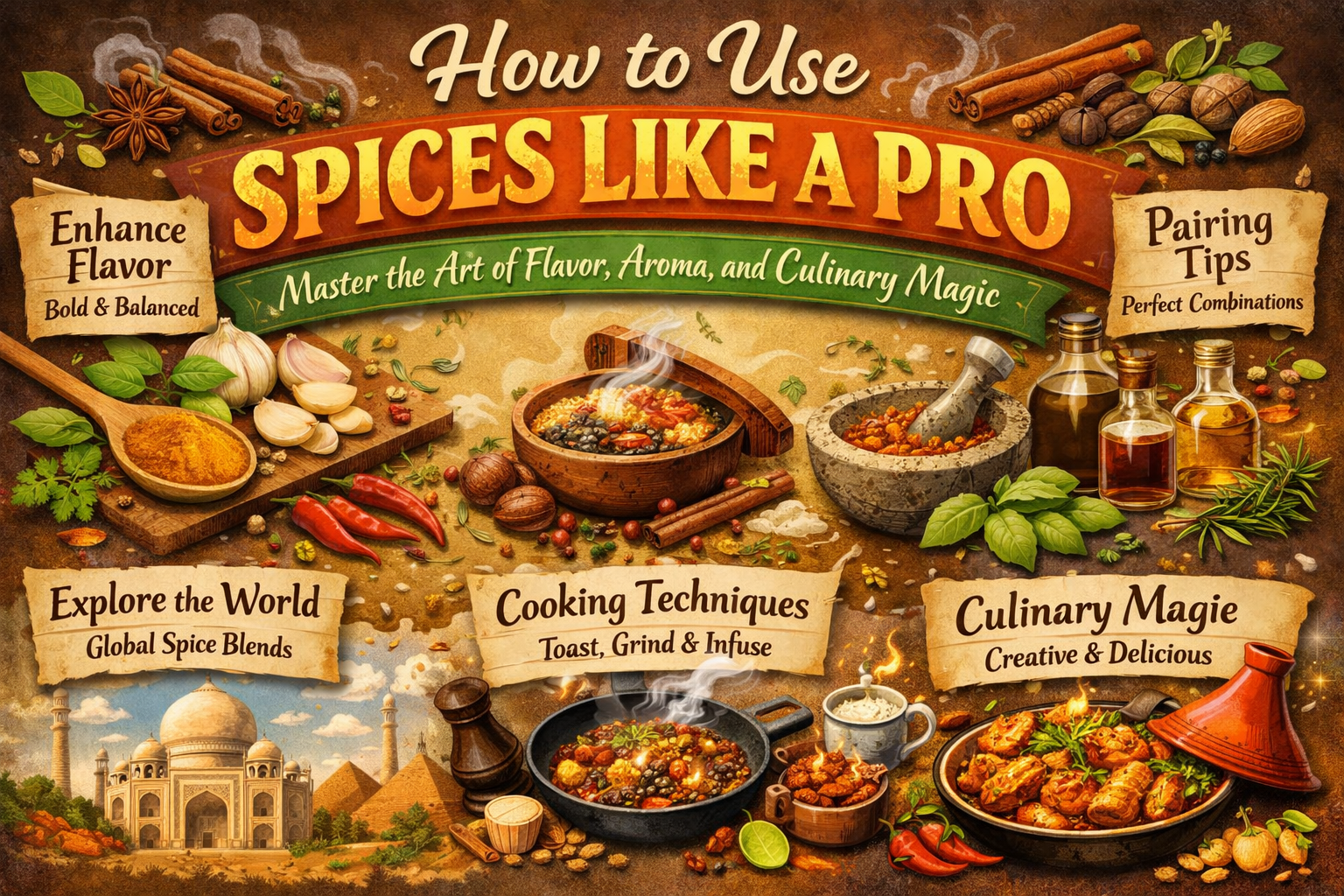
How to Use Spices Like a Pro: Core Techniques
Bloom Your Spices in Fat First
This is probably the single most impactful technique for improving how you cook with spices.
Before adding any liquid, vegetables, or protein to your pan, add your whole or ground spices directly to the hot oil or butter. Let them cook for 30 to 90 seconds, stirring constantly, until you can smell them — really smell them — rising from the pan.
This process is called blooming, and it’s used in cuisines all over the world for a reason: fat is excellent at extracting and carrying flavor. When spices hit hot fat, their volatile oils are released and distributed throughout the cooking medium. Everything you add afterward gets coated in that flavor from the very beginning.
Try it once with cumin seeds in olive oil before making any rice dish or bean stew. The difference is immediate and dramatic.
Toast Whole Spices Before Grinding
If you’re using whole spices — cinnamon sticks, cardamom pods, whole coriander seeds, black pepper, star anise — toasting them in a dry pan before grinding transforms them entirely.
Place them in a cold skillet, turn the heat to medium, and let them warm up slowly, swirling or stirring every 30 seconds. When they start to smell fragrant and look very slightly darker, take them off the heat immediately. They’ll continue cooking briefly from residual heat, so pull them before you think they’re done.
Let them cool for a minute, then grind in a spice grinder or mortar and pestle. The difference in aroma compared to pre-ground, straight-from-the-jar powder is significant. It’s not subtle. It’s the kind of difference that makes someone ask, “wait, what did you put in this?”
Layer Spices at Different Stages of Cooking
Professional cooks don’t add all their spices at once. They layer them — some early in the process, some in the middle, some at the very end.
Here’s a rough framework:
- Early stage (with fat, before other ingredients): Whole spices, hearty ground spices like cumin, coriander, turmeric, smoked paprika. These need time and heat to fully develop.
- Mid-stage (when adding liquids or midway through cooking): More delicate ground spices, blends like garam masala or za’atar, dried herbs like thyme and oregano.
- Finishing (right before serving): Fresh herbs, finishing spices like sumac or Aleppo pepper, a final pinch of flaky salt, a squeeze of citrus to brighten everything.
This approach builds complexity. Each layer adds a different note — some deep and roasted, some bright and fresh — and the result is a dish that keeps revealing itself as you eat it.
Use Salt as a Partner, Not a Crutch
Here’s an important point that gets overlooked: salt isn’t a spice, but it’s the key that unlocks every other spice in your dish.
Salt doesn’t add flavor the way spices do — it amplifies what’s already there. It suppresses bitterness, enhances sweetness, and makes aromas more perceptible. A dish that tastes “flat” often isn’t under-spiced. It’s under-salted. Adding a small pinch of salt frequently reveals flavors that were already present but muted.
The lesson: season throughout the cooking process, not just at the end. And taste as you go.
Getting to Know the Spice Pantry
You don’t need fifty different spices to cook well. You need maybe fifteen, used with confidence and intention. Here are the ones worth knowing deeply.
The Everyday Workhorses
Cumin — Earthy, warm, slightly bitter. The backbone of Mexican, Indian, Middle Eastern, and North African cooking. Works beautifully bloomed in oil.
Coriander — Citrusy, floral, mild. Often paired with cumin. Works in spice rubs, stews, and vegetable dishes.
Smoked Paprika — Sweet with a deep, woodsy smokiness. Transforms roasted vegetables, chicken, eggs, and soups. A jar of smoked paprika is one of the best investments in your spice cabinet.
Turmeric — Earthy, slightly bitter, with a bright golden color. Used heavily in South Asian cooking. Pairs well with black pepper (which actually enhances the absorption of curcumin, its active compound).
Cayenne — Pure heat without a lot of flavor complexity. Use sparingly as a background element or more generously if you want actual heat in the dish.
Cinnamon — Most people use this only in desserts, which is a real missed opportunity. Cinnamon adds warmth and depth to savory dishes — lamb stews, Moroccan tagines, tomato sauces, lentil soups.
Black Pepper — Probably the most underrated spice in the Western kitchen. Fresh-ground black pepper has a floral, piney quality completely different from pre-ground. Use it generously, and grind it fresh.
The Supporting Cast Worth Exploring
Cardamom — Floral, slightly menthol, intensely aromatic. Star of chai, Scandinavian baking, and Middle Eastern rice dishes. A little goes a long way.
Star Anise — Licorice-forward, sweet, warm. Used in Chinese braising liquids, Vietnamese pho, and some French preparations. Distinctive and powerful.
Sumac — Tart, fruity, slightly tangy. Ground from dried berries. Used in Middle Eastern cooking as a finishing spice — sprinkled over hummus, salads, grilled chicken. If you haven’t used sumac yet, make it a priority.
Za’atar — Technically a blend: dried thyme, sesame seeds, sumac, salt. Incredibly versatile as a finishing spice, mixed with olive oil for a dip, or rubbed on flatbread before baking.
Smoked Chipotle or Ancho Chile Powder — More complex than cayenne, with deep fruity, smoky undertones. Works beautifully in chili, marinades, and rubs.
Garam Masala — An Indian spice blend typically including coriander, cumin, cardamom, pepper, cinnamon, cloves, and nutmeg. Added at the end of cooking to add warmth and complexity.
Fennel Seeds — Anise-like, sweet, herbal. Incredible in Italian sausage, roasted pork, Mediterranean fish dishes, and even homemade bread.
How to Build Spice Blends That Actually Work
One of the most satisfying skills you can develop is making your own spice blends. It’s faster than it sounds, it keeps beautifully in a jar, and it elevates everything you cook with it.
The basic principle for a balanced spice blend is:
- A base: Something earthy and grounding — cumin, coriander, paprika.
- A warm note: Cinnamon, cloves, allspice, cardamom.
- A bright note: Sumac, dried citrus peel, dried ginger.
- Heat: Cayenne, black pepper, white pepper.
- Something aromatic: Fennel seed, star anise, dried herbs.
You don’t need all five categories in every blend — but this framework helps you create something rounded rather than one-dimensional.
A Simple All-Purpose Spice Rub
Here’s one to start with. Mix together:
- 2 tablespoons smoked paprika
- 1 tablespoon cumin
- 1 tablespoon coriander
- 1 teaspoon garlic powder
- 1 teaspoon black pepper
- ½ teaspoon cayenne
- ½ teaspoon cinnamon
- 1 teaspoon salt
Use this on chicken, pork, roasted vegetables, or even mixed into ground beef before forming burgers. Store in a small jar. It’ll last for weeks.
Matching Spices to Ingredients
A question that comes up a lot is: how do I know what spice goes with what food?
There’s no single answer, but there are patterns you can learn:
Chicken is mild and takes on whatever you give it. Almost any spice profile works — Mediterranean herb blends, Indian spice rubs, smoked paprika with garlic, lemon with za’atar.
Lamb is rich and slightly gamey. It pairs beautifully with warm spices that complement that richness: cumin, coriander, cinnamon, rosemary, mint.
Fish and seafood are delicate. You want bright spices rather than heavy ones — fennel seed, lemon pepper, smoked paprika (in moderate amounts), dill, coriander.
Root vegetables (carrots, sweet potato, beets) have a natural sweetness that plays well with warm spices: cumin, cinnamon, ginger, turmeric, smoked paprika.
Legumes (lentils, chickpeas, black beans) are earthy and absorbent. They can handle bold spice profiles — cumin-heavy blends work especially well, as do North African combinations like harissa-inspired mixes.
Eggs are one of the best vehicles for spice experimentation. Smoked paprika, everything bagel seasoning, za’atar with olive oil, turmeric, Aleppo pepper — eggs accept almost anything graciously.
Storing Spices: What Most People Get Wrong
Here’s a point that’s practical and important: the way you store spices directly affects how they perform.
Most spice racks are displayed near the stove for convenience. And that’s genuinely one of the worst places to keep them. Heat, humidity, and light all degrade volatile oils rapidly. A spice kept near the stove might lose most of its potency in a matter of months.
The best storage spots are:
- A drawer away from the stove
- A closed cabinet
- Away from direct light and heat sources
As for how long spices last: whole spices stay potent for 2–4 years. Ground spices start degrading significantly after about a year. The test is simple — smell them. If there’s barely any aroma when you open the jar, the flavor is mostly gone. Time to replace them.
And one more thing: buying spices in small quantities from bulk bins or specialty spice shops is often fresher and cheaper than buying big jars that sit half-used in your cabinet for three years.
Spices and Health: What’s Actually Worth Knowing
Since this blog covers health topics too, a note on spices and their benefits — without overstating things.
Several commonly used spices do have real, studied health properties. Turmeric contains curcumin, which has anti-inflammatory properties in lab studies, though the amounts you’d eat in food are much smaller than what’s tested in research contexts. Ginger is genuinely useful for nausea. Cinnamon has been studied in relation to blood sugar regulation. Black pepper contains piperine, which appears to enhance the absorption of certain other compounds.
Are spices medicine? No. But they’re also not just flavor — they’re dense with plant compounds that your body uses in various ways. Cooking with a wide variety of spices is, at minimum, a way of eating more diverse plant-based compounds. That’s genuinely a good thing, no exaggeration needed.
A Week of Cooking With Intention: Putting It Together
What does it actually look like to cook with spices more deliberately? Here’s a simple example across a few meals:
Monday dinner — Cumin-roasted chickpeas and sweet potatoes Bloom cumin, coriander, and smoked paprika in olive oil. Toss with chickpeas and cubed sweet potato. Roast at 425°F for 30 minutes. Finish with a squeeze of lemon and fresh cilantro.
Tuesday — Za’atar eggs Heat olive oil in a pan. Add a generous pinch of za’atar to the hot oil, let it sizzle for 20 seconds. Crack in two eggs. Cook to your preference. Serve on toast. Takes 5 minutes. Tastes like something from a café.
Wednesday — Simple spiced lentil soup Bloom onion in oil with cumin seeds. Add garlic, ginger, turmeric, coriander. Add red lentils and vegetable broth. Simmer 20 minutes. Blend half for texture. Finish with a squeeze of lemon and fresh parsley.
Thursday — Smoked paprika chicken thighs Rub chicken thighs with smoked paprika, garlic powder, salt, pepper, and a little cinnamon. Let sit 20 minutes. Sear in a cast iron pan, finish in the oven at 400°F for 20 minutes. Rest before serving.
Friday — Rice bowl with garam masala yogurt sauce Cooked basmati rice, roasted vegetables of choice. Sauce: Greek yogurt, a pinch of garam masala, salt, lemon juice, a little garlic. Drizzle over everything.
None of these are complicated. All of them are significantly better than their unseasoned versions — by a wide margin.
Conclusion: The Confidence to Season
Learning how to use spices like a pro isn’t a skill that takes years to develop. It takes a handful of meals cooked with more attention than usual. It takes being willing to smell your spices, to bloom them in fat, to taste as you go, to add a pinch more than you think you should.
The techniques in this article — blooming, toasting, layering, blending — are the actual tools that professional cooks and experienced home cooks use every single day. They’re not secrets. They just rarely get explained clearly.
Start with one technique this week. Bloom your spices before adding anything else to the pan. See what happens. I’m confident you’ll notice the difference on the first try.
And I’d genuinely love to hear how it goes. Leave a comment below — did you try any of these techniques? Did something click that didn’t before? Is there a specific spice or cuisine you’ve been wanting to understand better?
Drop your questions and suggestions in the comments. Your ideas shape what gets written next here, and I read every single one.