The Best Fluffy Pancakes recipe you will fall in love with. Full of tips and tricks to help you make the best pancakes.
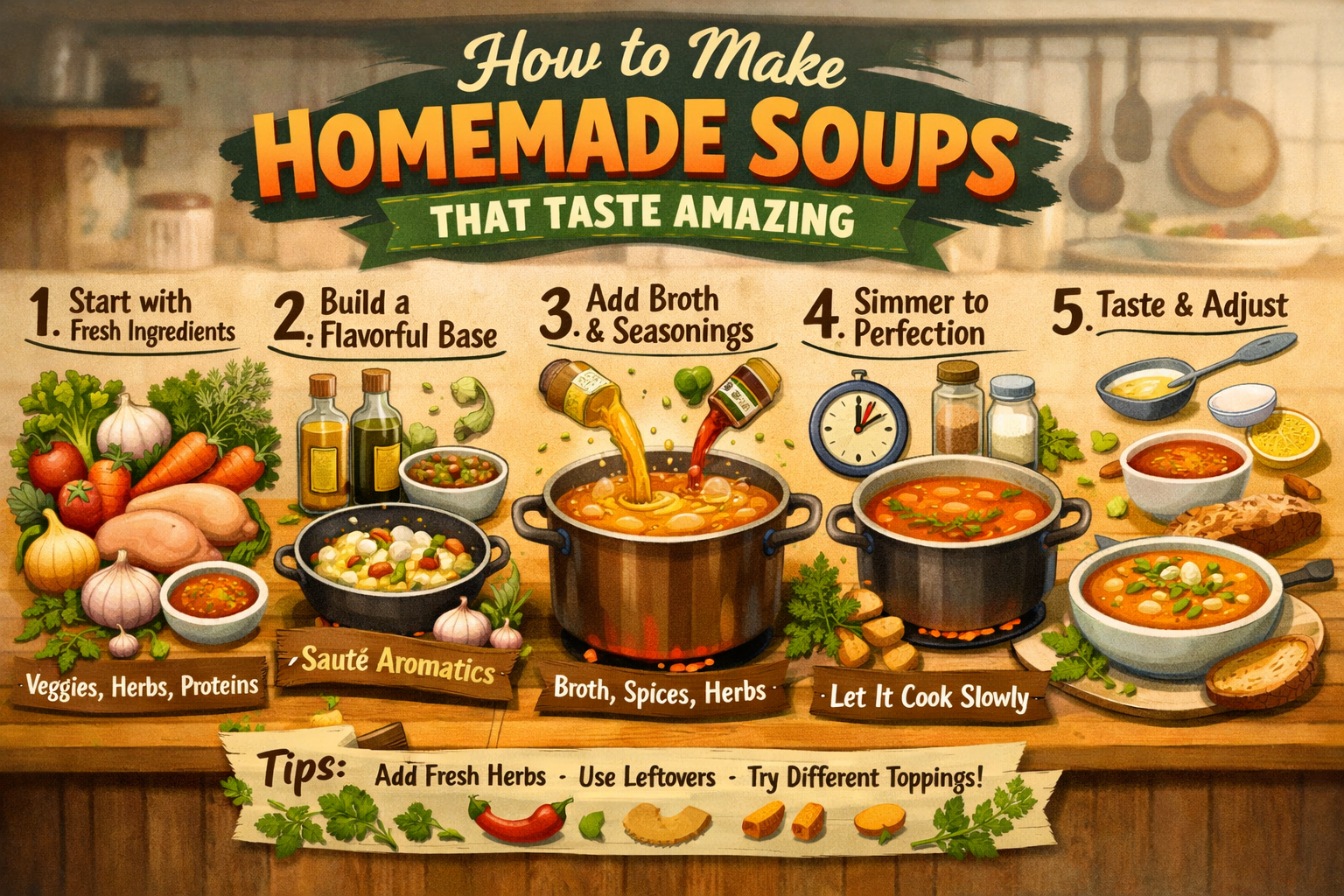

Soup is the dish that reveals a cook. Not because it’s technically demanding — it isn’t, most of the time — but because it requires something that technique alone can’t manufacture: patience with the process and an understanding of how flavor is built layer by layer over time.
You’ve had both kinds of soup. The kind that tastes like everything is floating in warm water — technically cooked, technically a soup, but flat and forgettable in a way that no amount of seasoning at the table can fix. And you’ve had the other kind. The kind that makes you lean over the bowl before the first spoonful, because the smell alone is already doing something. The kind where the broth has that depth that seems impossible given the ingredients — where you can taste the sweetness of slowly cooked onion, the complexity of a long simmer, the brightness of something acidic that pulls everything together at the end. The kind that makes the whole house smell like somewhere you want to be.
The difference between those two soups isn’t the recipe. It’s the understanding of what makes soup taste good — and that understanding is genuinely learnable, not something you’re born with or not.
This guide covers all of it. The principles behind building flavor that carries. The techniques that apply across every type of soup. The specific methods for the most important categories. And a collection of recipes that demonstrate the principles in action, built to be understood rather than just followed.
By the end, you’ll make better soup than you’ve made before — and more importantly, you’ll understand why it’s better, which means you can apply that understanding to every soup you make from here on out.
The Single Most Important Principle in Soup Making
Before anything else — before the recipes, the techniques, the ingredient lists — there’s one idea worth understanding completely because everything else flows from it.
Soup flavor is built, not added.
This sounds simple and is easy to underestimate. What it means in practice: you cannot make a deeply flavored soup by throwing ingredients into water and simmering them for twenty minutes. The flavor that makes a soup genuinely memorable isn’t coming from the ingredients as they are — it’s coming from the transformations those ingredients undergo before the liquid ever enters the pot.
The Maillard reaction when you brown meat. The caramelization of onions over low heat for a long time. The blooming of dried spices in hot fat. The gentle sizzle of aromatics in oil before liquid is added. These are not optional preliminary steps you can skip if you’re in a hurry. They are the soup. They are where the flavor lives.
Every single recipe in this guide builds flavor this way — sequentially, deliberately, at each stage before moving to the next. Once you internalize this principle, the question “why does my soup taste flat?” almost always has the same answer: one of these stages was rushed or skipped.
The Flavor Foundation: Understanding Aromatics
Every great soup starts with aromatics — the vegetables, herbs, and spices that provide the flavor base everything else builds on. Understanding which aromatics to use, how to treat them, and in what order to add them is the foundation of soup-making that actually tastes like something.
The Holy Trinity (Or Mirepoix, Or Sofrito — It Has Many Names)
Most of the world’s soup traditions arrive at roughly the same conclusion about flavor foundations, despite coming from completely different culinary contexts. French cuisine uses mirepoix — onion, carrot, and celery in a 2:1:1 ratio. Creole cooking uses the “holy trinity” — onion, celery, and bell pepper. Italian soffritto adds garlic to onion, carrot, and celery. Spanish sofrito builds from tomato, onion, and garlic. The specific components vary. The principle is identical: a combination of alliums, something sweet, and something savory forms the flavor platform everything else stands on.
For most Western soups, the practical foundation is: onion, carrot, celery, and garlic. These four vegetables, cooked slowly in fat until softened and slightly golden, create a sweet, savory, fragrant base that supports enormous variety above it. The variations you make above this base — the spices, the proteins, the liquid, the secondary vegetables — produce completely different soups. But the foundation remains.
Cooking Aromatics Properly: The Step People Rush
The single most common soup-making mistake is not overcooking the soup — it’s undercooking the aromatics.
When onion is added to a hot pan with fat and cooked over medium heat, it goes through distinct stages:
Raw (0 minutes): Pungent, sharp, harsh. Softened (5 minutes): Translucent, still slightly sharp. Properly sweated (8–10 minutes): Soft, sweet, most of the sharpness gone. Lightly golden (12–15 minutes): Beginning to caramelize, deeper sweetness. Fully caramelized (30–45 minutes): Deep amber, jammy, intensely sweet and savory.
Most soup recipes say “sauté the onion for 3–5 minutes.” That gets you to stage one. What you want for most soups is stage three or four, minimum. The difference in flavor between a three-minute onion and a twelve-minute onion is not subtle. It’s the difference between soup that tastes like it has onion in it and soup that has depth.
Take the time. Use medium-low heat. Stir occasionally. Don’t rush this step.
Fat Matters More Than You Think
The choice of fat is not cosmetic — it contributes flavor and determines how the aromatics cook.
Butter adds richness and a gentle dairy flavor that works beautifully in cream-based soups, French-style broths, and anything where delicacy is the goal.
Olive oil adds fruitiness and a Mediterranean character that belongs in tomato soups, bean soups, Italian-style broths, and most vegetable-based soups.
Rendered animal fat — chicken fat (schmaltz), duck fat, bacon fat, beef tallow — adds profound depth and a savory quality that vegetable oils can’t match. If you’re making a chicken soup or a beef-based soup, cooking the aromatics in fat rendered from the same animal produces a coherence of flavor that other fats don’t provide.
Neutral oil — vegetable, canola, avocado — adds no flavor of its own and is the right choice when you want the aromatics and spices to define the flavor without any competing fat character.
In practice: always use at least a tablespoon more fat than feels necessary. Aromatics cooked in too little fat steam and stew rather than sauté, which produces a different — and less flavorful — result.
The Spice Bloom: The Two-Minute Step That Changes Everything
If you add dried spices directly to liquid, they release their flavor slowly and often unevenly. If you add them to hot fat with aromatics before the liquid goes in, something different happens: the heat causes the volatile aromatic compounds in the spices to release in the fat, which then distributes them throughout every subsequent component of the soup.
This is called blooming, and it’s one of the highest-value techniques in soup making for the time it requires — roughly sixty to ninety seconds.
After your aromatics are properly softened, push them to the side of the pot, add a touch more oil to the center if needed, and add your dried spices to the hot oil. Stir and cook for sixty seconds — you’ll see the color deepen and smell the spices intensify dramatically. Then immediately incorporate the aromatics back in and continue.
This single step transforms the character of spiced soups — curries, chilis, Moroccan-spiced soups, lentil soups with cumin and turmeric — from “soup with spices in it” to “spiced soup.” The difference is in where the flavor lives: coating the oil that coats everything else, rather than floating free in the liquid.
Liquid: The Backbone of Flavor
The liquid you use to make soup is doing more work than any other ingredient. Use poor-quality liquid and no amount of technique compensates for it. Use good liquid and the soup is halfway there before anything else is added.
Homemade Stock vs. Store-Bought: The Honest Comparison
Homemade stock is genuinely better than store-bought. This is not culinary snobbery — it’s a factual difference in gelatin content, depth, and character. Stock made from bones has body and richness from the collagen that converts to gelatin during long cooking. Most store-bought stock contains no bones and therefore no gelatin, which is why it’s thin and flat where homemade stock is silky and round.
That said — homemade stock is a project. It requires bones, hours of simmering, and the decision to spend a Sunday afternoon making something you won’t use until next week. For most weeknight soups, good store-bought stock works perfectly well if you know which corners to cut and which not to.
Choosing good store-bought stock: Look for options without added MSG, artificial flavors, or excessive sodium. Reduced-sodium or low-sodium stocks give you more control over seasoning. Pacific Foods, Imagine Foods, and Kitchen Basics make consistently good options. Avoid stocks sold in foil pouches rather than cartons — they tend to be more concentrated and harder to calibrate.
A hybrid approach: Keep parmesan rinds in your freezer. A parmesan rind simmered in any broth-based soup adds a depth of flavor that’s difficult to identify but unmistakably present. It’s one of the most effective flavor-boosting tricks in home cooking, it costs nothing (the rind is what you’d otherwise discard), and it works regardless of whether your base stock is homemade or store-bought.
Making Simple Chicken Stock (For When You Have Time)
If you roast a whole chicken, you’re already halfway to a stock. Don’t throw away the carcass.
How to make it: Place the chicken carcass (and any bones from the meal) in a large pot. Add a halved onion, two carrots broken in half, two celery stalks, a few peppercorns, a bay leaf, and a handful of parsley stems. Cover with cold water by about 5cm. Bring to a barely visible simmer over medium heat — you should see occasional bubbles rising but no rolling boil. Skim any grey foam that rises in the first fifteen minutes. Simmer uncovered for 2–3 hours. Strain through a fine-mesh sieve, cool, and refrigerate. The fat will rise and solidify on top — scoop it off before using.
The result is a silky, golden, deeply flavored stock that makes any soup built on it noticeably better. Make a large batch and freeze in one-cup portions.
Water as Stock: The Emergency Technique
When you have no stock and no time to make it, you can build a reasonable approximation of stock flavor into the soup itself by adding: a parmesan rind, a generous amount of aromatics (onion, carrot, celery), whole peppercorns, a bay leaf, and enough salt. Simmering these components in water for twenty minutes before adding the main soup ingredients produces a base that’s meaningfully more flavored than plain water. It’s not stock — but it’s not nothing.
The Finishing Touches: Where Good Soup Becomes Great Soup
Most home cooks stop at “the soup is cooked and seasoned.” The extra steps that take a soup from good to memorable happen in the last five minutes and cost almost no additional effort.
Acid: The Most Underused Finishing Move
Acid — a squeeze of lemon, a splash of vinegar, a spoonful of yogurt, a pour of good white wine — does something to soup that salt cannot. It brightens. It lifts. It makes flavors that have become muted from long cooking suddenly snap back into focus. A soup that tastes flat and one-dimensional after seasoning with salt often needs acid, not more salt.
The amount needed is usually very small — the juice of half a lemon in a pot of soup, a tablespoon of sherry vinegar in a bean stew. You’re not making the soup taste sour. You’re using acid as a flavor enhancer.
Add acid at the end, off the heat or just before serving. Adding it too early causes it to cook off or change character.
Match the acid to the soup:
- Lemon juice: universally useful, especially for vegetable-based, legume-based, and Mediterranean soups
- Red wine vinegar: excellent in heartier soups, bean soups, anything with tomato
- Sherry vinegar: deeper and more complex, excellent in roasted tomato, mushroom, and Spanish-style soups
- Apple cider vinegar: subtle and sweet, works in American-style soups, butternut squash, and root vegetable soups
- White wine vinegar: light and clean, good in cream-based soups and delicate broths
Fat at the Finish
A drizzle of good olive oil, a knob of butter whisked in, a spoon of crème fraîche, a ladle of cream swirled through — fat added at the end of cooking rounds and enriches soup in a way that fat added at the beginning doesn’t. It stays present on the surface and in the first few spoonfuls, coating the palate and providing richness that long-cooked fat has lost.
This is the technique behind the olive oil drizzled over minestrone just before serving. The knob of butter whisked into a French onion soup. The crème fraîche stirred into a roasted tomato soup. Each one costs seconds and produces a noticeably more luxurious bowl.
Fresh Herbs at the End
Dried herbs added early in the cooking process lose their volatile flavor compounds during the long simmer. Fresh herbs added at the end — or just before serving — retain their brightness and add a fresh dimension that counters the richness of long-cooked soup.
The combination of cooked dried herbs (for depth) and fresh herbs added at the finish (for brightness) produces a more complete flavor profile than either alone. Most soups benefit from this combination: dried thyme in the pot, fresh thyme or parsley scattered over the bowl before serving.
The Seven Soup Types: Methods and Principles for Each
Type 1 — Clear Broth Soups
The most honest expression of your stock’s quality. Chicken noodle, French consommé, Vietnamese pho — these soups have nowhere to hide because the broth is the dish.
The principle: The stock must be exceptional. Use homemade or the best commercial stock available. Season the broth on its own before adding anything else — it should be well-seasoned, slightly saline, with depth you can taste.
Making it better: Add whole aromatics to the broth for the last 20–30 minutes of simmering — a few whole peppercorns, a cinnamon stick for pho, a lightly charred ginger for Asian broths — then strain them out. Finish with a small amount of fish sauce (for Asian broths) or a splash of sherry (for Western broths) to add umami depth.
Type 2 — Cream-Based Soups
Bisques, vichyssoise, cream of mushroom, cream of tomato — soups where cream is incorporated to create a smooth, rich, velvety texture.
The principle: The base vegetable or seafood must be fully cooked and properly seasoned before the cream is added. Adding cream to an under-seasoned soup produces a diluted, mild result that no amount of additional seasoning can fix after the fact.
The technique: Sweat aromatics, cook the main ingredient fully in broth, blend until completely smooth, return to low heat, add cream gradually. Never boil a cream soup after the cream is added — it can break the emulsion and curdle.
The texture secret: Blending in batches with a high-powered blender produces a smoother, more velvety result than an immersion blender. With a high-powered blender, pass the soup through a fine-mesh sieve after blending for an absolutely silky result.
Type 3 — Pureed Vegetable Soups
The simplest soup category and among the most forgiving — butternut squash, roasted tomato, roasted carrot, sweet potato, and pea soups all follow the same basic method.
The principle: Roasting the main vegetable before adding it to the soup dramatically improves flavor. Roasted squash, roasted garlic, charred tomatoes — the caramelization and concentration that happens in the oven produces a depth that raw or steamed vegetables don’t have. This is the difference between a butternut squash soup that tastes generically squash-adjacent and one that tastes deeply, specifically of sweet, slightly caramelized squash.
How to do it: Halve the squash or other vegetable, brush with oil, season, and roast at 200°C until caramelized and tender. Scoop out the flesh, add to your sautéed aromatics with stock, simmer briefly, blend.
Type 4 — Chunky Vegetable and Minestrone Soups
Italian-style vegetable soups — minestrone and its variations — are built on the principle of adding ingredients in order of the time they need to cook, so everything finishes simultaneously rather than some things being overcooked while others are underdone.
The principle: Aromatics first and longest. Dense root vegetables next. Beans and grains in the middle period. Quick-cooking vegetables — zucchini, peas, leafy greens — in the last few minutes. Pasta added separately and added to each bowl rather than the pot (pasta left in soup absorbs all the liquid and becomes bloated).
The most important technique: Soffritto — cooking the aromatics with tomato paste in olive oil until the tomato paste darkens and becomes jammy — is what gives Italian vegetable soups their characteristic depth. Take five minutes on this step before adding anything liquid.
Type 5 — Bean and Legume Soups
Lentil soups, black bean soups, white bean with rosemary and garlic, split pea — soups where legumes provide both body and protein.
The principle: Legumes need time and they reward patience. Red lentils cook in twenty minutes and dissolve into the soup for a creamy texture. Green and brown lentils take longer and hold their shape. Dried beans (rather than canned) need to be soaked and simmered for an hour or more — but the resulting texture and flavor is noticeably superior. Canned beans work well and save time; just add them later in the cooking process since they’re already cooked.
The flavor multiplier: In legume soups, the fat finish is particularly important. A drizzle of good olive oil over a bowl of lentil soup, or a spoonful of chili-infused oil over a black bean soup, adds richness that the naturally lean legumes lack and rounds the flavor significantly.
Type 6 — Meat-Based Soups and Braises
Chicken soup, beef and barley, posole, caldo verde — soups where meat provides both the protein and a significant portion of the flavor.
The principle: Brown the meat before adding liquid. This is non-negotiable. Searing meat creates the Maillard reaction — the complex browning chemistry that produces hundreds of flavor compounds not present in raw or simmered-only meat. The flavor difference between a browned and an unbrowned chicken piece in soup is the difference between a soup with depth and one without.
The technique: Dry the meat completely with paper towels before browning. Season generously. Work in batches — crowding the pan drops the temperature and causes steaming rather than browning. Get the outside genuinely brown before removing and continuing. Build the rest of the soup in the same pot, incorporating all the browned bits from the bottom.
Type 7 — Asian Broths and Noodle Soups
Pho, ramen, tonkotsu, laksa, hot and sour soup — this category is defined by bold, complex broths built from specific aromatics, long cooking, and careful balance of multiple flavor dimensions simultaneously.
The principle: These soups depend on umami depth from multiple sources — fish sauce, soy sauce, dried mushrooms, dried shrimp, fermented pastes, bone marrow — layered carefully to create a flavor that seems impossibly complex. The broth is where the time investment goes; the assembly at the bowl is quick.
The key technique for home cooks: Toasting and charring whole aromatics before adding them to the broth — a halved onion held directly over a gas flame until charred, whole garlic and ginger similarly treated — adds a smokiness and depth that uncharred aromatics don’t provide. This is a hallmark of authentic pho and many Japanese broths.
Ten Soups Worth Making From Scratch
Soup 1 — Classic French Onion Soup
Covered in the comfort food guide and worth repeating here because it is the ultimate demonstration of the “cook the aromatics properly” principle. The entire dish is built on onions cooked for 45–60 minutes until deeply caramelized. There is nothing else in this soup that justifies the time it takes — only those onions.
Ingredients (serves 4): 1.5kg onions (thinly sliced), 4 tablespoons butter, 1 tablespoon olive oil, ½ cup dry white wine or dry sherry, 1.5 liters good beef broth, 2 bay leaves, 4 sprigs fresh thyme, salt, pepper. For serving: thick baguette slices (toasted), 200g Gruyère (grated).
Method: Cook the onions in butter and oil over medium-low heat with a pinch of salt, stirring every 10 minutes, for 45–60 minutes until deeply golden-brown throughout — not blond, not orange, genuinely brown. Add wine and reduce. Add broth and herbs, simmer 20 minutes. Season. Ladle into oven-safe bowls, top with toasted baguette and a generous blanket of Gruyère, broil until bubbling and golden.
Soup 2 — Roasted Tomato and Garlic Soup with Basil
The roasting step is what separates this from a pan of canned tomatoes heated with broth.
Ingredients (serves 4): 1.2kg ripe tomatoes (halved) or 2 cans whole peeled tomatoes (spread in a roasting dish), 1 whole head of garlic (top sliced off), 1 large onion (quartered), 1 cup vegetable broth, 1 cup heavy cream (optional but excellent), a large handful of fresh basil, 3 tablespoons olive oil, 1 teaspoon sugar, salt, pepper.
Method: Arrange tomatoes, garlic, and onion on a baking sheet. Drizzle generously with olive oil, season, roast at 200°C for 40 minutes until caramelized and slightly charred. Squeeze garlic from its skins, transfer everything to a pot with broth, simmer 10 minutes. Blend until smooth. Stir in cream if using. Add basil, blend briefly. Season with sugar if acidic. Serve with good bread.
Soup 3 — Spiced Red Lentil and Coconut Soup
One of the most reliable soups in existence — made entirely from pantry ingredients, ready in 30 minutes, deeply satisfying.
Ingredients (serves 4–6): 1½ cups red lentils (rinsed), 1 can crushed tomatoes, 1 can coconut milk, 1 large onion (diced), 4 garlic cloves (minced), 1 tablespoon fresh ginger (grated), 1 liter vegetable broth, 1 teaspoon each of cumin, coriander, turmeric, 1 teaspoon garam masala, ½ teaspoon chili flakes, juice of 1 lemon, fresh cilantro, olive oil, salt.
Method: Sauté onion in oil over medium heat for 10 minutes until golden. Add garlic and ginger, cook 2 minutes. Add all spices, stir 60 seconds until fragrant. Add lentils, tomatoes, coconut milk, and broth. Simmer 25 minutes until lentils dissolve. Finish with lemon juice and generous seasoning. Serve with yogurt and warm flatbread.
Soup 4 — Italian White Bean Soup with Rosemary and Parmesan
Simple, classic, completely satisfying. This is the soup that proves great homemade soups don’t require complexity.
Ingredients (serves 4): 2 cans cannellini beans (drained and rinsed), 1 can crushed tomatoes, 1 onion (diced), 4 garlic cloves (sliced), 2 sprigs fresh rosemary, 1 parmesan rind, 1.2 liters chicken or vegetable broth, 3 tablespoons olive oil (plus extra for drizzling), salt, pepper, good parmesan to serve.
Method: Sauté onion in olive oil over medium heat for 10 minutes. Add garlic and rosemary, cook 2 minutes. Add tomatoes and simmer 5 minutes until thickened. Add beans, broth, and parmesan rind. Simmer 20 minutes. Remove rosemary and parmesan rind. Mash some beans against the side of the pot to thicken. Season generously. Serve with a generous drizzle of good olive oil and parmesan.
Soup 5 — Roasted Butternut Squash Soup
The roasting is what makes this extraordinary. The soup is the roasting.
Ingredients (serves 4): 1 large butternut squash (halved and seeds removed), 1 onion (quartered), 4 garlic cloves (unpeeled), 1 liter chicken or vegetable broth, 1 cup coconut milk or cream, 1 teaspoon smoked paprika, ½ teaspoon ground nutmeg, 3 tablespoons olive oil, salt, pepper.
Method: Place squash halves cut-side up, onion, and garlic on a baking sheet. Drizzle with olive oil and season. Roast at 200°C for 45 minutes until deeply golden and completely tender. Scoop the squash flesh. Squeeze garlic from skins. Transfer to a pot with broth, simmer 10 minutes. Blend completely smooth. Return to pot, stir in coconut milk or cream, add paprika and nutmeg. Season. Serve with toasted pumpkin seeds and a drizzle of cream.
Soup 6 — Classic Chicken Noodle Soup
The one everyone needs in their repertoire — genuinely made, not from a can.
Ingredients (serves 6): 1kg bone-in, skin-on chicken thighs or drumsticks, 3 carrots (sliced), 3 celery stalks (sliced), 1 large onion (diced), 4 garlic cloves (minced), 1.5 liters good chicken broth, 1 cup small pasta or egg noodles, fresh thyme, 2 bay leaves, fresh parsley, salt, pepper, olive oil.
Method: Sear the chicken in a hot pot with oil until golden — 3 minutes per side. Remove and set aside. Sauté onion in the same pot until soft, 8 minutes. Add garlic and cook 1 minute. Add broth, herbs, and chicken. Simmer 30–35 minutes until chicken is cooked through and the broth has taken on depth from the bones. Remove chicken, shred the meat, return to pot. Cook pasta in the soup until just al dente. Remove bay leaves, scatter fresh parsley, season generously.
Soup 7 — Vietnamese-Inspired Beef Broth with Herbs
A simplified weeknight version of pho that captures the essential character — the charred aromatics, the star anise, the fish sauce, the herbs — without the 12-hour bone broth.
Ingredients (serves 4): 1 liter good quality beef broth, 2 cups water, 1 large onion (halved), 4cm piece fresh ginger (halved), 3 star anise, 2 cinnamon sticks, 3 tablespoons fish sauce, 1 tablespoon soy sauce, 1 teaspoon sugar, 200g rice noodles (prepared per package instructions). To serve: thinly sliced beef (sirloin or eye of round), bean sprouts, fresh basil, fresh mint, thinly sliced chili, lime wedges, hoisin sauce.
Method: Char the onion and ginger halves directly over a gas flame or under the broiler until blackened in spots — this is not burning, it’s the technique. Add to a pot with broth, water, star anise, cinnamon, fish sauce, soy sauce, and sugar. Simmer 30 minutes. Strain. Taste and adjust fish sauce and sugar — the broth should be deeply savory with a subtle sweetness. To serve: place noodles in bowls, ladle the boiling broth over thinly sliced raw beef (the boiling broth cooks it on contact), add toppings.
Soup 8 — Ribollita (Tuscan Bread Soup)
One of the great peasant soups of Italy — thick, hearty, built on leftover bread and whatever vegetables are on hand. “Ribollita” means “reboiled,” and the soup is supposed to be made ahead and reheated, becoming thicker and more unified each time.
Ingredients (serves 6): 2 cans cannellini beans, 400g cavolo nero or kale (roughly chopped), 1 can crushed tomatoes, 1 onion + 2 carrots + 2 celery stalks (diced), 4 garlic cloves, 2 cups stale crusty bread (torn into chunks), 1 parmesan rind, 1.5 liters vegetable or chicken broth, 4 tablespoons olive oil, fresh thyme, salt, pepper.
Method: Build the soffritto — sauté onion, carrot, and celery in olive oil over medium-low heat for 15 minutes until completely soft. Add garlic, tomatoes, and thyme, cook 5 minutes. Add beans (mash a third of them directly in the pot), kale, broth, and parmesan rind. Simmer 20 minutes until kale is tender. Add the bread and stir until it softens and begins to dissolve into the soup, thickening it significantly. Season. Serve with a generous drizzle of your best olive oil.
This soup becomes extraordinary the next day, reheated slowly with a splash of water. It’s supposed to be thick — almost more stew than soup.
Soup 9 — Roasted Red Pepper and Chorizo Soup
A bold, smoky, satisfying soup that comes together in thirty minutes with pantry staples and a jar of roasted peppers.
Ingredients (serves 4): 1 jar roasted red peppers (drained), 150g cooking chorizo (diced), 1 can crushed tomatoes, 1 onion (diced), 4 garlic cloves, 1 liter chicken broth, 1 teaspoon smoked paprika, ½ teaspoon cumin, 2 tablespoons olive oil, salt, pepper, fresh parsley, crème fraîche to serve.
Method: Cook chorizo in the pot over medium heat until golden and the red oil renders — about 4 minutes. Remove and set aside. Sauté onion in the chorizo fat until soft. Add garlic and spices, stir 1 minute. Add tomatoes, roasted peppers, and broth. Simmer 15 minutes. Blend completely smooth. Return chorizo to the pot. Season. Serve with a spoon of crème fraîche and scattered parsley.
Soup 10 — Mushroom and Thyme Cream Soup
Earthy, rich, deeply savory — a soup that makes the case for mushrooms as a serious flavoring agent rather than just a garnish.
Ingredients (serves 4): 600g mixed mushrooms (cremini, portobello, shiitake — more variety means more depth), 30g dried porcini mushrooms (soaked in 1 cup boiling water — keep the soaking liquid), 1 large onion (diced), 4 garlic cloves, 4 sprigs fresh thyme, 1 liter chicken or vegetable broth, ½ cup heavy cream, 3 tablespoons butter, 1 tablespoon olive oil, salt, pepper, fresh thyme to serve.
Method: Cook the fresh mushrooms in butter in a hot pan over high heat until deeply browned and reduced — work in batches and don’t crowd the pan. This step takes 15 minutes and is what gives the soup its depth. Remove and set aside. Sauté onion in the same pot with olive oil until soft. Add garlic and thyme. Add the browned mushrooms, soaked porcini (drained), the porcini soaking liquid (pour carefully, leaving the sediment behind), and broth. Simmer 20 minutes. Blend about three-quarters of the soup, leaving some texture. Stir in cream. Season. Serve with fresh thyme and a drizzle of truffle oil if available.
Soup Troubleshooting Guide: Why Your Soup Tastes Flat and How to Fix It
“It tastes like nothing.”
The aromatics weren’t cooked long enough, or you’re using inferior stock. Add a parmesan rind and simmer another 20 minutes. Finish with fish sauce (½ teaspoon), soy sauce, or Worcestershire sauce — these add umami depth without a strong identifiable flavor. Then add acid.
“It’s salty but still tastes flat.”
This is the acid problem. The soup needs brightness, not more salt. Squeeze in lemon or add a splash of vinegar. Start with less than you think you need and adjust from there.
“The vegetables are soft but have no flavor.”
They were added to liquid too early without being properly cooked first. Next time, sauté harder vegetables in fat before adding liquid. For now: add soy sauce or fish sauce for umami, and acid to lift the flavors.
“It’s too thin.”
Options: simmer uncovered for 15–20 minutes to reduce. Blend a quarter of the soup and stir it back in — the starch thickens the liquid. Mash some of the beans or potatoes against the side of the pot. Add a tablespoon of tomato paste and simmer 5 minutes.
“It’s too thick.”
Add hot stock or water gradually until the consistency is right. Season again after thinning — dilution always reduces seasoning.
“The cream soup broke and looks grainy.”
It boiled after the cream was added. Next time, add cream off the heat or over the lowest possible heat. For now: blend vigorously and strain through a fine-mesh sieve — this can often save a broken cream soup.
“It tastes sharp and acidic.”
Too much tomato or not enough balance. Add a small pinch of sugar — not enough to taste sweet, just enough to balance the acid. A splash of cream or a knob of butter also rounds out sharpness.
Building a Weekly Soup Habit: The Practical Approach
The best soups require time — not necessarily active time, but time on the stove. The easiest way to incorporate homemade soup into regular life is batch cooking: making one large pot on Sunday that provides lunches and easy dinners through the week.
The Sunday pot: Choose a broth-based soup or hearty bean or vegetable soup — these store well and often improve over several days. Make a volume that gives you six to eight portions. Store in the fridge for up to five days or freeze in portions for up to three months.
Weeknight speed strategies: Keep cooked grains, canned beans, and good stock in the fridge or pantry at all times. With these elements, a satisfying soup can be assembled in twenty minutes on any given evening. The aromatics take ten minutes. The assembly takes five. The eating takes as long as you want.
Variation from a single base: One batch of sautéed aromatics and good broth can go in entirely different directions based on what you add. The same onion-carrot-celery-garlic base with broth becomes chicken noodle if you add chicken and pasta, minestrone if you add tomatoes and mixed vegetables and beans, ribollita if you add bread and kale, or a simple broth if you add nothing. Understanding that the base is reusable gives you soup variety without cooking entirely from scratch every time.
Conclusion: The Soup You Make at Home Is Worth the Effort
There’s a reason soup appears in every food culture on earth, in every season, at every income level, across every cooking tradition. It’s the most flexible, most forgiving, most scalable form of cooking that exists — and it rewards effort with disproportionate returns.
The soup principles in this guide — building flavor through properly cooked aromatics, blooming spices in fat, using quality liquid, finishing with acid and fresh fat, choosing the right method for the type of soup — aren’t advanced techniques. They’re the habits of people who make good soup consistently, applied to any bowl of liquid and ingredients they’re working with.
Pick the soup on this list that appeals to you most right now. Cook the onions properly. Don’t rush the aromatics. Taste as you go. Finish with lemon. Notice the difference between that result and the last soup you made.
And then tell me in the comments: what’s the soup you’ve been trying to get right and haven’t cracked yet? Is it the French onion that never gets deep enough? The lentil soup that tastes flat no matter what you do? The chicken soup that’s fine but not the one you remember from somewhere? Leave the specific challenge in the comments — those targeted questions are always where the most useful follow-up content begins, and soup troubleshooting is genuinely one of my favorite conversations to have.