The Best Fluffy Pancakes recipe you will fall in love with. Full of tips and tricks to help you make the best pancakes.
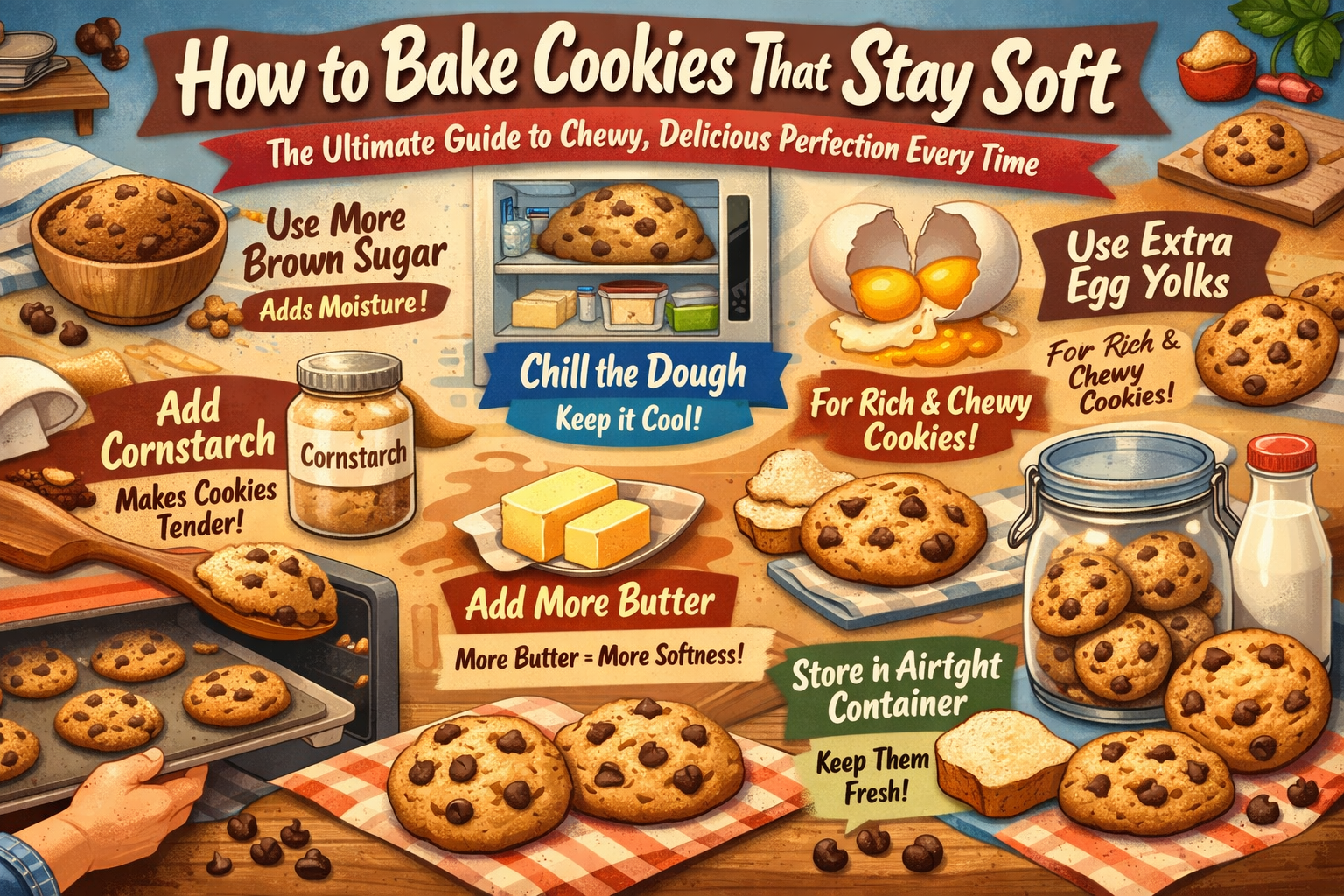

Have you ever pulled a batch of cookies out of the oven, taken that first warm, pillowy bite — and then come back the next morning to find sad, rock-hard pucks sitting on the counter? Yeah. We’ve all been there. It’s one of the most frustrating things in home baking, honestly.
The good news? Soft, chewy cookies aren’t just a happy accident. There’s actual science behind why some cookies stay tender for days and others turn into biscuits overnight. And once you understand those little secrets, you’ll never go back to dry, crunchy disappointment again.
This guide is going to walk you through everything — from the ingredients you choose to the way you store your cookies after baking. Whether you’re a total beginner or someone who’s been baking for years and still can’t figure out why your cookies dry out, this is for you.
Let’s get into it.
Why Do Cookies Get Hard in the First Place?
Before we talk about how to keep cookies soft, it helps to understand why they get hard. And here’s the honest answer: it’s mostly about moisture.
When cookies cool down after baking, they lose steam — literally. That moisture evaporates into the air, and as it does, the starches and proteins in the dough firm up. The longer they sit exposed to air, the more moisture they lose, and the harder they get.
So the whole game of baking soft cookies is really about two things:
- Locking in moisture during baking — using ingredients and techniques that keep the dough moist from the inside.
- Preventing moisture loss after baking — storing them the right way so they don’t dry out.
Simple in theory. A little more nuanced in practice. Let’s break it all down.
The Ingredients That Make All the Difference
Here’s a point that surprises a lot of people: soft cookies start long before you preheat the oven. They start at the grocery store.
Brown Sugar vs. White Sugar
This is probably the most impactful swap you can make. Brown sugar contains molasses, and molasses is hygroscopic — meaning it actually attracts and holds onto moisture from the air. Cookies made with mostly brown sugar will naturally stay softer for longer.
White sugar, on the other hand, does the opposite. It draws moisture out, which leads to crisper, more spread-out cookies.
The sweet spot (pun intended) for soft cookies? A ratio of about 2 parts brown sugar to 1 part white sugar. You still get good flavor complexity, but the brown sugar does the heavy lifting when it comes to softness.
Butter: Melted or Creamed?
Vale dizer — this one causes a lot of debate in baking circles.
Creamed butter (beaten until fluffy with the sugar) incorporates air into the dough, which creates a lighter, slightly cakier texture. Melted butter, on the other hand, makes denser, chewier cookies. Why? Because when butter is melted, the fat coats the flour more thoroughly, limiting gluten development and resulting in that fudgy, chewy texture we all crave.
If you want maximum chewiness, use melted butter, slightly cooled before mixing. You’ll notice the difference immediately.
The Role of Eggs (And Extra Yolks)
Standard cookie recipes call for one or two whole eggs. But here’s a baker’s trick worth knowing: swapping one whole egg for two egg yolks (while keeping the same total volume) makes cookies noticeably richer and chewier.
Egg whites add moisture and structure, but they also set quickly in the oven — which can make cookies drier. Yolks are high in fat and emulsifiers, which contribute to a tender, moist crumb that holds together without getting tough.
Try it once and you’ll be converted.
Flour: Don’t Overmeasure
This sounds basic, but overmeasuring flour is the number-one reason home-baked cookies turn out dry and crumbly. When you scoop flour directly from the bag with your measuring cup, you can pack up to 20% more flour than the recipe calls for.
The fix? Spoon the flour into your measuring cup and level it off, or better yet, use a kitchen scale. It takes ten seconds and makes a real difference.
As a general rule, soft and chewy cookies use all-purpose flour. Bread flour has more protein, which creates more gluten and chewier texture (some bakers love this for chocolate chip cookies specifically), but it can also make cookies tougher if overworked.
A Little Cornstarch Goes a Long Way
Here’s one of those small tricks that sounds weird until you try it: adding 1 to 2 teaspoons of cornstarch per batch of cookies makes them noticeably softer and more tender. It dilutes the protein in the flour just enough to keep the texture delicate without making the cookie fall apart.
A lot of bakeries do this quietly. Now you know.
Don’t Forget the Extra Moisture Boosters
A tablespoon of cream cheese, sour cream, or even Greek yogurt folded into cookie dough adds richness and keeps things moist. You won’t taste it directly — it just rounds out the flavor and keeps the texture soft for longer. Some recipes also swear by a teaspoon of honey or maple syrup alongside the sugar, both of which are hygroscopic (just like that molasses in brown sugar).
Technique: What You Do Matters as Much as What You Use
Okay, you’ve got the right ingredients. Now let’s talk about what happens when you actually make the dough.
Chill the Dough — Seriously
I know, I know. When you’ve got a craving for warm cookies, the last thing you want to do is wait two hours. But chilling your dough is one of the most transformative things you can do.
Here’s why it works:
- It solidifies the fat, so cookies spread less in the oven and stay thicker and chewier.
- It gives the flour time to hydrate fully, improving the texture.
- It concentrates the flavors — the difference between freshly made dough and 24-hour chilled dough is genuinely remarkable.
Even 30 minutes in the fridge makes a noticeable difference. Overnight is even better. If you want to make the dough in advance, you can roll it into balls and freeze them — then bake straight from frozen whenever you want fresh cookies (just add 2–3 minutes to the bake time).
Don’t Overmix After Adding the Flour
Once your flour goes in, mix just until the dough comes together. That’s it. Overmixing develops gluten, which makes cookies tough — not soft. A few streaks of flour are fine; they’ll incorporate as you scoop and shape.
Na prática, this means: add the flour, stir slowly (not with a mixer on high), and stop the moment you don’t see dry flour anymore.
Use a Cookie Scoop for Even Sizing
Uneven cookies bake unevenly. The smaller ones overbake while you’re waiting for the bigger ones to finish, and then they dry out. A standard cookie scoop (about 1.5 tablespoons) gives you consistent portions that bake at the same rate.
The Most Important Baking Tips for Soft Cookies
And here’s where a lot of people go wrong — in the actual oven.
Underbake Them (on Purpose)
This is probably the single most important tip in this whole guide. Take your cookies out before they look done.
I mean it. If they look perfectly set in the oven, they’re already overcooked. Cookies continue to cook on the hot pan after you take them out of the oven — this is called carryover cooking. You want to pull them out when:
- The edges are set and just lightly golden.
- The centers still look slightly underdone, even a little glossy or puffy.
- They don’t look “finished” yet.
Within 5–10 minutes of sitting on the pan, they’ll firm up into perfectly chewy, soft cookies. If you wait until they look done in the oven, they’ll be overdone by the time you eat them.
Trust the process on this one.
Oven Temperature Matters More Than You Think
Most cookie recipes call for 350°F (175°C). But here’s an interesting variation to try: bake at a slightly higher temperature — 375°F (190°C) — for a shorter time. This creates a faster set on the outside while keeping the center soft and gooey. The edges caramelize a bit more, too, which adds flavor.
Every oven runs differently, so it’s worth getting an oven thermometer if you bake often. A dial that says 350°F can easily be running at 325°F or 375°F, and that changes everything.
Let Them Cool on the Pan
After you pull the cookies out, leave them on the baking sheet for 5 minutes before transferring to a cooling rack. This finishing time on the hot pan is part of the bake. Moving them too soon can cause them to fall apart or undercook in the center.
How to Keep Baked Cookies Soft for Days
You baked them perfectly. Now don’t let them dry out in the next 12 hours.
Store Them in an Airtight Container
This sounds obvious, but the type of container matters. A loose lid or a plate covered with plastic wrap lets air in — and air dries cookies out. Use a container with a tight-sealing lid.
Add a Slice of Bread to the Container
Here’s a classic trick your grandmother may have known: place a slice of sandwich bread in the cookie container. The cookies will absorb moisture from the bread, staying soft while the bread slowly dries out.
It sounds strange. It genuinely works. Change the bread slice every day or two if you’re storing cookies for more than a few days.
Store at Room Temperature (Not the Fridge)
Counterintuitively, the refrigerator can actually dry cookies out faster than room temperature storage, because fridges are low-humidity environments. Keep your cookies at room temperature in an airtight container — they’ll stay soft for 3 to 5 days.
For longer storage, freeze them. Baked cookies freeze beautifully for up to 3 months. Thaw at room temperature for 30 minutes and they taste almost fresh-baked.
The Best Soft Cookie Recipe to Try All These Tips
Want to put everything together? Here’s a simple, reliable recipe that incorporates all the techniques above. This is a classic chocolate chip cookie — the ultimate test of softness.
Ingredients
- 2¼ cups (280g) all-purpose flour
- 1 tsp baking soda
- 1 tsp salt
- 1½ tsp cornstarch
- 1 cup (225g) unsalted butter, melted and cooled
- 1 cup (200g) brown sugar, packed
- ½ cup (100g) white sugar
- 2 large egg yolks + 1 whole egg
- 2 tsp vanilla extract
- 2 cups (340g) chocolate chips
Instructions
- Whisk together the flour, baking soda, salt, and cornstarch in a bowl. Set aside.
- In a large bowl, mix the melted butter with both sugars until smooth. Don’t beat it — just stir until combined.
- Add the egg yolks, whole egg, and vanilla. Stir until fully incorporated.
- Fold in the flour mixture until just combined. Don’t overmix.
- Stir in the chocolate chips.
- Cover the dough and refrigerate for at least 30 minutes (overnight is better).
- Preheat oven to 375°F (190°C). Line baking sheets with parchment paper.
- Scoop dough into balls (about 1.5 tablespoons each) and place 2 inches apart.
- Bake for 10–11 minutes, until edges are set but centers still look slightly underdone.
- Leave on the pan for 5 minutes, then transfer to a rack.
- Store in an airtight container with a slice of bread.
That’s it. Simple, classic, and genuinely soft.
Common Mistakes That Lead to Hard Cookies
Let’s do a quick recap of what not to do, because sometimes it’s easier to learn from the failures:
- Using all white sugar — trades softness for crispness.
- Measuring flour by scooping — adds too much flour, leading to dry dough.
- Skipping the chill — cookies spread too much and bake unevenly.
- Overbaking — the number one culprit. Pull them out early.
- Storing them loosely — air exposure = dry cookies. Always use an airtight container.
- Baking on a dark pan — dark pans absorb more heat and can overbake the bottoms quickly. Use light-colored or aluminum pans for more even baking.
For Who Is This Guide Really For?
Honestly? Everyone who’s ever bitten into a cookie and thought, “this is good, but not great.”
You don’t need to be an experienced baker to apply these tips. Most of them require zero extra equipment and just a small shift in how you approach the recipe. Whether you’re baking for your kids, for a bake sale, or just because you had a long day and needed something sweet — soft cookies are within reach.
And here’s a point worth making: baking isn’t just about the end result. There’s something genuinely satisfying about understanding why things work, not just following steps blindly. Once you know that brown sugar holds moisture and chilling the dough improves texture, you start seeing recipes differently. You can adapt, troubleshoot, and create confidently.
That’s the real goal here.
Final Thoughts: Soft Cookies Are Totally Within Your Reach
Let’s bring it home. The secret to baking cookies that stay soft isn’t one magic ingredient — it’s a combination of small, intentional choices:
- Start with more brown sugar than white.
- Use melted butter and extra egg yolks.
- Add a bit of cornstarch.
- Chill your dough for at least 30 minutes.
- Underbake on purpose and let carryover heat do the rest.
- Store in an airtight container with a slice of bread.
Do these things consistently and you’ll stop wondering why your cookies keep getting hard. You’ll just have good cookies — reliably, every time.
Now I’d love to hear from you: do you have a cookie trick that’s become your secret weapon? Maybe something your mom or grandmother passed down, or a technique you stumbled on by accident? Drop it in the comments — I genuinely read every single one, and sometimes the best tips come from readers.
And if you’ve got questions, doubts, or a specific cookie problem you’re trying to solve, let me know. That might just become the next article.