The Best Fluffy Pancakes recipe you will fall in love with. Full of tips and tricks to help you make the best pancakes.
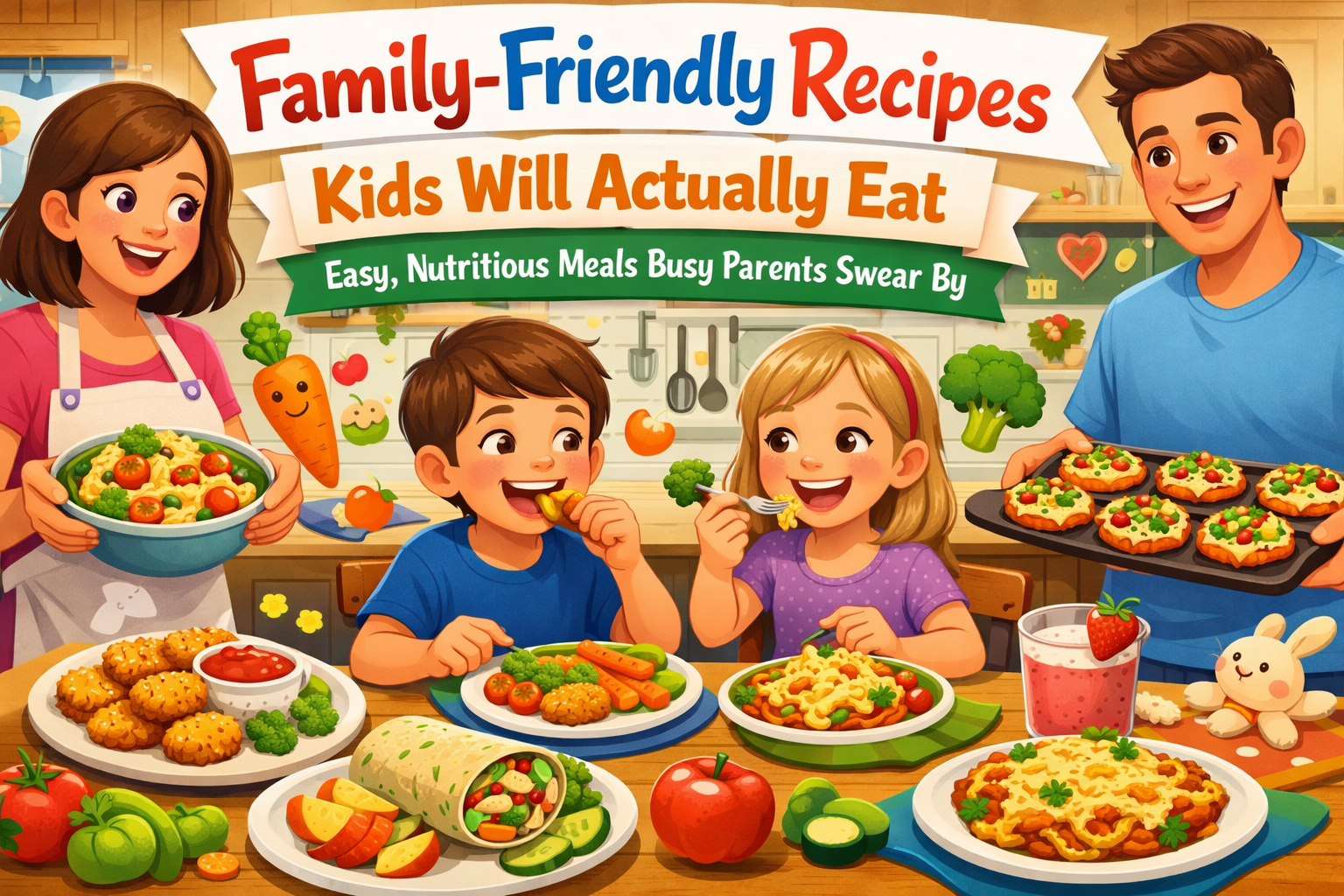

It’s 6:15pm on a Wednesday. You just got home. Everyone is hungry. Someone is already crying about something. You open the fridge, stare at its contents for a full thirty seconds, and then close it again without taking anything out.
You need dinner. Real dinner. On the table in under an hour. And it needs to be something that the seven-year-old who “hates everything green,” the teenager who’s decided this week that they’re “basically vegetarian,” and two adults who are running on four hours of sleep will all actually eat.
If this scene — or any version of it — sounds like your life, you’re in the right place.
This guide is specifically about family-friendly recipes that work in the real world. Not the recipes where a beaming parent in a pristine kitchen presents a rainbow grain bowl to a child who eats it enthusiastically. The ones that work in the actual chaos of a real family weeknight. Quick enough to make when you’re tired. Nutritious enough that you don’t feel guilty serving them. And — this is the critical part — genuinely liked by the kids who are supposed to eat them.
We’re going to cover the strategies behind getting kids to eat better, the meals that consistently work across different ages and preferences, and the practical tips that busy parents have learned the hard way so you don’t have to.
Let’s get into it.
Why Getting Kids to Eat Healthy Meals Is Actually So Hard
Before we dive into recipes, it’s worth understanding why feeding children is such a unique challenge — because once you understand the why, a lot of the strategies start making more intuitive sense.
Children’s taste perception is genuinely different from adults’. Kids have more taste buds than adults, which makes them more sensitive to bitter compounds. This is the real reason so many children resist broccoli, Brussels sprouts, kale, and other vegetables that adults have learned to enjoy. It’s not stubbornness or bad behavior — it’s biology. Over time, as taste bud density decreases and repeated exposure builds familiarity, most children naturally become more adventurous eaters. But forcing it rarely works.
Food neophobia — the fear of new foods — is developmentally normal. Most children between the ages of 2 and 8 go through phases of rejecting unfamiliar foods, sometimes foods they previously ate happily. Research suggests this may be an evolutionary protective mechanism from when toddlers started becoming mobile and could potentially eat something harmful. Knowing this doesn’t make the dinner table less stressful, but it does make it easier not to catastrophize.
Control matters enormously to children. Food is one of the areas where children can exert genuine agency over their own bodies, and many kids — especially toddlers and preschoolers — use it accordingly. Giving children some control over what they eat (within reasonable bounds) tends to produce better results than rigid, all-or-nothing meal rules.
Texture often matters more than flavor. Ask most picky eaters what they don’t like about a food and they’ll often describe a texture before a taste. Mushy, slimy, stringy, or “weird” textures are frequent deal-breakers. Roasting a vegetable that was previously rejected when steamed or raw often works simply because the texture changes dramatically.
And here’s a point worth making: there’s no single strategy that works for every child in every family. Some kids are naturally adventurous eaters who’ll try anything. Others are genuinely cautious and need months of exposure before accepting a new food. Most fall somewhere in between and fluctuate depending on their age, mood, and how much sleep everyone got last night. The goal of this guide is to give you a flexible toolkit, not a rigid system.
The Principles Behind Family Meals That Actually Work
Before we get to specific recipes, here are the underlying principles that consistently appear when you look at what actually works for feeding families well.
Make the “Hidden” Vegetable Your Last Resort, Not Your First
The hidden vegetable approach — blending spinach into smoothies, sneaking cauliflower into mac and cheese — has its place and it does work for getting nutrients in. But relying on it exclusively prevents kids from learning to actually like vegetables, which is the longer-term goal.
A better approach: make the vegetable visible but non-threatening. A carrot stick on the side of the plate that nobody has to eat creates familiarity over time. The hidden approach works best as a supplement to regular exposure, not as a replacement for it.
Offer, Don’t Force
Research from pediatric nutrition consistently shows that forcing children to eat specific foods — including the classic “you can’t leave the table until you finish your vegetables” — tends to backfire. It creates negative associations with those foods and increases resistance. The most effective approach is offering a variety of foods consistently, without pressure or bargaining, and letting the child decide how much of each to eat.
This doesn’t mean making a separate meal for every family member every night. It means having at least one component of the meal that you know the child will eat, and presenting the rest without drama.
Involve Kids in the Kitchen
This one is well-supported by research and by the practical experience of parents everywhere: children are significantly more likely to eat food they helped prepare. Even very young children can wash vegetables, tear lettuce, stir batter, or arrange toppings. Older children can measure, chop with guidance, or take ownership of a simple component.
The kitchen involvement also builds food literacy — understanding where food comes from, how it changes with cooking, and how different ingredients combine — that pays off for years.
Consistency and Repeated Exposure
A child who rejects a food the first time may accept it on the eighth or twelfth encounter. Consistent, low-pressure exposure to a variety of foods — without making every meal a negotiation — is the most reliable long-term strategy for expanding a picky eater’s repertoire.
Na prática: keep offering. Keep it calm. Don’t make a big deal of rejections. And celebrate quietly when something new gets accepted.
The Two-Component Rule
For genuinely busy nights, this is the most useful practical framework: every meal should have at least one thing you know each family member will eat, and at least one thing that adds genuine nutrition. You’re not aiming for perfect balance at every single meal — you’re aiming for a pattern of reasonable variety over the week.
10 Family-Friendly Recipes Kids Will Actually Eat
Here are ten recipes that combine the qualities that matter most in family cooking: quick enough for weeknights, nutritious enough to feel good about, flexible enough to accommodate different preferences, and genuinely tasty enough that kids ask for them again.
Recipe 1: Sheet Pan Chicken Thighs With Roasted Vegetables
Why it works: Everything cooks on one pan in the oven, the chicken comes out juicy and slightly crispy, and the vegetables get caramelized and sweet rather than steamed and limp. The “I don’t like vegetables” kid who refuses steamed carrots will often happily eat roasted ones because the texture and flavor are completely different.
Time: 10 minutes prep, 35–40 minutes oven
Ingredients (serves 4):
- 6–8 bone-in, skin-on chicken thighs
- 3 medium carrots, cut into thick coins
- 2 medium zucchini, cut into half-moons
- 1 bell pepper (any color), sliced
- 1 red onion, cut into wedges
- 3 tablespoons olive oil
- 1 teaspoon garlic powder
- 1 teaspoon smoked paprika
- 1 teaspoon dried oregano
- Salt and black pepper
Method: Preheat oven to 220°C (425°F). Toss vegetables in half the oil and season with salt and pepper. Spread on a large baking sheet. Rub chicken thighs with remaining oil and the garlic powder, paprika, and oregano. Season generously with salt and pepper. Nestle the chicken among the vegetables. Roast 35–40 minutes until chicken skin is golden and crispy and juices run clear. Serve directly from the pan.
Picky eater tip: Let kids pick which vegetables they want on their plate. Ownership increases acceptance.
Recipe 2: Homemade Beef Tacos With a DIY Topping Bar
Why it works: Tacos are almost universally loved by children for one simple reason — they get to build their own. The topping bar format gives kids control and turns dinner into something interactive. It also naturally accommodates different preferences without requiring you to make multiple meals.
Time: 20 minutes
Ingredients (serves 4):
- 500g lean ground beef
- 1 packet taco seasoning (or: 1 tsp cumin, 1 tsp smoked paprika, ½ tsp garlic powder, ½ tsp onion powder, salt, and a pinch of chili)
- ¼ cup water
- Small flour or corn tortillas
Topping bar options:
- Shredded lettuce or cabbage
- Diced tomato
- Shredded cheese
- Sour cream or Greek yogurt
- Avocado or guacamole
- Mild salsa
- Black beans (heated from a can — a great source of fiber and plant protein)
- Corn kernels
Method: Brown the ground beef in a pan over medium-high heat, breaking up as it cooks. Drain excess fat. Add seasoning and water, stir and simmer 2–3 minutes until slightly saucy. Warm tortillas (wrap in a damp paper towel and microwave 30 seconds, or warm directly on a gas flame for charred spots). Set out all the toppings and let everyone build their own.
Nutrition boost: Swap half the ground beef for cooked black beans — the kids often can’t tell the difference, and you’ve just significantly increased the fiber and plant protein content of the meal.
Recipe 3: Pasta With Hidden Vegetable Tomato Sauce
Why it works: Most kids love pasta. And a well-made tomato sauce can carry a significant nutritional payload without any vegetable being visible or detectable in the final dish. This is one of the legitimate use cases for the hidden vegetable approach — as a base that gets served consistently alongside visible vegetables over time.
Time: 35–40 minutes (mostly hands-off)
Ingredients (serves 4–6):
- 2 tablespoons olive oil
- 1 medium onion, roughly chopped
- 3 garlic cloves, minced
- 2 medium carrots, roughly chopped
- 2 celery stalks, roughly chopped
- 1 medium zucchini, roughly chopped
- 2 cans (400g each) crushed tomatoes
- 1 teaspoon dried basil
- 1 teaspoon dried oregano
- Salt, pepper, and a pinch of sugar
- 400g pasta of choice
Method: Sauté onion and garlic in olive oil over medium heat for 5 minutes until softened. Add carrots, celery, and zucchini. Cook another 5–7 minutes until the vegetables soften. Add crushed tomatoes, herbs, sugar, salt, and pepper. Simmer on low for 20 minutes. Use an immersion blender (or regular blender carefully) to blend completely smooth. Taste and adjust seasoning. Cook pasta according to package directions. Serve sauce over pasta.
Note: Make a big batch and freeze in portions. This sauce keeps beautifully in the freezer for 2–3 months and makes weeknight dinners effortless.
Recipe 4: Baked Salmon With Honey and Soy Glaze
Why it works: Salmon is mild enough for most kids, and the honey-soy glaze adds a familiar sweet-savory flavor that makes it genuinely appealing rather than “healthy food.” It’s also one of the fastest proteins you can cook — 12–15 minutes in the oven and you’re done.
Time: 5 minutes prep, 12–15 minutes oven
Ingredients (serves 4):
- 4 salmon fillets (skin-on or off, your preference)
- 2 tablespoons soy sauce
- 1 tablespoon honey
- 1 teaspoon sesame oil
- 1 garlic clove, grated
- ½ teaspoon fresh or ground ginger
Method: Preheat oven to 200°C (400°F). Mix soy sauce, honey, sesame oil, garlic, and ginger in a small bowl. Place salmon fillets on a lined baking sheet. Spoon or brush the glaze over each fillet. Bake 12–15 minutes until salmon is just cooked through — it should flake easily with a fork and be slightly darker at the edges. Serve with steamed rice and any vegetable.
For reluctant fish eaters: The glaze does most of the heavy lifting here. If a child has refused plain fish before, this version is often the one that converts them. Start with a small piece alongside something they definitely like.
Recipe 5: Slow Cooker Chicken and Rice Soup
Why it works: Soup is profoundly comforting, and this one is nearly impossible to mess up. You put everything in the slow cooker in the morning and come home to a complete meal. It’s also ideal for sick days, cold evenings, or whenever the family needs something gentle and nourishing.
Time: 10 minutes active, 6–8 hours slow cooker
Ingredients (serves 6):
- 600g boneless, skinless chicken thighs or breasts
- 1 cup long-grain white rice
- 3 medium carrots, sliced
- 3 celery stalks, sliced
- 1 medium onion, diced
- 3 garlic cloves, minced
- 1.5 liters (6 cups) chicken broth
- 1 teaspoon dried thyme
- 1 bay leaf
- Salt and pepper
- Fresh parsley to serve (optional)
Method: Add everything to the slow cooker except the parsley. Cook on low for 6–8 hours or high for 3–4 hours. About 30 minutes before serving, remove the chicken, shred it with two forks, and return to the pot. Taste for seasoning — soups often need more salt than you’d expect. Remove bay leaf, top with parsley if using, and serve.
Make it ahead: This soup keeps in the fridge for 4–5 days and the rice continues to absorb liquid as it sits, making it progressively thicker. Add a splash of water or broth when reheating if needed.
Recipe 6: Homemade Chicken Nuggets (Baked, Not Fried)
Why it works: Chicken nuggets are almost universally loved by children. These homemade ones have the same crispy coating and tender interior as fast food versions — but they’re made with real chicken, without the additives, preservatives, or mystery ingredients. And baking them instead of frying means you can make a big batch without standing over a hot pan.
Time: 15 minutes prep, 20 minutes oven
Ingredients (serves 4):
- 600g chicken breast, cut into bite-sized pieces
- 1 cup breadcrumbs (panko gives the best crunch)
- ¼ cup grated Parmesan
- 1 teaspoon garlic powder
- 1 teaspoon paprika
- ½ teaspoon salt
- 2 eggs, beaten
- 2 tablespoons flour
Method: Preheat oven to 220°C (425°F). Line a baking sheet with parchment and spray or brush lightly with oil. Set up a breading station: flour in one bowl, beaten eggs in another, and the panko mixed with Parmesan, garlic powder, paprika, and salt in a third. Dip each chicken piece in flour, then egg, then panko mixture. Place on the prepared baking sheet. Lightly spray or drizzle the tops with oil — this is what makes them golden and crispy. Bake 18–20 minutes, flipping halfway through, until golden and cooked through.
Serve with: Ketchup, honey mustard, or a quick yogurt dip (Greek yogurt + garlic + lemon + dill). These also freeze brilliantly after baking — reheat straight from frozen at 200°C for 12 minutes.
Recipe 7: Veggie-Loaded Fried Rice
Why it works: Fried rice is a brilliant vehicle for vegetables because everything gets chopped small, coated in soy sauce and egg, and the overall flavor is savory enough that individual vegetable tastes become much less prominent. Kids who refuse peas in a plain bowl will often eat them without comment in fried rice.
Time: 20 minutes
Ingredients (serves 4):
- 3 cups cooked rice (day-old rice works best — freshly cooked rice is too wet)
- 3 eggs, beaten
- 1 cup frozen peas and corn (straight from the freezer is fine)
- 2 medium carrots, finely diced
- 3 spring onions, sliced
- 3 tablespoons soy sauce
- 1 teaspoon sesame oil
- 2 tablespoons neutral oil (vegetable or sunflower)
- 2 garlic cloves, minced
- Optional protein: shredded chicken, cooked shrimp, or diced tofu
Method: Heat 1 tablespoon oil in a large wok or frying pan over high heat. Add carrots and stir-fry 2–3 minutes until just softened. Add garlic and cook 30 seconds. Push everything to the side, add remaining oil, and scramble the eggs in the empty space — cook until just set, then break into pieces and mix with the vegetables. Add the cold rice and press it against the hot pan, letting it sit for 30 seconds to get some crispiness, then stir and repeat. Add frozen peas and corn (they thaw almost immediately). Add soy sauce and sesame oil, stir well, top with spring onions.
Why day-old rice: Fresh rice has too much moisture and turns sticky in the pan. Cold rice from the fridge gives you the separated, slightly crispy texture that makes fried rice so satisfying.
Recipe 8: Cheesy Quesadillas With Black Bean and Corn Filling
Why it works: Quesadillas are one of the fastest, most universally accepted dinners in the family cooking repertoire. This version adds black beans and corn inside — which most kids accept easily — making it significantly more nutritious than a plain cheese quesadilla without requiring any negotiation.
Time: 15 minutes
Ingredients (serves 4):
- 8 medium flour tortillas
- 2 cups shredded cheese (cheddar, Monterey Jack, or a mix)
- 1 can (400g) black beans, drained and rinsed
- 1 cup corn kernels (frozen and thawed is fine)
- ½ teaspoon cumin
- Salt to taste
- Butter or oil for the pan
Method: In a small bowl, mix beans, corn, cumin, and a pinch of salt. Heat a large non-stick pan over medium heat with a small amount of butter or oil. Place one tortilla in the pan. Spread a layer of cheese on one half, top with a spoonful of the bean and corn mixture, then fold the tortilla in half. Cook 2–3 minutes per side until golden and crispy and the cheese is melted. Repeat. Serve with sour cream, salsa, or guacamole.
Quick upgrade: Add a handful of baby spinach to the filling — it wilts inside the quesadilla and becomes essentially invisible once the cheese melts around it.
Recipe 9: One-Pan Tomato and Egg Shakshuka
Why it works: Shakshuka sounds exotic but it’s essentially eggs cooked in a flavorful tomato sauce — and most kids accept eggs in almost any form. It comes together in one pan in about 25 minutes, it’s packed with protein and lycopene, and it works equally well for dinner, weekend brunch, or “I have no idea what to make” emergencies.
Time: 25 minutes
Ingredients (serves 4):
- 2 tablespoons olive oil
- 1 onion, diced
- 1 red bell pepper, diced
- 3 garlic cloves, minced
- 1 teaspoon cumin
- 1 teaspoon smoked paprika
- ½ teaspoon chili flakes (optional — omit for very young or spice-sensitive children)
- 2 cans (400g each) crushed tomatoes
- Salt and pepper
- 6 large eggs
- Fresh parsley or cilantro to serve
- Crusty bread or pita for dipping
Method: Heat olive oil in a large, deep frying pan over medium heat. Sauté onion and pepper until softened, about 6 minutes. Add garlic and spices, cook 1 minute until fragrant. Add tomatoes, season with salt and pepper, and simmer 10 minutes until slightly thickened. Taste and adjust seasoning. Make 6 wells in the sauce with a spoon and crack an egg into each one. Cover the pan and cook on low-medium heat for 6–8 minutes until egg whites are set but yolks are still slightly runny (or cook longer for fully set yolks, depending on preference). Scatter herbs on top. Serve directly from the pan with bread.
For younger children: The runny yolk version might not be preferred — simply cook the eggs fully, which takes a few more minutes with the lid on.
Recipe 10: Banana Oat Pancakes (3 Ingredients, High-Protein)
Why it works: Kids love pancakes. These ones are made without refined flour or added sugar, using just banana, eggs, and oats as the base — which means they’re genuinely nutritious while tasting like a treat. Perfect for weekend mornings or a breakfast-for-dinner night.
Time: 15 minutes
Ingredients (makes about 8 small pancakes, serves 2–3):
- 2 ripe bananas (the riper and more speckled, the sweeter)
- 2 large eggs
- ½ cup rolled oats (blended to a rough flour, or use as-is for a chunkier texture)
- Optional add-ins: ½ teaspoon cinnamon, 1 tablespoon peanut butter, a handful of blueberries, or a few chocolate chips
Method: Mash bananas well in a bowl until mostly smooth. Add eggs and blended oats and mix until combined. Add any optional extras. Heat a non-stick pan over medium heat with a small amount of butter. Spoon small rounds of batter into the pan. Cook 2–3 minutes until bubbles form and the edges look set, then flip and cook another 1–2 minutes. Serve with a drizzle of honey, fresh fruit, or a spoonful of yogurt.
Note: These pancakes are more delicate than traditional ones — keep them small (about 8cm) and don’t flip too early or they’ll fall apart. The texture is slightly more custardy than regular pancakes, which most children enjoy.
Practical Strategies for Busy Parents: Making Family Meals Sustainable
The recipes matter, but so does the system around them. Here are the strategies that make family cooking actually manageable in real life.
Batch Cook Once a Week
Pick one component to make in a large quantity every week: a batch of cooked rice or grains, a big pot of soup, a tray of roasted vegetables, or a doubled portion of a sauce. Having these building blocks ready in the fridge turns weeknight assembly from a chore into something that takes 15 minutes.
Build a Meal Rotation
Analysis paralysis at 5:30pm is a real phenomenon. Having a loose rotation of 8–10 meals your family reliably enjoys eliminates the daily “what should I make?” decision and ensures you’re always stocked with the right ingredients. Not rigid — you can deviate when you want to try something new — but a rotation that defaults back to when you need it.
The “Deconstructed” Trick
Many family-friendly recipes can be served deconstructed for picky eaters. Tacos where the components are served separately. Pasta where the sauce is on the side. Stir-fry where the rice, protein, and vegetables are served in separate sections of the plate. Kids who refuse the combined dish often accept the same ingredients when they’re not touching each other. Bizarre but real — and worth taking advantage of.
Invest in the Right Containers
Having good airtight containers for batch-cooked components, individually portioned meals, and frozen leftovers makes the whole system work smoother. Soups, sauces, cooked proteins, and grains all freeze well and become the foundation of fast meals on the most difficult nights.
Lower Your Own Standards (Slightly and Strategically)
This one might be the most important piece of advice in this entire guide: a family that regularly eats simple, reasonably nutritious home-cooked meals — even if they’re not varied or optimally balanced — is doing significantly better than a family that aims for perfection and burns out and orders takeout most nights.
Done is better than perfect. Consistent is better than occasional. A quesadilla with black beans on a Wednesday night is a good dinner. You don’t need to do more than that every single time.
A Note on Nutrition for Growing Children
Since this blog touches on health and nutrition, it’s worth addressing this briefly and honestly.
Children’s nutritional needs are genuinely different from adults — they need adequate protein for muscle and tissue development, calcium and Vitamin D for bone growth, iron for cognitive development, and sufficient healthy fats for brain development. But meeting these needs doesn’t require a rigid, perfect diet at every meal. It requires a pattern of variety over time.
The meals in this guide all contribute meaningfully to children’s nutritional needs:
- Protein sources in nearly every recipe: chicken, salmon, eggs, beans, cheese
- Complex carbohydrates for sustained energy: rice, oats, whole grain tortillas, pasta
- Vegetables in multiple forms, raw and cooked, visible and incorporated
- Healthy fats from olive oil, salmon, avocado, eggs, and cheese
If your child is eating a varied enough diet that includes some protein, some vegetables (even if not many), and some whole food sources of carbohydrates and fat — they are most likely doing fine. Growth charts and energy levels are better indicators of nutritional adequacy than any single meal or week.
If you have genuine concerns about a child’s nutrition — slow growth, very severe food restriction, developmental concerns — a pediatric dietitian is the right person to consult.
Conclusion: Feed Your Family Without Losing Your Mind
Here’s what I want you to take from all of this:
Family cooking doesn’t have to be complicated, perfect, or Instagram-worthy. It needs to be consistent, reasonably nutritious, and — most importantly — actually eaten. The ten recipes in this guide all meet that bar. They’re flexible, forgiving, quick enough for weeknights, and genuinely liked by children across a wide range of ages and preferences.
Start with the two or three that look most manageable for your family. Add them to your regular rotation. Try one new one each week. And on the nights where nothing works and you order delivery? That’s fine too. One meal doesn’t define a diet, and burnout is a far bigger problem for family nutrition than an occasional takeout night.
I’d love to hear from you: which of these are you going to try first? And what’s the biggest challenge in feeding your family right now — picky eaters, time, budget, inspiration? Share it below. Real questions from real parents are exactly what drives the content on this blog.
And if there’s a specific recipe you’ve been struggling to find a family-friendly version of, drop it in the comments. I’ll get to it.
Disclaimer: This article is for informational and educational purposes only. Individual children’s nutritional needs vary. For specific concerns about your child’s growth, development, or dietary needs, consult a qualified pediatric healthcare professional or registered dietitian.