The Best Fluffy Pancakes recipe you will fall in love with. Full of tips and tricks to help you make the best pancakes.
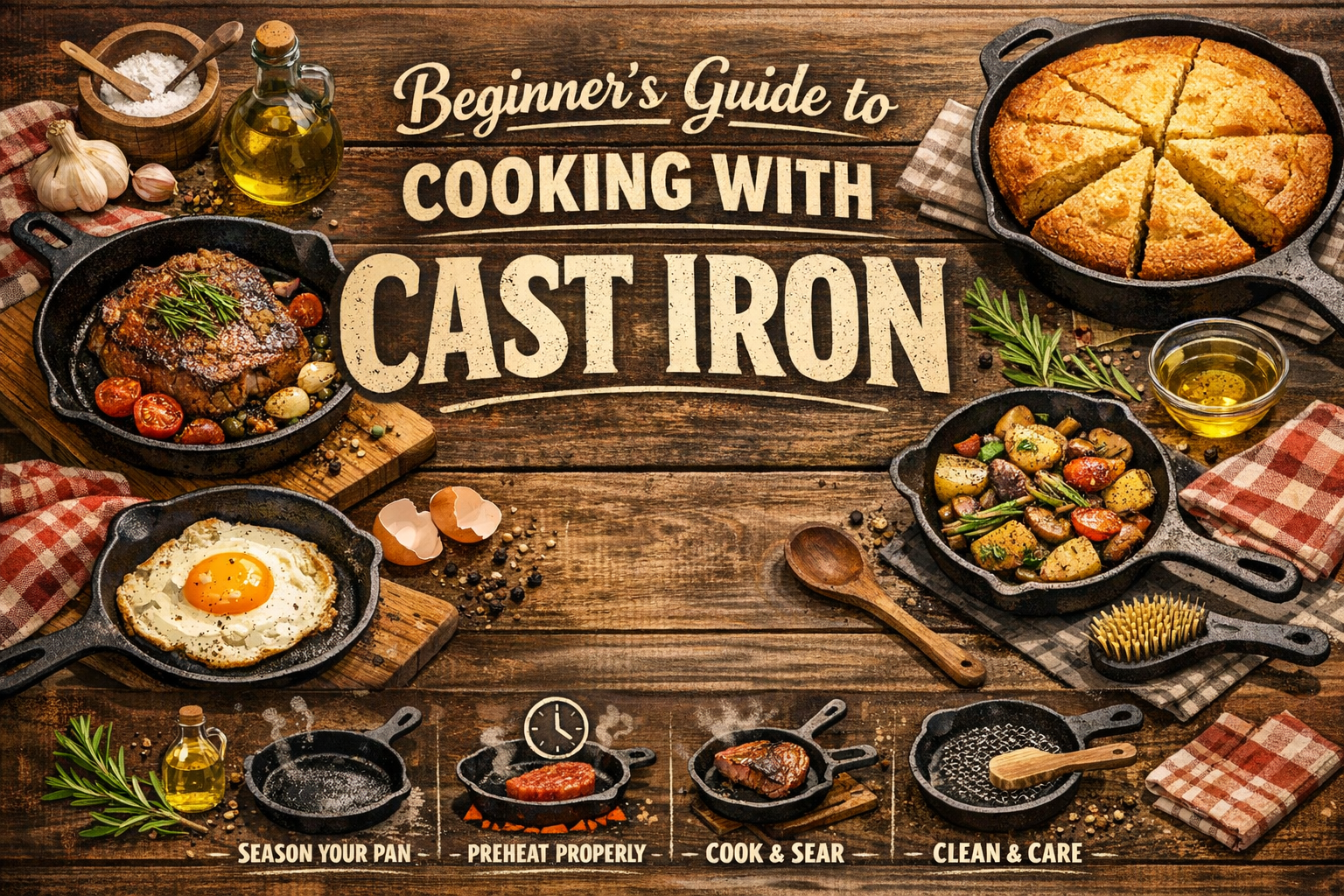

There’s a cast iron skillet sitting in someone’s cabinet right now — maybe yours — that hasn’t been touched in months. Maybe it came from a thrift store find that felt exciting at the time. Maybe someone passed it down. Maybe you bought it after reading about how incredible it is and then had one confusing, slightly sticky experience and quietly went back to your non-stick pan.
That story is more common than you might think. Cast iron has a devoted following of people who swear by it with almost evangelical fervor — and an equally large group who tried it once, found it mysterious and high-maintenance, and gave up before the payoff arrived.
Here’s the truth: cast iron is not difficult to cook with. But it does require understanding a few things that nobody bothers to explain upfront — how it heats, how the seasoning works, what it does better than any other cookware, and what it genuinely doesn’t do well. Once you have that context, the whole thing clicks into place and the pan starts to feel like the most reliable tool in your kitchen rather than a mystery object you’re afraid to use wrong.
This guide covers all of it. Start to finish, seasoning to storage, beginner mistakes to the recipes that make cast iron worth having in the first place. By the end, you’ll either be reaching for that skillet with confidence or you’ll know exactly why it might not be the right tool for your cooking style. Both outcomes are useful.
Let’s start from the beginning.
What Is Cast Iron and Why Does Everybody Love It?
Cast iron is exactly what it sounds like: cookware made by pouring molten iron into a mold and letting it solidify. The result is an extremely dense, heavy pan with a porous surface that, when properly treated, becomes increasingly non-stick over time. It’s been made this way for hundreds of years. The basic technology hasn’t changed.
What makes cast iron compelling enough that people pass skillets down through generations?
Exceptional heat retention. Cast iron heats slowly but holds that heat with remarkable consistency. Once it’s hot, it stays hot — even when cold food is added to it. This is why a cast iron skillet produces a better sear on a steak than almost any other pan. When cold meat hits a hot cast iron surface, the pan barely drops in temperature. A thinner pan would lose heat quickly, causing the meat to steam rather than sear.
Unmatched versatility. Cast iron goes from stovetop to oven without issue, handles temperatures that would warp or damage other cookware, and works on gas, electric, induction, and even open flame or campfire. It is genuinely the most versatile cooking surface in existence.
Durability that’s essentially permanent. A well-maintained cast iron pan will outlast every other piece of cookware you own. By a significant margin. The Lodge skillet you buy today could realistically be used by your grandchildren. This isn’t marketing — it’s just a property of dense iron.
Improving over time. Unlike non-stick pans that degrade with use, cast iron gets better the more you cook with it. The seasoning — the layer of polymerized oil that coats the surface — builds with every use, gradually producing a surface that releases food more and more easily.
And there’s something that’s harder to quantify but genuinely real: cooking in cast iron feels different. The weight of it. The way it holds heat. The way it produces a crust on chicken skin that doesn’t happen in lighter pans. It’s a different cooking experience, and for a lot of people, it changes how they relate to their kitchen.
The One Thing You Must Understand Before You Start: Seasoning
“Seasoning” is the term that confuses most beginners, and getting clarity on it changes everything.
Seasoning is not a coating applied once when the pan is manufactured. It’s not something you add flavor-wise. And it’s definitely not something that, once damaged, means the pan is ruined.
Seasoning is a layer — or multiple layers — of oil that has been heated to the point where it bonds chemically to the iron surface in a process called polymerization. When fat is heated above its smoke point in contact with iron, it transforms from an oily liquid into a hard, dark, slick solid polymer. That polymer is the seasoning. It fills the microscopic pores of the iron, creates a smooth, non-reactive surface, and is what gives cast iron its non-stick properties.
Every time you cook with fat in a cast iron pan, you’re potentially adding to that seasoning. Every time you cook without sufficient fat, or use harsh soap and scrubbing, you’re potentially damaging or removing it. That’s the relationship between cast iron and its user in a nutshell — you’re participating in an ongoing process of building a surface.
The good news: seasoning is resilient and recoverable. A scratched, rusty, stripped pan can be fully restored. Damage is not permanent. If your cast iron has had a rough experience at some point, don’t throw it away — re-season it.
How to Season a New (or Restored) Cast Iron Pan
Whether you’ve bought a new pan, inherited an old one that’s seen better days, or want to restore a neglected piece, the seasoning process is the same.
What you need: Neutral oil with a high smoke point — flaxseed oil, vegetable shortening, and refined coconut oil all work. Canola or vegetable oil work too. Avoid olive oil, which has a low smoke point and produces an uneven, slightly sticky result.
Step 1 — Clean the pan. If new: wash with warm soapy water (just this once — regular dish soap is fine for initial cleaning of a new pan) and dry completely. If restoring: scrub with steel wool to remove any rust, wash, dry completely.
Step 2 — Dry it thoroughly. Water is the enemy of cast iron. After washing, put the pan on the stovetop over low heat for a few minutes to ensure every drop of water has evaporated. The pan should be completely dry before oil touches it.
Step 3 — Apply a very thin layer of oil. Using a paper towel or cloth, rub oil all over the pan — the cooking surface, the sides, the bottom, and the handle. Then — and this is critical — buff off what feels like almost all of it. The layer should be so thin it looks dry. Visible pooling or excess oil will polymerize unevenly and produce a patchy, sticky surface rather than a smooth, hard coating.
Step 4 — Bake upside down in the oven. Place the pan upside down in the oven at 230–250°C (450–480°F) for 1 hour. Baking it upside down prevents oil from pooling in the cooking surface. The high temperature is necessary — this is what triggers polymerization. Lower temperatures don’t complete the process and leave a tacky residue.
Step 5 — Let it cool in the oven. Turn the oven off and let the pan cool completely inside. Don’t rush it.
Step 6 — Repeat. One seasoning layer is a start. For a truly good, smooth surface, three to four rounds produce significantly better results. Do it on the same day if you have the time, or spread it across a few sessions.
After multiple rounds of seasoning, the pan should have a dark, slightly shiny, smooth appearance and should feel dry — not sticky or oily. If it feels tacky, it means too much oil was used and it hasn’t fully polymerized. Return it to the oven at high heat for another hour.
How Cast Iron Heats: The Most Important Thing Nobody Tells You
Here’s where a lot of first-time cast iron users go wrong, and it’s not about seasoning at all. It’s about heating.
Cast iron heats slowly and unevenly when first exposed to heat. Unlike a stainless or aluminum pan that distributes heat fairly quickly across its surface, a cold cast iron pan placed on a burner will be much hotter directly above the burner than at the edges — sometimes by a significant margin. This is why food placed in a cast iron pan that hasn’t been properly preheated cooks unevenly: the center gets heat, the edges don’t.
The solution is simple: preheat cast iron slowly over medium heat for at least 5 minutes before using it. As the pan gradually comes up to temperature, the heat has time to distribute across the entire surface. By the time you add food, the whole pan is hot — not just the center.
You can test whether a cast iron pan is properly preheated by holding your hand several inches above the surface (not touching it — it will be very hot) and feeling for even warmth across the whole surface, or by flicking a few drops of water onto the surface — they should dance and evaporate immediately across the whole pan, not just in the center.
After this preheating period, you can turn up the heat if you want high-heat searing — but you’re adjusting from an already evenly distributed temperature, not trying to compensate for cold spots.
This single piece of knowledge fixes most of the “cast iron doesn’t work for me” experiences.
What Cast Iron Does Better Than Any Other Pan
Understanding where cast iron genuinely excels helps you use it in the situations where it makes the biggest difference.
Searing and Crust Development
This is cast iron’s greatest strength. When you need a deep, even, Maillard-reaction crust on a steak, a chicken thigh, a piece of fish, or a burger — cast iron is the best tool available in most home kitchens. The heat retention means the surface temperature barely drops when cold food is placed on it, which is exactly what you need for proper searing rather than steaming.
Cornbread and Skillet Baking
Baking in cast iron produces results that are difficult to achieve in regular bakeware — crispy edges and bottom, evenly baked interior, and a crust that forms immediately when the batter hits the preheated pan. Skillet cornbread is arguably the best argument for cast iron in a single dish.
Frittatas and Oven-Finished Dishes
The ability to go from stovetop to oven seamlessly makes cast iron ideal for any dish that starts on the burner and needs to finish in the oven — frittatas, skillet cookies, certain pasta bakes, and more.
Braising and Slow Cooking
Cast iron Dutch ovens — the deep, lidded version of the skillet — are among the best vessels for braising. They retain heat exceptionally well, maintain even temperatures during long, low cooking, and go from stovetop searing to oven braising without any transfer.
Campfire and Outdoor Cooking
No other cookware handles open flame, camping stoves, and outdoor fires as reliably as cast iron. It’s been the cookware of explorers and outdoorspeople for centuries for good reason — it doesn’t warp, it doesn’t melt, and it doesn’t care what kind of heat source you’re using.
What Cast Iron Does NOT Do Well (Be Honest With Yourself)
This is the part most cast iron evangelists conveniently leave out. Cast iron isn’t the right tool for everything, and knowing its limitations saves frustration.
Delicate fish. Fragile fillets — sole, tilapia, thin cod — tend to stick and break apart in cast iron, even when well-seasoned. A stainless or non-stick pan handles these better.
Acidic foods for prolonged cooking. Cooking tomato-based sauces, wine reductions, or other acidic foods in cast iron for extended periods can strip the seasoning and also impart a slight metallic flavor to the food. Occasional short-term use is fine, but a long-simmered tomato sauce is better made in stainless or enameled cast iron.
Anything that requires rapid temperature changes. Cast iron responds slowly to heat adjustments. If you need to quickly drop the temperature — because something is about to burn, or a sauce needs to be pulled back rapidly — cast iron fights you. Thinner pans respond immediately. Cast iron takes its time.
Scrambled eggs (for beginners). It’s possible to make beautiful scrambled eggs in cast iron, but only with a very well-seasoned pan and a lot of butter and patience. Beginners will almost certainly have problems. Keep scrambled eggs in the non-stick until your seasoning is genuinely established.
Steaming or boiling. There’s no real advantage to boiling water or steaming vegetables in cast iron. It adds no value and the weight makes it awkward. Use a lighter pot.
How to Clean and Care for Cast Iron (Without Ruining It)
Cast iron care has accumulated a lot of mythology — most of it either overly strict or just wrong. Here’s the straightforward reality.
Cleaning After Cooking
For everyday cleaning: While the pan is still warm (not scorching hot — just warm), rinse with hot water and scrub with a stiff brush or chain mail scrubber. Most food debris releases easily when the pan is still warm. Dry immediately and thoroughly.
What about soap? This is the biggest cast iron controversy. Traditional advice says never use soap on cast iron. Modern understanding of seasoning chemistry suggests that a small amount of modern dish soap used occasionally won’t significantly damage a well-established seasoning. That said — there’s no real reason to use soap regularly. Hot water and a brush handles virtually everything without it.
For stuck-on food: Add a small amount of water to the warm pan and bring it to a simmer on the stovetop — the stuck bits will release easily. Alternatively, pour coarse salt into the pan and scrub with a paper towel or cloth — the salt acts as an abrasive without stripping seasoning.
What to absolutely avoid: Soaking in water (promotes rust), the dishwasher (the prolonged moisture and harsh detergents will strip seasoning and promote rust), and abrasive steel wool for regular cleaning (though it’s useful for rust removal during restoration).
Drying
After washing, dry the pan thoroughly — first with a towel, then over low heat on the stovetop for a minute or two. The goal is zero moisture. Water left in the pores of the iron is the primary cause of rust.
After Drying: The Oil Wipe
After the pan is completely dry and off the heat, wipe a very thin layer of oil over the cooking surface with a paper towel. This is the maintenance step that keeps the seasoning in good condition and prevents any moisture from finding the bare iron. It takes ten seconds and makes a meaningful difference.
Storage
Store in a dry place. If stacking with other pans, place a paper towel between them to absorb any residual moisture and prevent scratching the seasoning of the pan beneath.
Rust: What to Do When It Happens
It will happen at some point, and it’s not a catastrophe. Rust on cast iron looks alarming — orange-red flaking on a cooking surface is not something anyone wants to see — but it’s essentially just oxidized iron and is fully reversible.
Light surface rust: Scrub with steel wool until the rust is gone, wash, dry completely, and re-season. Back in action.
Heavy rust: Same process but more aggressive scrubbing, potentially multiple passes with steel wool. Rinse, dry, re-season multiple times. Even a pan that looks completely destroyed by rust can often be fully restored.
The only cast iron that truly can’t be saved is one that has developed cracks — a structural failure of the iron itself, which is different from surface rust. Rust is cosmetic. Cracks are structural.
The First Three Things to Cook in Cast Iron
Once your pan is seasoned and you understand how to heat it, here’s what to cook first. These are chosen deliberately — they’re all forgiving, they all benefit enormously from cast iron’s properties, and they all actively improve your pan’s seasoning as you cook them.
1. Bacon
Bacon is one of the best first things you can cook in cast iron, and not just because it tastes good. Cooking bacon releases fat that gets worked into the pan’s surface as you cook, actively building your seasoning. The sugars in bacon can leave some residue, but the fat does more good than the residue does harm.
Cook over medium heat — not high. The gradual rendering of fat produces more evenly cooked bacon and reduces splatter. Watch the heat: bacon can burn quickly in a well-heated cast iron pan.
2. Sautéed or Roasted Vegetables
Root vegetables, mushrooms, bell peppers, onions, broccoli — cast iron produces a char on vegetables that other pans can’t match. The sustained high heat creates caramelization and browning without burning, producing roasted-tasting vegetables in a pan on the stovetop.
Toss in oil, season generously, spread in a single layer in a preheated skillet, and resist stirring for a few minutes to allow browning to develop. The fat and the vegetables will both condition your seasoning.
3. Pan-Seared Chicken Thighs
Bone-in, skin-on chicken thighs in cast iron is a gateway experience for most converts. The skin crisps to something extraordinary — crackly, golden, deep — in a way that’s almost impossible to replicate in another pan. And the method is simple enough to be nearly foolproof.
Season the thighs generously. Preheat the pan over medium heat for 5–6 minutes. Add a small amount of oil, then place the thighs skin-side down. Don’t move them for 8–10 minutes. This is the sear. When the skin releases naturally from the pan and is deeply golden, flip and transfer the whole pan to a 200°C oven for 15–18 minutes until cooked through.
The skin. The skin is the thing. You will understand the cast iron obsession the moment you eat those chicken thighs.
Five Recipes That Show Cast Iron at Its Best
Recipe 1 — Cast Iron Skillet Steak with Garlic Herb Butter
The definitive cast iron recipe. A properly seared steak — deep brown crust, juicy interior, finished with basted butter — is the most compelling argument for cast iron in a single dish.
Ingredients (serves 2):
- 2 ribeyes or strip steaks (at least 2.5cm thick — thinner steaks overcook too quickly)
- Salt and coarse black pepper
- 1 tablespoon neutral oil (avocado or vegetable)
- 3 tablespoons butter
- 4 garlic cloves (smashed, not minced)
- 4 sprigs fresh thyme or rosemary
How to make it: Take the steaks out of the fridge at least 30 minutes before cooking — room temperature meat sears more evenly. Season aggressively on all sides with salt and pepper — more than you think you need. Heat your cast iron skillet over high heat for at least 5–6 minutes until smoking. Add the oil — it should shimmer immediately. Add the steaks and don’t touch them for 2–3 minutes. They should sizzle dramatically. Flip, and immediately add butter, garlic, and herbs to the pan. As the butter melts and foams, use a spoon to continuously baste the top of the steak with the hot, herb-infused butter. Cook 2 more minutes for medium-rare, basting constantly. Remove the steaks and rest on a cutting board for at least 5 minutes. Slice against the grain.
The basting with herb butter in those final minutes does something profound to the steak — the surface gets continuously coated with fragrant, nutty, deeply flavored fat. It’s the technique that makes steakhouse steaks taste different from home steaks.
Recipe 2 — Skillet Cornbread
This is the quintessential cast iron baking recipe, and it produces something fundamentally better than cornbread made in a regular baking dish. The preheated skillet creates an immediate sizzle when the batter hits it — forming a crispy, golden crust on the bottom and sides while the interior bakes soft and fluffy.
Ingredients (makes 1 skillet):
- 1 cup fine cornmeal
- 1 cup all-purpose flour
- 2 teaspoons baking powder
- ½ teaspoon baking soda
- 1 teaspoon salt
- 1 tablespoon sugar (optional — Southern purists say no, but a little helps browning)
- 1 cup buttermilk
- 2 large eggs
- 4 tablespoons melted butter (plus 1 extra tablespoon for the skillet)
How to make it: Preheat your oven to 220°C (425°F) with the cast iron skillet inside. Whisk the dry ingredients together. Whisk the wet ingredients together. Combine wet and dry — don’t overmix. When the oven is ready, carefully remove the hot skillet and place it on the stovetop. Add the tablespoon of butter to the hot pan — it should sizzle immediately and coat the bottom. Pour in the batter quickly and return to the oven. Bake 20–22 minutes until a toothpick comes out clean and the top is golden brown. Let it cool 10 minutes in the skillet before inverting or slicing.
The crust on the bottom. That’s the revelation.
Recipe 3 — Cast Iron Roast Chicken
Roasting a whole chicken in a cast iron skillet produces better results than most roasting pans because the retained heat from the preheated skillet cooks the bottom of the bird from the moment it goes in, crisping the skin underneath as well as on top.
Ingredients (serves 4):
- 1 whole chicken (about 1.5–1.8kg)
- 1 tablespoon salt, ½ teaspoon pepper
- 1 teaspoon smoked paprika, 1 teaspoon garlic powder
- 2 tablespoons butter (softened) + 1 tablespoon olive oil
- 1 lemon (halved)
- 1 whole head of garlic (halved crosswise)
- Fresh thyme and rosemary
How to make it: Let the chicken sit at room temperature for 30 minutes. Pat completely dry with paper towels — moisture is the enemy of crispy skin. Mix the butter with the spices and rub it all over the chicken and under the skin where possible. Season with salt and pepper. Stuff the cavity with the lemon halves, garlic head, and herbs. Preheat the cast iron skillet in the oven at 220°C for 10 minutes. Carefully remove the skillet, add a drizzle of oil, and place the chicken breast-side up. Return to the oven and roast for 1 hour to 1 hour 15 minutes until the internal temperature in the thickest part of the thigh reads 74°C and the skin is deeply golden all over. Rest 15 minutes before carving.
The skin. Again. Always the skin.
Recipe 4 — Shakshuka with Feta
A recipe covered earlier in this blog that becomes something else entirely in a cast iron skillet — the thick pan holds heat so evenly that the eggs poach more consistently, and the skillet goes from stovetop to table as its own serving vessel. Cast iron is built for this kind of communal, rustic presentation.
Ingredients (serves 3–4):
- 6 eggs
- 1 can crushed tomatoes
- 1 onion (diced), 1 red bell pepper (diced)
- 4 garlic cloves (sliced)
- 1 teaspoon cumin, 1 teaspoon smoked paprika, ½ teaspoon chili flakes
- 100g feta (crumbled)
- Fresh parsley or cilantro, olive oil, salt, pepper
How to make it: Heat oil in the skillet over medium heat. Sauté onion and pepper until soft — 7–8 minutes. Add garlic and spices, stir 1 minute. Add tomatoes, simmer 12–15 minutes until thickened. Season the sauce well before adding the eggs. Make 6 wells, crack an egg into each. Cover with a lid or foil, cook 5–7 minutes until whites are set but yolks still runny. Scatter feta and herbs. Bring the skillet directly to the table.
Recipe 5 — Giant Skillet Chocolate Chip Cookie
This is the recipe that turns skeptics into believers. One enormous cookie baked in a cast iron skillet — crispy, buttery edges, gooey, barely-set center, eaten warm from the pan with ice cream or just a fork. It takes fifteen minutes of prep and produces something that causes genuine excitement.
Ingredients (serves 6–8):
- 115g (½ cup) butter (browned for depth — melt in the skillet itself, swirling until it turns golden and nutty, then pour into a bowl to cool slightly)
- ¾ cup brown sugar, ¼ cup white sugar
- 1 large egg + 1 egg yolk
- 1 teaspoon vanilla extract
- 1¼ cups all-purpose flour
- ½ teaspoon baking soda, ½ teaspoon salt
- 1 cup dark chocolate chips
How to make it: Preheat the oven to 180°C. Whisk the browned butter and both sugars together until combined. Add egg, yolk, and vanilla, whisk until smooth and slightly lightened. Stir in flour, baking soda, and salt until just combined. Fold in the chocolate chips. Lightly butter the same skillet used to brown the butter. Press the dough evenly into the skillet — it should fill it roughly 1cm thick. Bake 18–22 minutes until the edges are set and golden but the center still looks slightly underdone. Pull it out — it will firm up. Let it cool 5 minutes in the skillet. Serve with vanilla ice cream directly from the pan.
The browned butter is what makes this extraordinary. Don’t skip that step.
Common Beginner Mistakes to Avoid
A quick reference for the pitfalls that trip up most beginners — because knowing them in advance is much better than discovering them the hard way:
Cooking on too-high heat right away. Cast iron + extreme heat before the pan is evenly preheated = hot spots, burning, and uneven results. Preheat slowly and evenly over medium heat before adjusting upward.
Expecting non-stick performance immediately. A newly seasoned pan is not as non-stick as a Teflon surface. The seasoning builds with use. Give it time and keep cooking with fat.
Using metal utensils aggressively. A metal spatula used normally is fine. Aggressive scraping and gouging damages seasoning. Be firm but not brutal.
Neglecting to dry it completely. Even a few drops of water left in a warm pan can begin to surface rust. Dry it on the stove, every single time.
Using it for everything immediately. Start with forgiving, high-fat recipes (bacon, sautéed vegetables, seared chicken). Save delicate, acidic, and low-fat cooking for when your seasoning is well established.
Storing it while damp or near moisture. A pan stored in a humid environment — near a dishwasher, under a sink — will rust. Store in a dry place with good airflow.
The One Thing That Takes Cast Iron from Useful to Indispensable
After everything — the seasoning knowledge, the heating technique, the maintenance routine — what actually makes cast iron become an indispensable part of your kitchen is simply using it.
Regularly. For different things. Building a relationship with it the way you build a relationship with any tool by using it until its quirks become familiar and its strengths feel natural.
The pan that gets used daily develops a deep, dark, beautiful seasoning that gets more non-stick with every meal. The pan that lives in the back of the cabinet waiting for the “right moment” never gets there.
Use it for your morning eggs when the seasoning is good enough. Use it for searing. Use it for baking. Use it camping. Use it for cornbread and giant cookies and roast chicken and steaks. Each use makes the next use better.
Cast iron rewards commitment. Not complicated, demanding, high-maintenance commitment — just the simple, regular commitment of choosing it over the other pans in your cabinet and cooking with it.
Conclusion: The Cast Iron Learning Curve Is Worth Every Minute of It
Here’s the honest summary. Cast iron has a learning curve — but it’s not a steep one. It requires understanding the preheating, the seasoning maintenance, the cleaning approach, and the limits of what it does well. Those things take an afternoon to learn and a few weeks of regular cooking to internalize.
After that? You have a pan that produces a better sear than anything else in your kitchen. A pan that improves with every use. A pan that will outlast you and everything else you own. A pan that does equally well on a camping trip and at a dinner party. And a pan that, used correctly, produces food with a quality — a crust, a char, a depth of flavor from sustained, even heat — that other cookware simply can’t match.
The cast iron sitting in your cabinet (or thrift store, or your grandmother’s kitchen, or your online cart) is worth the investment of time and attention it takes to understand. Once you get past the initial learning phase, most cast iron devotees will tell you the same thing: they cook with it more than everything else combined.
Try the chicken thighs first. They’re forgiving, they benefit enormously from cast iron’s properties, and the skin — that skin — will make the whole thing click for you in a way that words can only partially prepare you for.
Leave a comment and let me know where you’re at with cast iron — are you a first-time buyer, someone restoring an inherited pan, or a longtime user with tips worth sharing? I genuinely want to hear about it. And if there’s a specific cast iron challenge you’ve been stuck on — sticking food, uneven seasoning, not knowing what to cook — leave it in the comments. The best follow-up articles on this topic always come from the questions readers are actually asking.